

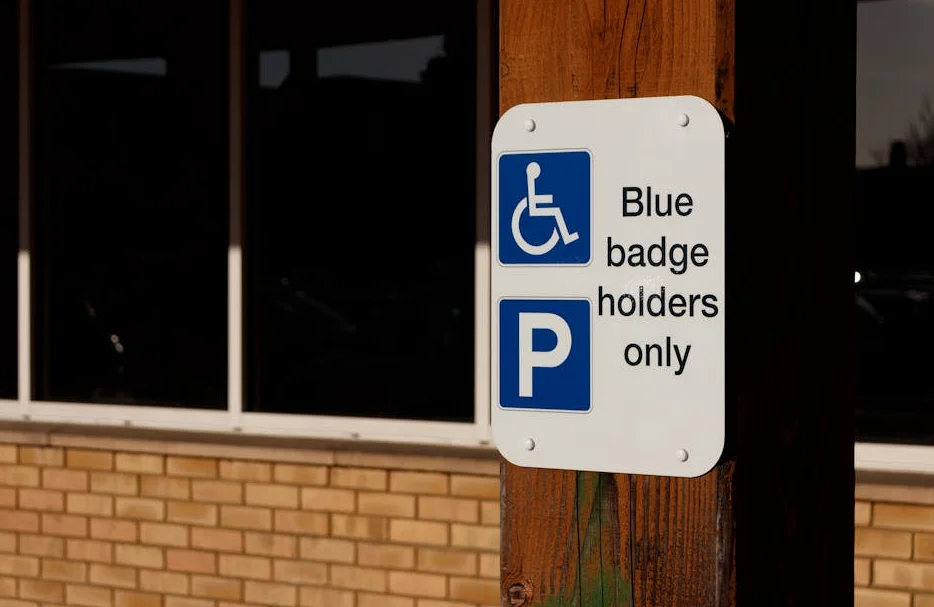
Scotland’s Blue Badge scheme offers key parking relief to drivers and passengers with disabilities, including those affected by conditions like ALS, dementia, autism or Parkinson’s that limit mobility. The badge allows free parking in designated disabled bays and exemptions from many standard restrictions, such as meters, pay-and-display zones and single or double yellow lines.
Badge holders must still avoid 11 precise spots around the clock. Transport Scotland warns that parking there risks fines or vehicle clamping. The agency urges users to opt for marked bays over yellow lines whenever available for safety and compliance.
Correct display proves essential. Place the badge on the dashboard with the front facing up and photo side hidden from view through the windscreen. Highlighted indicators on the badge show the proper orientation. Failure to show it clearly can void exemptions.
Allowed spots include on-street meter spaces, pay-and-display areas and disabled bays. Badge users also park without time limits in most council-controlled off-street car parks, except multi-storey ones. Exemptions cover resident permit zones and shared spaces, though local rules may add 30-minute limits on single yellow lines during restricted hours.
The forbidden list stands firm. Blue Badge holders cannot park:
- on motorways or slip roads
- on the central reservation of dual carriageways
- in bus lanes
- in bus stops or taxi ranks
- where it causes an obstruction to other vehicles
- on red routes
- on cycle tracks
- where there are double white lines with a solid line nearest the vehicle
- on pedestrian crossings, crossing areas or zigzag lines
- in designated parking places for diplomatic vehicles
- where parking controls are in force purely for event reasons
Transport Scotland emphasizes these rules apply whether the badge holder drives or rides as a passenger. Eligibility covers people with physical or mental health conditions impacting walking, plus those with terminal illnesses receiving certain benefits. Applications go through local councils, which assess needs case by case.
Recent checks by the agency highlight rising misuse reports. Officers clamped 1,200 vehicles last year for improper badge use, mostly due to poor display or parking in no-go zones. Fines start at £100 but can climb with repeat offenses.
Councils enforce slightly varying rules in multi-storey or pay-and-display lots, so badge holders should check signs. The scheme, running since 1978, now serves over 100,000 Scots. Transport Scotland updated guidance in 2024 to stress bay preference amid urban congestion.
For full details, badge holders visit local council sites or the Transport Scotland page. Proper use keeps the scheme effective for those who need it most.






Comments
No comments yet
Be the first to share your thoughts