

 CBS News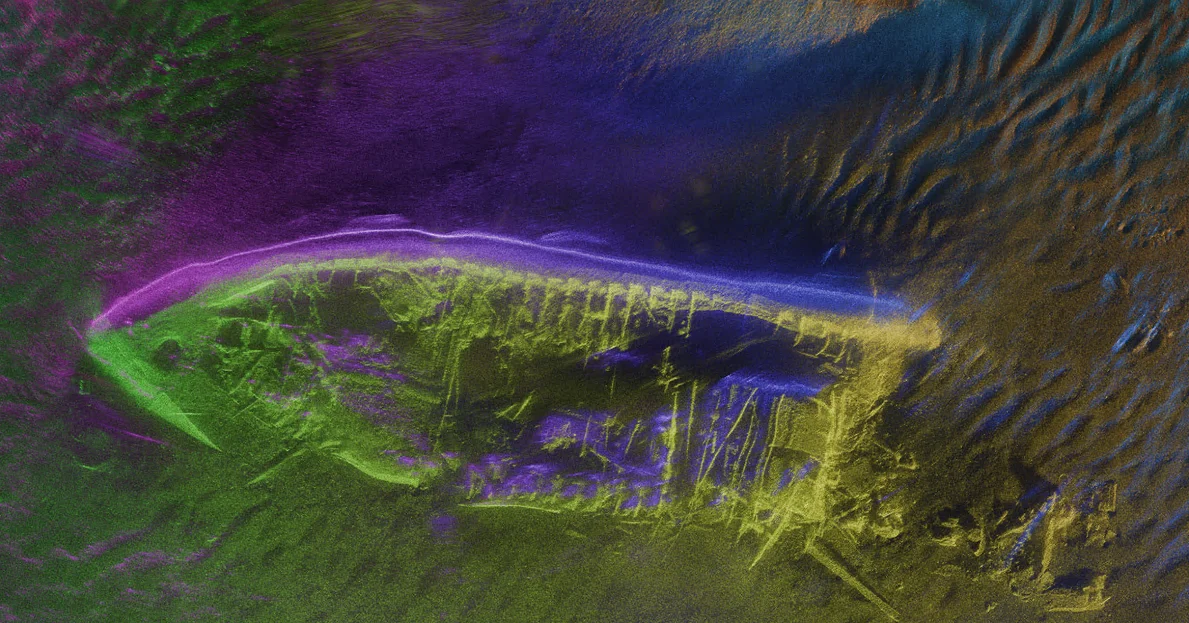
More than 160 years after the USS Monitor sank off the coast of North Carolina, new 3D images are offering a detailed look at an iconic Civil War ship that helped shape naval technology and marine architecture in the 19th century. The images, produced by NOAA and Northrop Grumman, reveal the shipwreck in extraordinary detail, highlighting its preservation and the thriving marine life that now surrounds it.
Historic Battle and Technological Legacy
First launched in January 1862 from Greenpoint, New York, the Monitor was the U.S. Navy’s prototype ironclad warship, designed to counter a Confederate ironclad ship called the CSS Virginia. The Monitor went up against the CSS Virginia during the historic battle of Hampton Roads in March of that year, a key moment in naval warfare history.
The battle, which took place in the Chesapeake Bay, is remembered as the first clash between ironclad warships. The Monitor’s innovative rotating gun turret and iron-plated hull set a new standard for naval engineering. The battle ended in a draw, but the Monitor’s design influenced the future of naval technology.
3D Imaging and Underwater Exploration
NOAA and Northrop Grumman have created a digital timeline of the Monitor’s history, from its construction in 1862 to its current state as a sunken wreck. The timeline includes high-resolution 3D images of the shipwreck, which lies about 240 feet beneath the surface of the Atlantic Ocean near the Outer Banks.
According to NOAA, the images were produced using advanced sonar technology and an autonomous underwater vehicle deployed to the bottom of the sea. The scans highlight the ship’s condition and provide a new perspective on its structure and the surrounding environment.
Tane Casserley, a maritime archaeologist with the Monitor National Marine Sanctuary, said the scans show the Monitor is in ‘fantastic shape’ despite sitting at the bottom of the ocean for over 160 years. ‘It’s difficult to visit. It’s very deep. There’s only so much we can do as scuba divers,’ Casserley said. ‘But now we got this.’
Ecological Transformation and Conservation Efforts
The Monitor’s wreck has transformed into a thriving marine ecosystem. According to NOAA, the ship now serves as a reef filled with fish and other marine creatures. ‘This thriving ecosystem grew from the wreck of the iconic civil war ironclad — from a vessel of war to an island of life,’ reads a description paired with the timeline’s final stop.
The ship sank during a severe storm that struck near Cape Hatteras, North Carolina, on New Year’s Eve in 1862. Forty-seven crew members were rescued, but 16 sailors did not survive. The Monitor was lost for over a century before its remains were discovered by researchers in August 1973.
The site was designated by NOAA as the country’s first national marine sanctuary in 1975. This designation set the stage for an appreciation of America’s maritime heritage, a broad legacy that includes not only physical resources like historic shipwrecks and prehistoric archaeological sites but also archival documents, oral histories, traditional seafaring, and ecological knowledge of indigenous cultures.
As exploration of the site continued, scientists and researchers collected and conserved various items from the wreck, including pieces of its hull, turret, and stern. These artifacts are crucial for understanding the Monitor’s construction and the technological advancements it represented.
Today, the Monitor remains the world’s largest marine archaeological metals conservation project, managed by the Mariners’ Museum and Park in collaboration with NOAA. The shipwreck’s transformation into a vibrant marine ecosystem highlights the complex relationship between human history and the natural world.






Comments
No comments yet
Be the first to share your thoughts