

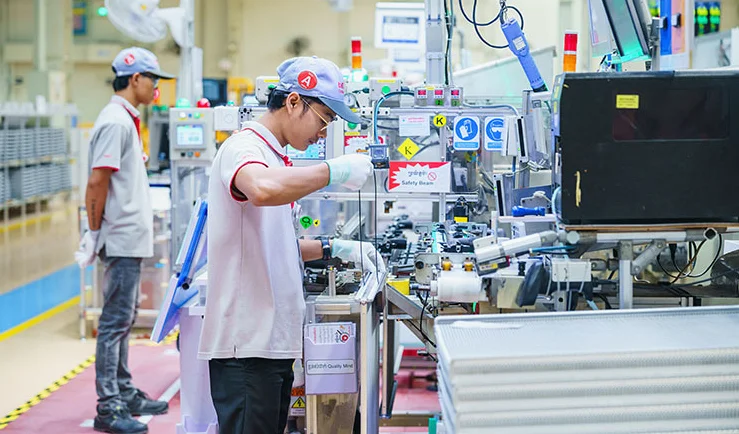
PHNOM PENH — Royal Group Phnom Penh SEZ Plc marked Japan’s National Day with a spotlight on its 44 Japanese tenant companies. These firms operate in RGPPSEZ, a special economic zone outside the capital, producing everything from precision components to electrical equipment.
The zone’s developer highlighted Japanese investors’ role in raising Cambodia’s industrial standards. Japanese operations bring advanced technologies and management systems, according to company statements. Workers receive training in Kaizen methods and quality controls, building expertise in a nation pushing for manufacturing growth.
Job numbers have climbed steadily. Local employees now handle complex assembly lines once reliant on imports. Supporting industries have sprung up too, as Japanese firms seek nearby suppliers for parts and materials. This localization cuts costs and ties RGPPSEZ tighter into Asian supply chains.
RGPPSEZ offers reliable power, roads and customs clearance to match Japanese standards. The zone complies with Cambodian regulations while partnering with authorities for smooth operations. Japanese companies invested here for the stability, executives noted during the holiday announcement.
Beyond factories, the partnership highlights Japan-Cambodia ties. On the birthday of Emperor Naruhito, RGPPSEZ sent congratulations to Tokyo. Officials praised the investors for discipline and long-term commitments that align with Cambodia’s export ambitions.
Sectors vary widely. Automotive parts makers supply regional carmakers. Electronics firms produce components for global brands. Precision engineering outfits handle tolerances measured in microns. All told, these 44 outfits form one of RGPPSEZ’s largest investor blocs.
Skills transfer stands out. Cambodian staff master just-in-time production and lean manufacturing. Such know-how positions the workforce for higher-value work as Cambodia eyes upper-middle-income status by 2030. Japanese managers oversee on-site programs, blending local hires with expatriate oversight.
The zone draws from Japan’s playbook. Investors favor spots with clear rules and infrastructure. RGPPSEZ delivers on both, from wastewater treatment to fire safety. Tenants report few disruptions, a rarity in Southeast Asia’s industrial parks.
Supply chain effects ripple outward. Local firms now provide packaging and logistics. Some Cambodian startups even export to Japan. This cluster effect bolsters Phnom Penh’s case as a manufacturing alternative to Vietnam or Thailand.
Royal Group Phnom Penh SEZ Plc vows to deepen the collaboration. Plans call for more training centers and tech upgrades. As Cambodia joins trade pacts like RCEP, Japanese firms stand ready to expand, zone officials said.
The National Day message closed with optimism. RGPPSEZ eyes further Japanese arrivals. With 44 anchors in place, the zone cements its reputation as a Japan-friendly hub in Cambodia.





Comments
No comments yet
Be the first to share your thoughts