

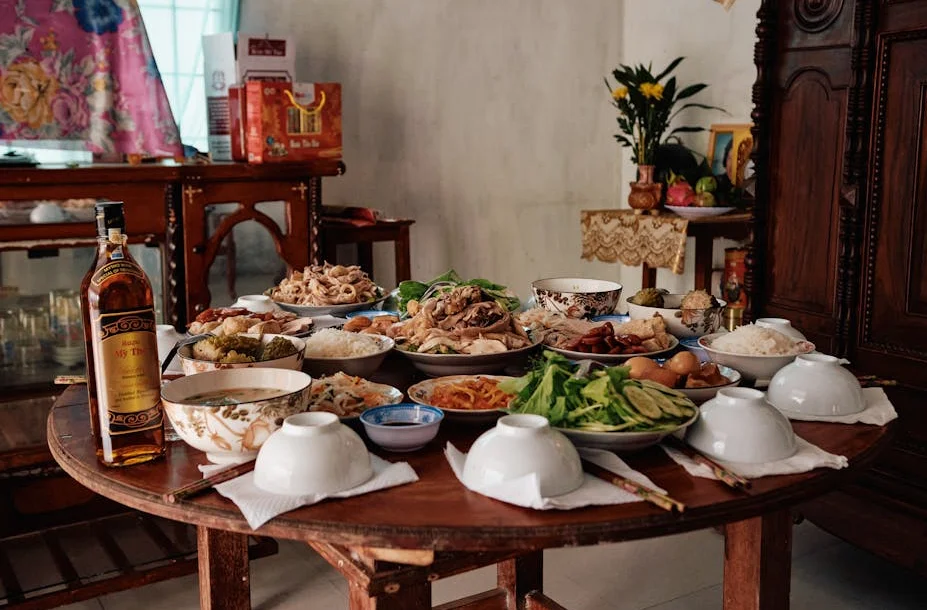
BACH LONG VI ISLAND, Vietnam — Tran Thi Lan prepared a reunion feast in her modest home in Residential Area No. 2, stirring pots of sticky rice and traditional sweets. She and her husband, Hoang Van Binh, have called this isolated outpost home for over 25 years after moving from Hoa Binh ward in Hai Phong.
“Our family enjoys Tet here,” Lan said. “It’s peaceful but warm. Soldiers share meals with civilians, and we visit their units. Supplies come regularly by ship now.”
The island, Vietnam’s farthest outpost in the Gulf of Tonkin, buzzed quietly with holiday spirit two weeks before the Lunar New Year. Mainland delegations arrived with gifts, essentials and events like the “Zero-Cost Tet Market” and “Tet Reunion.” Supply ships delivered peach branches, kumquat trees, green leaves for cakes and other holiday staples despite choppy seas.
Gatherings filled the air with greetings. Residents from various hometowns swapped stories over year-end meals with military personnel. “We feel like one family,” Binh said. “Bach Long Vi is my second homeland. I hope to stay many more years.”
Lieutenant Colonel Nguyen Dinh Binh of Radar Station 490, Regiment 151, Naval Region 1, joined the celebrations after more than 20 years on the island and two prior Tets in the Spratly Islands. Conditions have improved dramatically. Roads, electricity, freshwater systems, schools and clinics now serve the 600 residents and troops.
“We schedule cultural and sports activities around duties during Tet,” the officer said. Local authorities host joint events for civilians and soldiers.
Nguyen Van Hau, vice chairman of the Bach Long Vi Special Administrative Zone People’s Committee, outlined 2026 plans to build the island into an economic-defense hub. Priorities include marine tourism, high-value aquaculture and ecosystem protection, alongside maritime security.
“We’ll work with armed forces for safety in Gulf skies and waters,” Hau said. Officers and soldiers extended New Year wishes to the mainland.
The harbor stayed calm under spring sun. Gentle waves lapped at flag-draped boats. National flags snapped in the breeze, symbols of Vietnam’s frontier presence. Kumquat trees lined doorsteps, echoing mainland customs 120 kilometers offshore.
Past hardships linger in memories. Early supply runs depended on weather; ships sometimes waited days for calm seas or needed specialized vessels. Steady investments have transformed daily life.
Every household felt the solidarity. Soldiers patrolled sovereignty lines while civilians hosted communal feasts. The island’s rhythm blended tranquility with resolve, a steadfast marker in open waters.


Comments
No comments yet
Be the first to share your thoughts