

Algeria’s former minister of industry. Mohamed Aoun. Has been jailed in a high-profile corruption case involving the mismanagement of ferrous and non-ferrous metal waste, according to Al Jazeera. Prosecutors had sought a 12-year sentence for Aoun, along with 10-year sentences for several other defendants, and he was ordered to pay a fine of 1 million Algerian dinar (approximately $7,500), as reported by the Economic and Financial Criminal Court in Algiers.
The Case and Convictions
The case revolved around the irregular sales of ferrous and non-ferrous metal waste in violation of public asset management rules, according to Dzair Tube. The AFP news agency reported that the case centered on accusations of corruption, mismanagement, and the unlawful awarding of industrial and investment contracts, notably involving the trade in ferrous waste and copper residues.
Among those convicted was Aoun’s son. Mehdi Aoun. Who received a six-year prison term as part of the same case — Investors, an official at a state-owned business, and a prominent businessman were also sentenced to between three and 10 years, according to Dzair Tube. Some other officials were acquitted due to a lack of evidence, as reported by AFP.
Broader Anticorruption Campaign
The case and the convictions come amid an ongoing anticorruption drive launched by Algerian President Abdelmadjid Tebboune, who came to power in 2019 amid widespread pro-democracy protests, according to AFP. Tebboune’s campaign against corruption has targeted senior officials, including those from the era of former President Abdelaziz Bouteflika, who stepped down after losing the support of the armed forces in 2019.
Political affairs in Algeria have long been dominated by a closed elite based in the military and the ruling party, the National Liberation Front (FLN), according to Freedom House. While there are multiple opposition parties in Parliament, elections are distorted by fraud, and electoral processes are not transparent, and other concerns include the suppression of street protests, legal restrictions on media freedom, and rampant corruption.
Recent Developments and Reforms
In May 2025. Authorities published a new penal code that includes a series of measures significantly limiting freedom of expression online by targeting any criticism of the security forces and national symbols, according to Freedom House. In September 2024, President Abdelmadjid Tebboune was reelected with 84.3 percent of the vote, though the election was marred by controversies related to which candidates were allowed to run and the results published by the electoral commission.
In November 2024, security forces arrested French-Algerian writer Boualem Sansal, alleging that he had threatened national unity due to a controversial statement questioning Algeria’s sovereignty over its eastern territory. The president, who is directly elected for five-year terms, is the dominant figure in the executive branch. A two-term limit has been in effect since 2016, but it did not apply to the prior terms of longtime president Abdelaziz Bouteflika, whose plans to seek a fifth term sparked the Hirak protests in 2019.
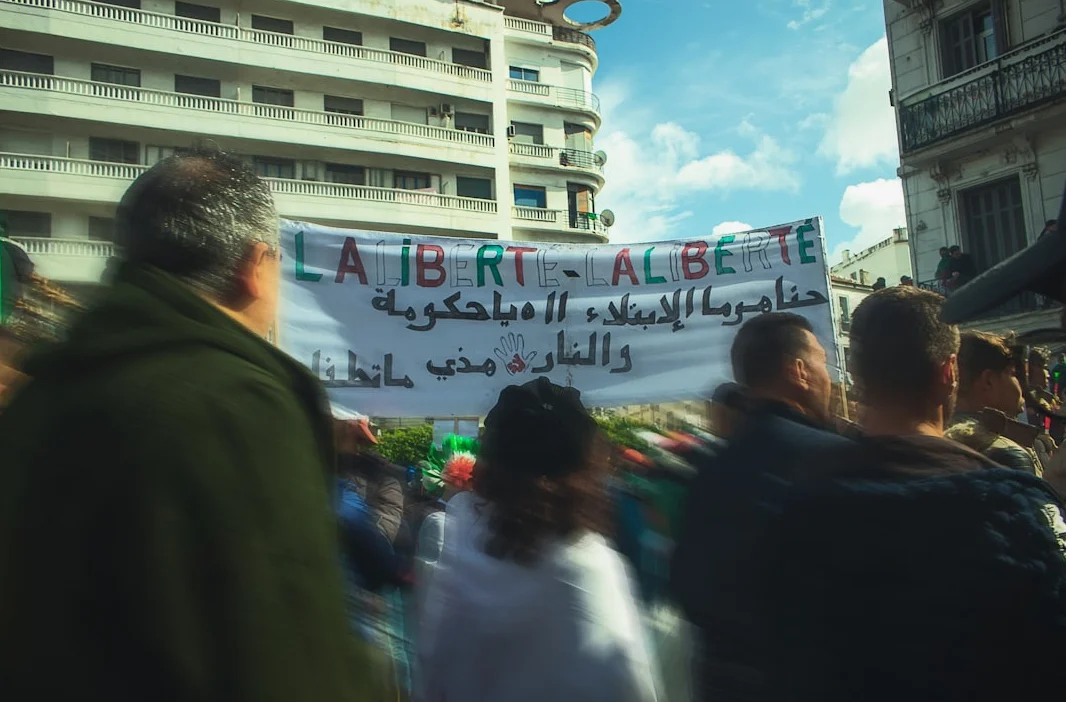
President Abdelmadjid Tebboune secured a second term in power in September 2024. The Hirak protest movement in 2019 put pressure on the regime to reform, but a crackdown on dissent in the following years has prevented large-scale demonstrations from continuing.





Comments
No comments yet
Be the first to share your thoughts