

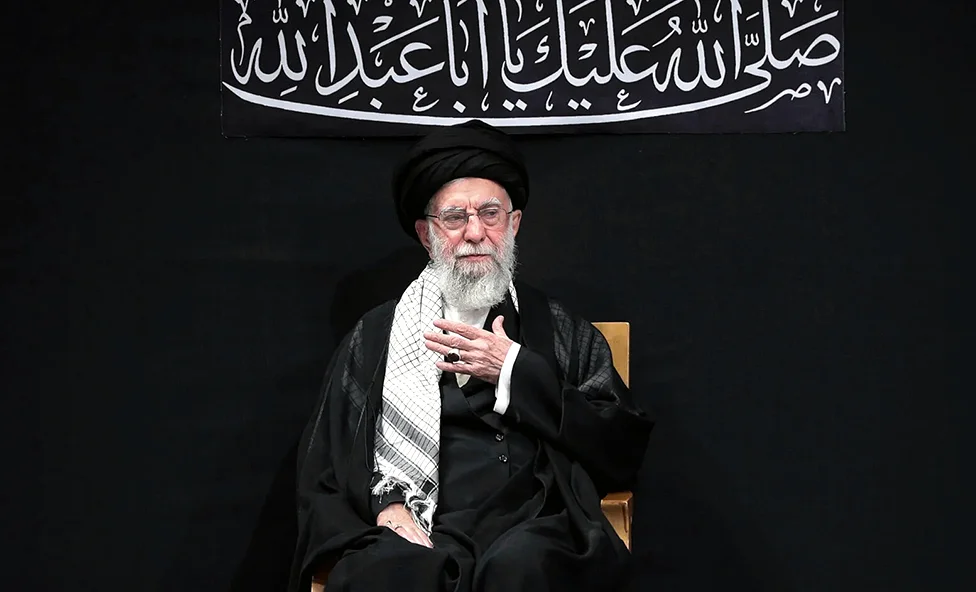
Ayatollah Ali Khamenei, the revered and controversial figure who shaped Iran’s foreign and domestic policies for over 36 years, has died at the age of 86. Iranian state media confirmed that he was killed in air strikes by Israel and the United States that targeted his central Tehran compound. The attacks came after years of failed diplomatic efforts to resolve tensions over Iran’s nuclear program, according to reports.
Impact on Iran’s Regional Power
Khamenei’s death marks the end of an era in Iran’s geopolitical strategy. As the supreme leader since 1989, he positioned the country as a leading anti-U.S. force in the Middle East, backing Shi’ite militias in Iraq and Lebanon and propping up Syrian President Bashar al-Assad. His influence extended through the ‘Axis of Resistance,’ which included groups such as Hamas and the Houthis. However, by 2024, this network began to unravel, with the ousting of Assad and military defeats by Israel in Lebanon and Gaza.
Khamenei was instrumental in funding these alliances, spending billions over four decades to strengthen Iran’s regional influence. But recent years saw the collapse of these partnerships, leaving Iran’s position in the region significantly weakened.
A Legacy of Hardline Rule
Khamenei’s rule was defined by a hardline stance, both domestically and internationally. He maintained the policies of the Islamic Republic’s founder, Ayatollah Ruhollah Khomeini, ensuring that Iran remained isolated from the West. His rejection of Western influence extended to his criticism of U.S. policies, including the 2018 withdrawal from the 2015 nuclear deal. That move by former U.S. President Donald Trump led to renewed sanctions on Iran and increased tensions, with Khamenei condemning the U.S. as ‘the Great Satan.’
Khamenei also faced significant domestic unrest, including the 2009 protests over disputed election results and the 2022 demonstrations following the death of Mahsa Amini, a 22-year-old Iranian-Kurdish woman killed in custody. In response, Khamenei cracked down on protesters, resorting to mass arrests and public executions to quell the unrest.
As supreme leader, Khamenei wielded near-absolute power, overseeing the armed forces, appointing key officials, and shaping the country’s direction. His influence was cemented through his control of the Major Guards, a powerful paramilitary force that played a central role in Iran’s regional and domestic affairs.
A Controversial Legacy
Khamenei’s legacy is one of both strength and controversy. While he is revered by hardliners and clerics for his unwavering commitment to the Islamic Republic, critics argue that his policies have led to Iran’s economic and political isolation. His refusal to compromise with the West, particularly on the nuclear issue, has been a point of contention, even during the 2015 nuclear deal with the U.S., the U.K., France, Germany, Russia, and China.
Khamenei’s death comes at a time of intense conflict in the Middle East. In June 2025, Israel launched a large-scale air strike on Iranian military and nuclear targets, marking a turning point in the region’s tensions. The U.S. joined the strike, escalating the conflict into an open war. Khamenei had vowed in January 2025 that Iran would not ‘yield to the enemy,’ a sentiment that reflected his lifelong opposition to Western influence.
According to Karim Sadjadpour of the Carnegie Endowment for International Peace, Khamenei was ‘an accident of history’ who rose from a relatively weak figure to one of the most influential leaders in modern Iranian history. ‘He went from a weak president to an initially weak supreme leader to one of the five most powerful Iranians of the last 100 years,’ he said.
Khamenei’s early life was marked by religious devotion. Born in Mashhad in 1939, he became a cleric at the age of 11 and studied in Iraq and Qom, Iran’s religious capital. His father, a traditionalist cleric, opposed mixing religion with politics, but Khamenei embraced the major cause. He was imprisoned in 1963 for political activities and endured severe torture during his detention.
Khamenei’s rise to power was not without controversy. He was an unexpected choice to succeed Khomeini, lacking both the charisma and clerical credentials of his predecessor. However, his ties to the Major Guards and his ability to maintain the hardline policies of the Islamic Republic secured his position as supreme leader.
As the leader of Iran, Khamenei’s influence extended beyond the country’s borders. He was a key figure in the 1980-88 Iran-Iraq War and later played a major role in the Islamic Republic’s military and political structures. His leadership was marked by a deep distrust of the West, a sentiment that shaped his policies and actions throughout his rule.
Khamenei’s death leaves a power vacuum in Iran’s leadership, with uncertainty about the future of the country’s policies and its role in the Middle East. Analysts suggest that his passing may lead to a shift in Iran’s approach to diplomacy, particularly with the U.S. and Israel, though the immediate impact remains unclear.


Comments
No comments yet
Be the first to share your thoughts