

 Al Jazeera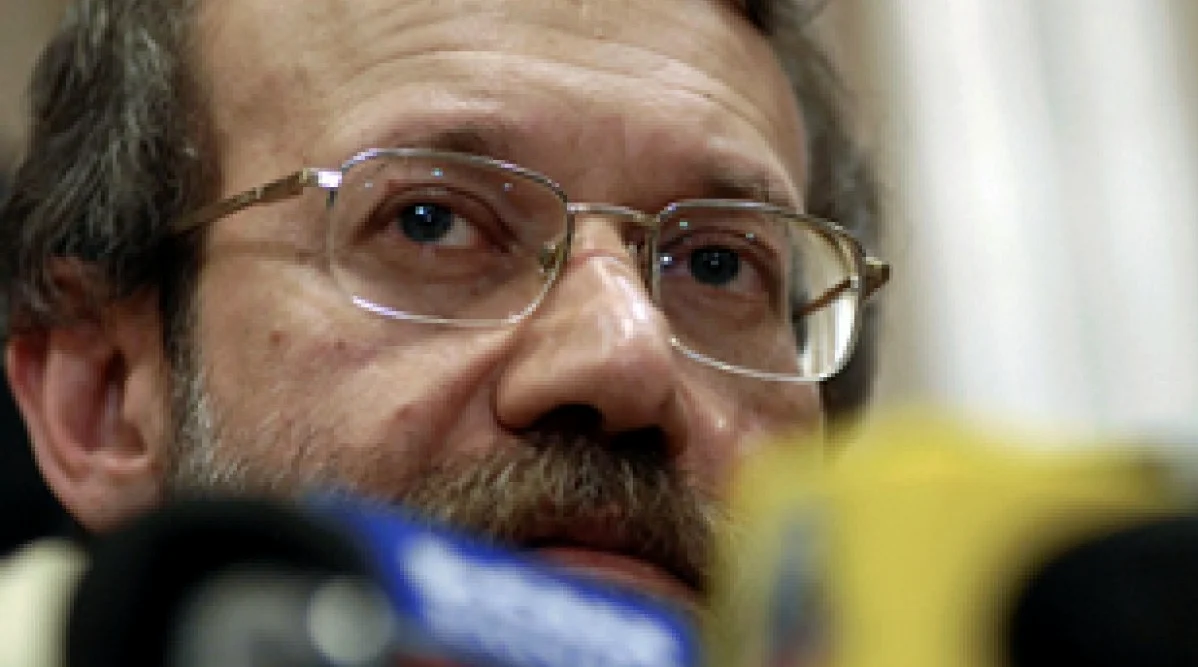
Ali Larijani, 67, has long been a key figure in Iran’s political landscape, known for his pragmatic approach and academic background. But following the March 1 air strikes that killed Supreme Leader Ayatollah Ali Khamenei and IRGC commander Mohammad Pakpour, Larijani’s tone has shifted dramatically. In a fiery statement on social media, he declared that the US and Israel had ‘set the heart of the Iranian nation ablaze’ and vowed to ‘burn their hearts’ in retaliation.
From Pragmatism to Fire
Larijani, the secretary of Iran’s Supreme National Security Council, has spent decades handling the complex corridors of power in Tehran. Once a respected negotiator and academic, he is now at the center of Iran’s most severe crisis since the 1979 revolution. His recent rhetoric contrasts sharply with his earlier role in brokering the 2015 nuclear deal with world powers.
Speaking on state television just 24 hours after the attacks, Larijani called the US and Israel ‘hellish international oppressors’ and warned that Iran would deliver an ‘unforgettable lesson.’ His message has resonated with a population reeling from the loss of its most revered leader and facing a precarious political transition.
Larijani’s statement comes at a critical juncture. He is expected to play a central role alongside a three-man transitional council managing Iran’s affairs in the aftermath of Khamenei’s death. The nation’s future direction, both domestically and internationally, now rests in the hands of figures like Larijani, whose influence spans decades of political and military decision-making.
A Dynasty of Power
Larijani was born in Najaf, Iraq, to a wealthy family from Amol, Iran. His father, Mirza Hashem Amoli, was a prominent religious scholar, and his family has been compared to the Kennedys of Iran due to their deep political and religious influence. Larijani’s marriage to Farideh Motahari, the daughter of Morteza Motahari—a close associate of Ayatollah Khomeini—further solidified his ties to Iran’s major elite.
Despite his family’s conservative roots, Larijani’s personal life reflects a more modern trajectory. His daughter, Fatemeh, completed her medical education at Cleveland State University in Ohio, US, highlighting the family’s exposure to Western institutions.
Unlike many of his peers, Larijani has a strong secular academic background. He earned a bachelor’s degree in Mathematics and Computer Science from Sharif University of Technology and later pursued master’s and doctoral degrees in Western philosophy at the University of Tehran, focusing on the works of Immanuel Kant.
From Negotiator to Hardliner
Larijani’s political career has been marked by a blend of diplomacy and hardline positions. He served as Iran’s chief nuclear negotiator and was instrumental in securing parliamentary approval for the 2015 nuclear deal. However, he resigned from his role in 2007 after growing distant from President Mahmoud Ahmadinejad’s policies.
From 2008 to 2020, Larijani served as the speaker of Iran’s Parliament, shaping both domestic and foreign policy. He attempted to run for president in 2005 and 2021 but was disqualified by the Guardian Council, which analysts believe was a move to clear the path for hardliner Ebrahim Raisi.
Despite these setbacks, Larijani’s influence remained strong. In August 2025, he was reappointed as secretary of the Supreme National Security Council by President Masoud Pezeshkian. Since then, his stance has hardened, including the cancellation of a cooperation agreement with the IAEA in October 2025, citing the agency’s reports as ‘no longer effective.’
Just weeks before the recent escalation, Larijani was reportedly engaged in indirect negotiations with the US, mediated by Oman. In an interview with Al Jazeera, he described Iran’s position on talks as ‘positive’ and noted that the US had realized the military option was not viable.
However, the February 28 air strikes have shattered that diplomatic window. Larijani has since rejected media reports of new talks with the US, stating that Iran would ‘not negotiate’ with Washington. Instead, he has vowed to respond with ‘a force that they have never experienced before.’
As Iran prepares for a leadership transition, Larijani’s role remains key. His recent statements indicate a shift from the pragmatic negotiator of the past to a more confrontational stance. Whether this marks a permanent change or a temporary response to the current crisis remains to be seen.

Comments
No comments yet
Be the first to share your thoughts