

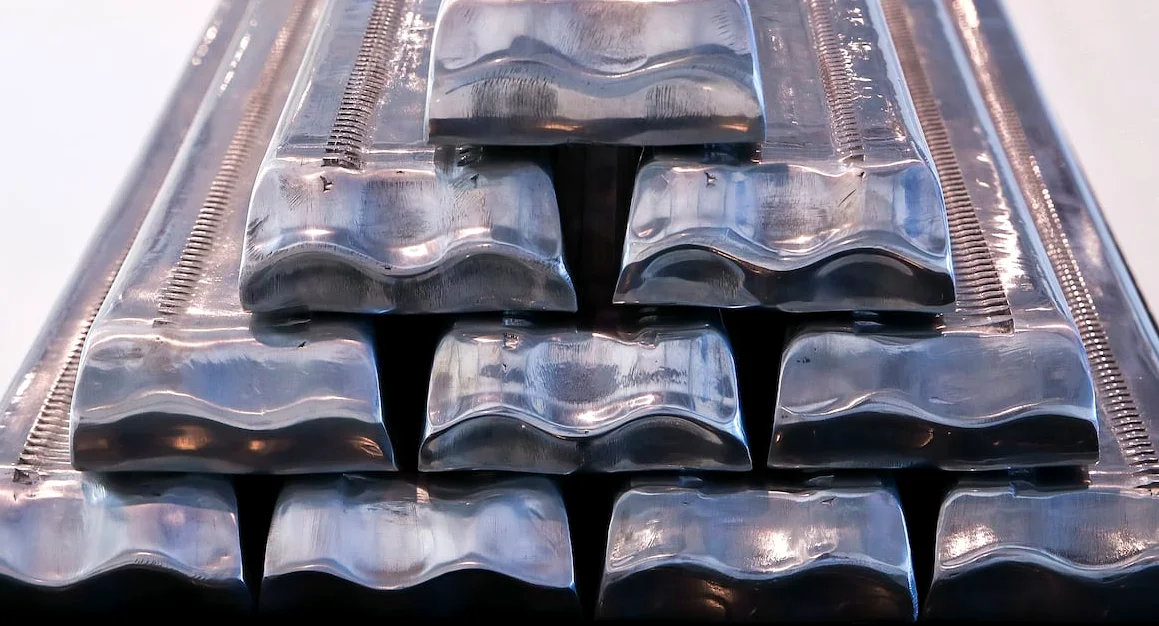
Aluminium prices have climbed to a near four-year high, reaching $3,544 a tonne on Monday on the London Metal Exchange, amid ongoing supply chain disruptions caused by the regional war. The conflict, which began on February 28 with US and Israeli strikes on Iran, has led to the effective closure of the Strait of Hormuz, a critical export route for Gulf aluminium producers.
Regional Producers Face Supply Challenges
Gulf countries account for about 8 per cent of global primary aluminium production, according to the International Aluminium Institute. Key producers include Emirates Global Aluminium in the UAE, Aluminium Bahrain (Alba), Ma’aden Aluminium in Saudi Arabia, Qatalum in Qatar, and Sohar Aluminium in Oman. Most of their output is exported through the Strait of Hormuz, which has effectively halted traffic due to the conflict.
Bahrain’s Alba has declared force majeure on its deliveries due to transit issues, while Qatar’s Qatalum announced a controlled production shutdown on March 3 due to natural gas shortages. Carsten Menke, head of next generation research at Julius Baer, noted that two of the region’s largest producers are defaulting on their delivery contracts, potentially leading to short-term price spikes.
Supply Constraints and Market Deficit
The International Aluminium Institute reported that the market is already expected to run a deficit in 2026. A prolonged, large-scale disruption could push prices as high as $3,700 per tonne, according to BMI, a unit of Fitch Group.
Ross Strachan, head of aluminium raw materials at CRU Group, said that with low stock levels and limited idled capacity, supply disruptions could push prices to $4,000 per tonne. ‘Given the low level of stocks, limited idled capacity, which has viable ways to restart, supply disruption could lead to prices pushing towards $4,000 per tonne,’ he said.
The conflict has also disrupted the import of raw materials, such as alumina, which are crucial for production. Most Gulf smelters rely on imported alumina, which arrives by sea through the Strait of Hormuz. Disruptions therefore threaten both exports of finished metal and the import of raw materials needed for production.
Alternative Routes and Risks
Strachan noted that alternative shipping routes, such as the Red Sea, the Port of Jeddah, and the circumnavigation around the Cape of Good Hope in South Africa, exist. However, these routes face inherent risks of interception amid escalating conflicts and could lead to higher insurance costs and surging freight rates.
In the UAE, shorter alternative routes include the Gulf of Oman, where there are two major Emirati ports in Khor Fakkan and Fujairah. However, the extended voyage durations required to deliver to Europe, Asia, and North America will attract higher insurance costs and surging freight rates, ultimately compounding premiums.
‘Beyond the immediate security risks, a major practical constraint is whether alternative hubs have the infrastructure and capacity to handle redirected shipping volumes,’ Strachan said.
Exports from the Gulf region represented about 21 per cent of total US primary aluminium imports last year, according to official US customs data. The region also supplied 19 per cent of the EU’s primary aluminium imports, with the majority delivered to Italy and the Netherlands, S&P Global said in a report.
Higher aluminium prices could ripple through industries that depend heavily on the metal, including automotive, aerospace, construction, and packaging, potentially raising manufacturing costs if supply disruptions persist, according to S&P.
‘Aluminium smelting is an energy-intensive process. The Gulf’s access to abundant and relatively low-cost natural gas has been a crucial driver of the industry’s growth and global competitiveness,’ S&P explained.
For now, as long as producers in the Gulf still have raw materials on site, ‘they will try to keep smelters operating as shutting them down is both a lengthy and costly process,’ Menke told The National. ‘Plus, restarting them is a time-consuming process as well. Our understanding is that raw materials on site should be sufficient to continue producing for around three to four weeks. Assuming that the Strait of Hormuz opens within that timespan, the impact on the producers and the aluminium market more broadly should be manageable,’ he said.
However, if imports of raw materials are constrained for longer and production is curtailed as a result, ‘this would have a major impact on the aluminium market, given the size of the Middle Eastern aluminium industry,’ Menke added.
The smelter in Saudi Arabia gets its alumina domestically and in turn that is supplied by domestic bauxite and hence is less likely to be affected, Strachan said. ‘A protracted conflict would have major implications for the entire supply chain as it will mean that sourcing bauxite to the refineries and alumina to smelters in the region would become immensely challenging (or even impossible) and in turn challenging for metal to flow to customers,’ he added.




Comments
No comments yet
Be the first to share your thoughts