

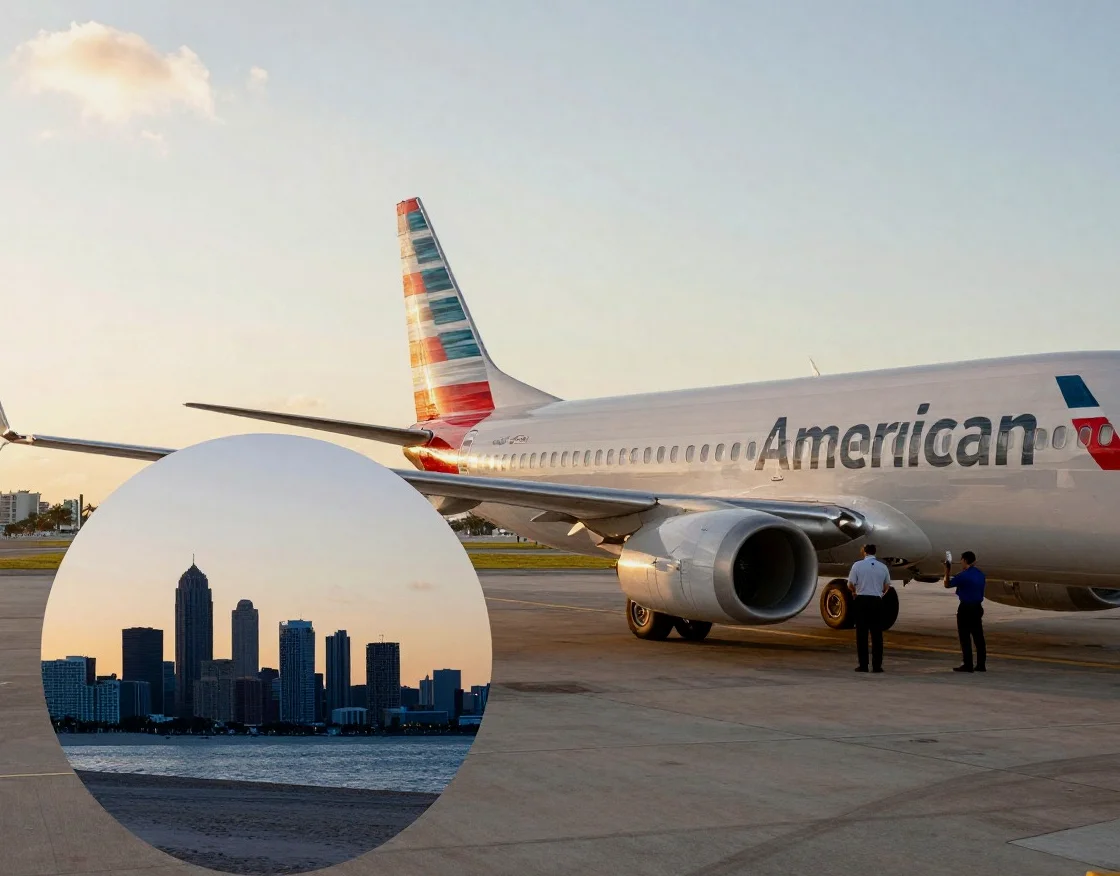
An American Airlines Boeing 737 MAX 8 touched down safely in Miami on February 25, 2026, after a scheduled round-trip flight from Medellín, Colombia. However, the aircraft was found with puncture damage on a critical wing control surface during a routine post-flight inspection, prompting an immediate investigation by federal aviation authorities and the airline’s safety teams. The incident has raised questions about aviation security, operational resilience, and the broader implications for international travel and the hospitality sector.
The Flight and the Damage
The aircraft, flight AA923, departed from José María Córdova International Airport near Medellín and arrived at Miami International Airport without any reported in-flight issues. According to flight tracking data, the journey followed a standard route. However, upon arrival, technicians identified puncture marks on the right aileron—a flight control surface crucial for roll and lateral balance. American Airlines immediately removed the aircraft from service and transferred it to its primary maintenance base in Dallas-Fort Worth for a thorough structural assessment.
The Federal Aviation Administration (FAA) and other relevant authorities are now examining when and where the damage occurred. No injuries were reported, and the crew did not report any abnormal flight control behavior. Despite the absence of in-flight issues, the discovery has reignited discussions about the security of international air routes and the potential for external threats to commercial aircraft.
Airlines and Tourism: A Connected Ecosystem
Colombia is one of Latin America’s fastest-growing tourism markets, and Miami remains a key gateway between the two countries. The Medellín-Miami corridor is economically and culturally significant, supporting a steady flow of international travelers. According to recent data, Colombia recorded more than 1,500 weekly international flight frequencies and over 288,000 weekly seats connecting it to 29 countries in late 2025. The United States leads with over 60,000 weekly seats and hundreds of frequencies.
American Airlines operates extensive connectivity between the U.S. and Colombia, with Miami serving as its primary Latin America gateway. The removal of a single aircraft from service does not disrupt the entire network, as airlines manage fleet rotations with spare capacity and substitution strategies. However, such safety events often prompt additional inspections across similar aircraft types, which may slightly affect scheduling flexibility and operational efficiency.
Travelers may notice increased aircraft perimeter monitoring and ground security procedures at select airports in the coming weeks. These adjustments aim to protect passengers and reassure global markets. The incident also highlights the interconnectedness of airline operations, international travel confidence, and the hospitality industry.
Tourism and Hotel Industry Implications
Colombia welcomed millions of foreign non-resident visitors in 2025, with the United States remaining its largest source market. Medellín has transformed into a leading urban tourism destination, attracting digital nomads, business travelers, cultural tourists, and medical tourists. Miami, in turn, serves as both a leisure magnet and a cruise embarkation hub, supporting hotel occupancy in both cities.
Major international hotel brands such as Marriott, Hilton, and Hyatt operate properties in both Miami and Colombia’s principal cities. These brands rely heavily on steady international air connectivity. Even isolated aviation security events can temporarily influence booking behavior, as travelers may become more cautious or seek alternative routes.
Historically, short-term booking slowdowns occur when headlines dominate news cycles. However, when flights continue safely and investigations progress transparently, travel demand tends to stabilize. Hospitality analysts emphasize that brand trust and crisis communication play a decisive role in maintaining consumer confidence. Hotels often coordinate with airlines and tourism boards to reassure travelers and maintain business continuity.
Despite the incident, commercial aviation remains statistically one of the safest modes of transportation. Aircraft undergo multiple layers of inspection before and after flights, and airlines implement strict maintenance programs regulated by national aviation authorities. The Boeing 737 MAX 8, which operates worldwide in large numbers, features advanced flight control systems, redundant hydraulic architecture, and structural resilience.
Any sign of external impact prompts detailed inspection cycles, and the FAA mandates strict reporting standards for structural findings. Aircraft are grounded when necessary until cleared. This disciplined approach ensures that incidents are evaluated scientifically rather than emotionally.
For travelers, the most important takeaway is that the aircraft landed safely. Safety systems worked, procedures were followed, and no passenger injuries occurred. As the investigation continues, the focus remains on ensuring that such incidents do not deter future travel or undermine confidence in the global aviation and hospitality sectors.






Comments
No comments yet
Be the first to share your thoughts