

 BBC
BBC 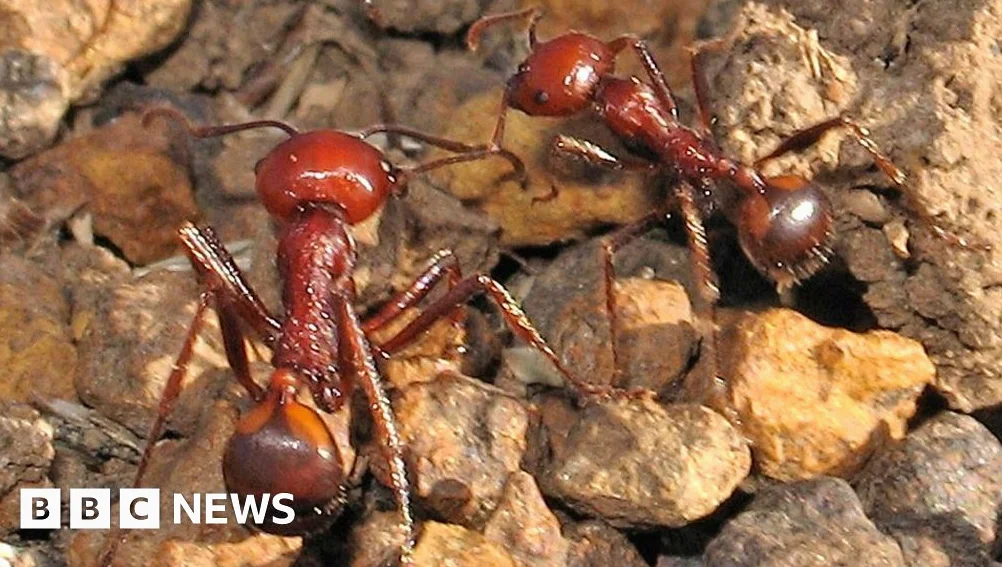
Kenya’s Rift Valley town of Gilgil has become a hotspot for a new and unusual form of wildlife trafficking. During the rainy season. Swarms of giant African harvester ants take flight in search of mates, a natural phenomenon that smugglers are exploiting to sell queen ants on the black market. These insects. Valued by international collectors, can fetch up to $220 each, according to reports.
Illegal Trade in the Rift Valley
Gilgil, a quiet agricultural town in Kenya’s Rift Valley, is now at the center of a growing illegal trade in giant African harvester ants, and the mating ritual of these ants—where winged males leave the nest to impregnate queens—provides an ideal opportunity for poachers. The queens. Which are large and red. Are particularly sought after by international ant collectors who keep them in transparent enclosures to observe their behavior.
According to the Kenya Wildlife Service (KWS), the scale of the trade became apparent last year when 5,000 queen ants were found alive at a guest house in Naivasha, a nearby lakeside town. The suspects. Including individuals from Belgium. Vietnam, and Kenya, had packed the ants in test tubes and syringes with moist cotton wool to keep them alive for two months.
The plan was to transport the ants to Europe and Asia for sale. The KWS reports that the ants were collected around Gilgil and transported to Naivasha, where they were stored before being smuggled out of the country. This discovery highlighted the extent of the illegal trade and the involvement of both local and foreign actors.
Surprise for Scientists and Authorities
The rise of this ant trade has caught scientists and authorities by surprise. Kenya is more accustomed to high-profile wildlife crimes involving elephant tusks and rhino horns, but the illegal harvesting of ants is a new frontier in wildlife trafficking. UK-based retailer Ants R Us describes the giant African harvester ant as ‘many people’s dream species,’ but the queens are currently out of stock, with the site explaining that it is very hard for retailers to source them.
Dino Martins. A biologist based in Kenya, expressed surprise at the extent of the trade. He noted that the giant African harvester ant, known for its seed-gathering behavior, is one of the most enigmatic species of ants. They form large colonies, engage in interesting behaviors, and are easy to keep, making them popular with collectors.
During the swarming season, the queens mate with several males, after which the males’ role ends. Most are eaten by predators or die, while the queen then digs a burrow and begins laying eggs to start her colony. The workers and soldier ants, all female, will eventually number in the hundreds of thousands. Nests can live for over 50 years, and Martins knows of nests near Nairobi that are at least 40 years old.
Risks to Ecosystems and Conservation
Experts warn that the trade in giant African harvester ants poses significant risks to local ecosystems. Harvester ants are both keystone species and ecosystem engineers, helping to disperse seeds and create a more healthy and dynamic grassland. Unsustainable harvesting, particularly the removal of queen ants, can lead to colony collapse, disrupting ecosystems and threatening biodiversity.
Mukonyi Watai, a senior scientist at Kenya’s Wildlife Research and Training Institute, shared these concerns. He emphasized that the removal of queen ants can have long-term consequences for the environment, as the collapse of a colony can affect the entire ecosystem.
Conservationists are now calling for greater trade protections for all ant species under the Convention on International Trade in Endangered Species (Cites), the global wildlife trade treaty. Sérgio Henriques, a researcher into the global ant trade, noted that no ant species is currently listed under Cites, leaving the trade largely unregulated.
In China, the trade in ants has also raised concerns. Zhengyang Wang, an assistant professor at Sichuan University, warned that the trade could ‘wreak havoc’ with local ecosystems. His research, published in the journal Biological Conservation, found that more than a quarter of the traded species in China were not native to the country, despite it being illegal to import them.
Wang explained that if the trade volume of invasive ants continues to grow, it’s only a matter of time before some escape from their formicaria and become established in the wild. The study highlighted the potential impact of the giant African harvester ant on agriculture in south-eastern China, where they could disrupt grain-based farming.
The illegal trade in Kenya has also led to arrests and convictions. Those arrested were convicted on charges of biopiracy and ordered to pay fines or serve 12 months in jail. Some opted to pay the $7,700 fee and left the country. Recently, a Chinese national alleged to be the mastermind behind the ring was arrested at Nairobi’s Jomo Kenyatta International Airport with another 2,000 queen ants packed in test tubes and tissue rolls.
The former broker involved in the trade said he only realized the extent of his involvement after seeing the arrests on the news. He immediately quit the business. The illegal trade in ants has now become a significant issue for Kenya, highlighting the need for stronger regulations and international cooperation to combat this new frontier of wildlife trafficking.






Comments
No comments yet
Be the first to share your thoughts