

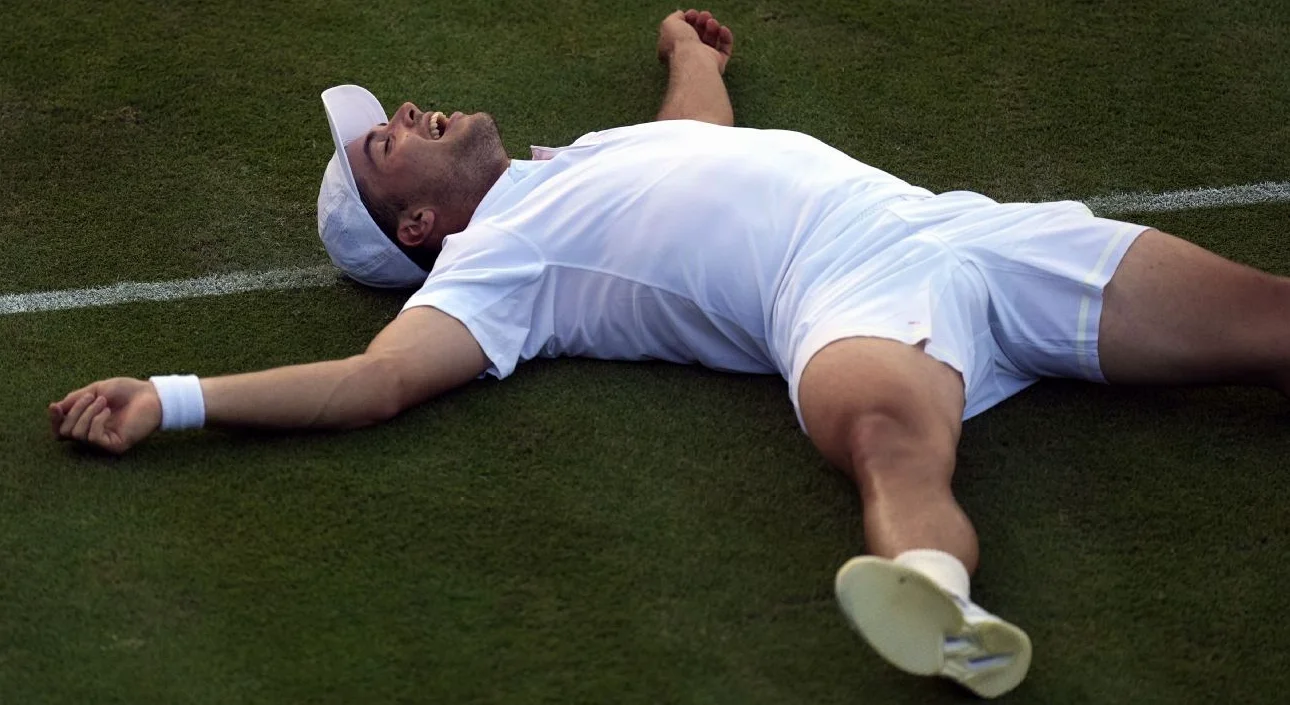
Arthur Fery. A 23-year-old French-born British tennis player standing at just 5-foot-9-inches, became an unlikely Wimbledon hero in 2026; Out of 128 men in the singles draw, Fery was the fourth shortest participant, yet he managed to push British tennis through a challenging tournament. After a thrilling five-set victory over Grigor Dimitrov on Centre Court, Fery advanced to the quarterfinals, becoming the first British wildcard to reach that stage in the 21st century.
A Rising Star with a Unique Background
Fery was born in Sèvres. A suburb of Paris. And moved to England as a child; he represented France before switching allegiance to Great Britain, though his father, Loïc Fery, is a multimillionaire hedge fund manager and president of the Ligue 1 club Lorient. Fery’s mother, Olivia, was a former professional tennis player — Before turning pro in 2021, he studied at Stanford University and played in the NCAA tennis system.
Ranked at No. 114 in the world, Fery was given a wildcard entry to Wimbledon 2026. His rise to prominence came after British stars like Jack Draper and Emma Raducanu withdrew before the tournament due to injury, and other local players fell in early rounds. Fery became the last British man standing, carrying the hopes of the Lawn Tennis Association and British tennis fans.
Unlikely Triumphs and Emotional Wins
Fery’s win over Dimitrov was particularly significant. The Bulgarian, a former world No. 3, had suffered a pectoral injury during Wimbledon 2025 and struggled to regain form, dropping from No. 21 to No. 146 in the rankings. Fery defeated him in a grueling five-set match, twice coming back from a break down in the fourth set. His performance drew praise from former coaches and tennis experts, with Paul Goldstein calling it “so well earned, so well deserved.”
After the match, Fery described the emotional weight of the moment, saying he felt an “unbelievable amount of emotion.” The victory transformed Fery from an underdog into a national figure. He was dubbed “King Arthur” in British tennis circles and became a symbol of resilience. His quarterfinal match against Italian ninth seed Flavio Cobolli was highly anticipated, with Goldstein traveling to London in hopes of attending the match.
A New Chapter for British Tennis
Fery’s success has sparked discussions about how young players can transition from promising talent to household names. His journey, from a wildcard entry to a quarterfinalist, highlights the potential for athletes with limited Grand Slam experience to make an impact on one of the most prestigious stages in tennis. Despite his early success, Fery has not played at the US Open and has primarily competed in Challenger-level tournaments.
For the British Lawn Tennis Association, Fery’s run helped avert what would have been its worst Wimbledon in modern history. The association had faced criticism after key players withdrew and other early exits. Fery’s performance not only boosted the organization’s profile but also brought renewed attention to British tennis at a time of uncertainty.
As the tournament progresses, Fery continues to defy expectations. His story is not just about his height or his nationality, but about perseverance, adaptability, and the ability to seize a moment on one of the most famous courts in the world.

Comments
No comments yet
Be the first to share your thoughts