

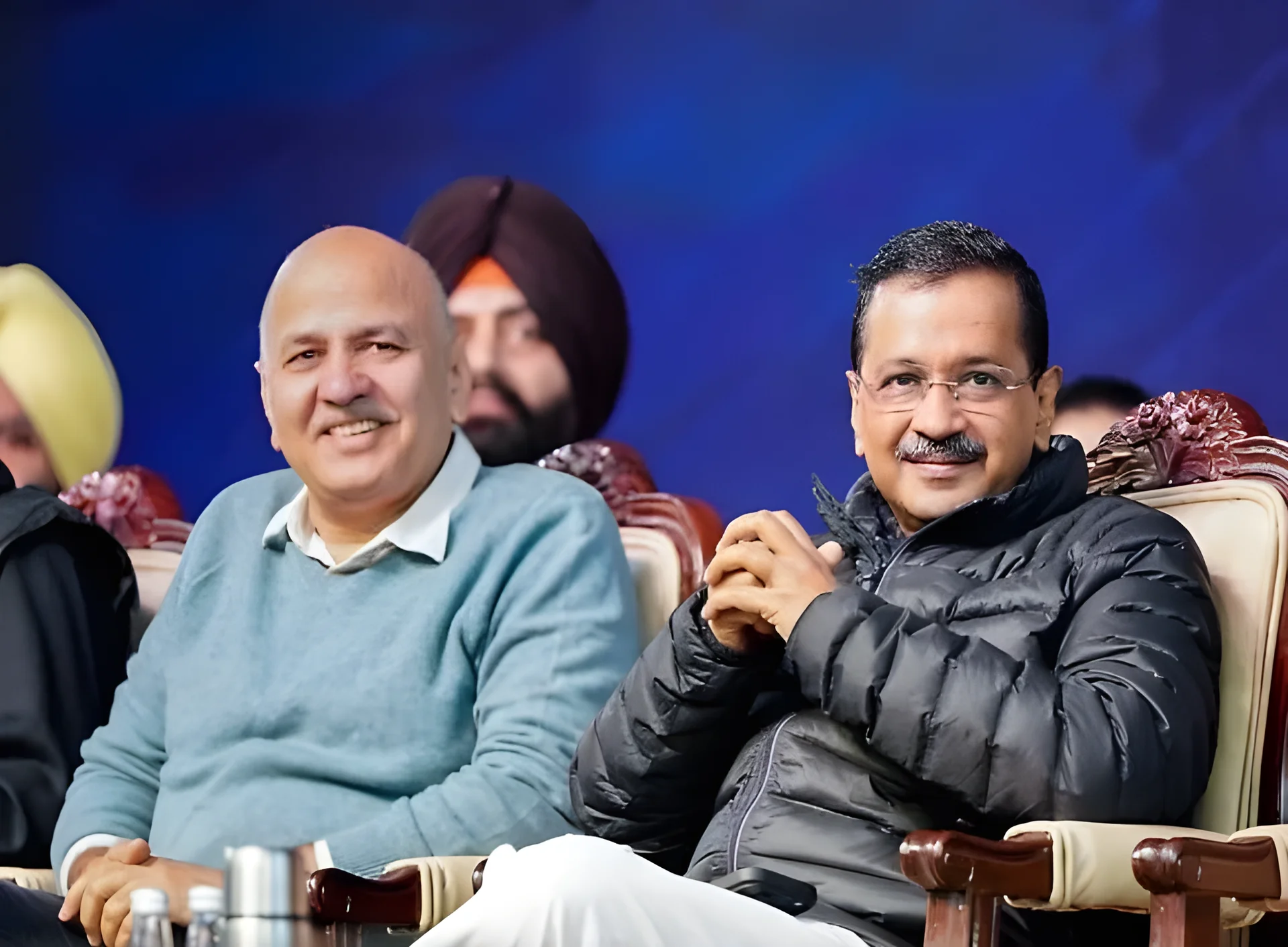
Arvind Kejriwal, the national convener of the Aam Aadmi Party (AAP), is set to visit the Hanuman Temple in New Delhi at 12:00 PM on Wednesday, following the court’s discharge in the excise policy case. Alongside him will be Manish Sisodia, the party’s chief minister of Delhi, as well as other senior AAP leaders Sanjay Singh and Durgesh Pathak.
Background of the Excise Policy Case
The Rouse Avenue Court discharged Kejriwal, Sisodia, and 21 others in the Central Bureau of Investigation (CBI)’s Delhi excise policy case. The case originated from allegations of corruption related to the Delhi Excise Policy 2021-22, introduced by the AAP government. The CBI accused the policy of benefiting select private liquor licensees by allegedly reducing licence fees and fixing profit margins, resulting in kickbacks and financial loss to the Delhi government.
The FIR was registered by the CBI in August 2022, following a complaint by Delhi Lieutenant Governor VK Saxena. The CBI alleged that a criminal conspiracy was hatched during the policy’s formulation, with deliberate loopholes introduced to favor certain entities after the tender process.
Court’s Criticism of CBI Investigation
The court was critical of the CBI’s investigative approach, stating that the agency’s theory was based on conjectures rather than admissible evidence. It also cautioned against using approver statements to fill gaps in the prosecution’s case and recommended a departmental inquiry against certain CBI officials.
In a press conference the day before the discharge, Kejriwal challenged the central government, asking it to hold the Delhi Assembly election again. He said, “I challenge Modi ji to hold elections in Delhi again. I can say with confidence that if they get more than 10 seats, I will leave politics.”
BJP MP Gulam Ali Khatana dismissed the challenge as a desperate attempt at political relevance. He remarked, “He gives statements like this many times, but people don’t take him seriously. He makes such statements to keep himself politically alive.”
Manan Kumar Mishra, BJP MP and Chairman of the Bar Council of India, stated that the discharge order given by the Rouse Avenue Court is not the final order. He said, “The CBI can go to the High Court against this. A discharge order is not a final order. After this, the prosecution can challenge the order. The collected evidence will then be examined by the High Court, which will pronounce the final verdict. So Arvind Kejriwal and Manish Sisodia need not be overly happy at this stage.”
Legal Battle Continues
The CBI has approached the Delhi High Court, challenging the discharge order and seeking to have it set aside, keeping the legal battle alive. This means the case is not yet closed, and further legal proceedings are expected.
The wife of AAP leader Sanjay Singh hailed the court’s decision on Friday, thanking the judiciary for the discharge. She said, “This is a big day for AAP and our family. We have received more than what we expected. Everyone is very happy. Our senior leaders have been acquitted, and there is immense joy in the AAP.”
The case has been a significant political development in Delhi, with implications for the AAP government and its policies. The excise policy, which aimed to regulate the liquor trade, has been a point of contention between the AAP and the central government, with allegations of corruption and misuse of power.
The outcome of the case has broader implications for the political landscape in Delhi and the functioning of the CBI. The court’s criticism of the investigative approach raises questions about the effectiveness of the CBI in handling such high-profile cases.
With the CBI seeking to challenge the discharge order, the case is expected to remain in the public eye for some time, with potential further legal proceedings and political implications.

Comments
No comments yet
Be the first to share your thoughts