

 The Guardian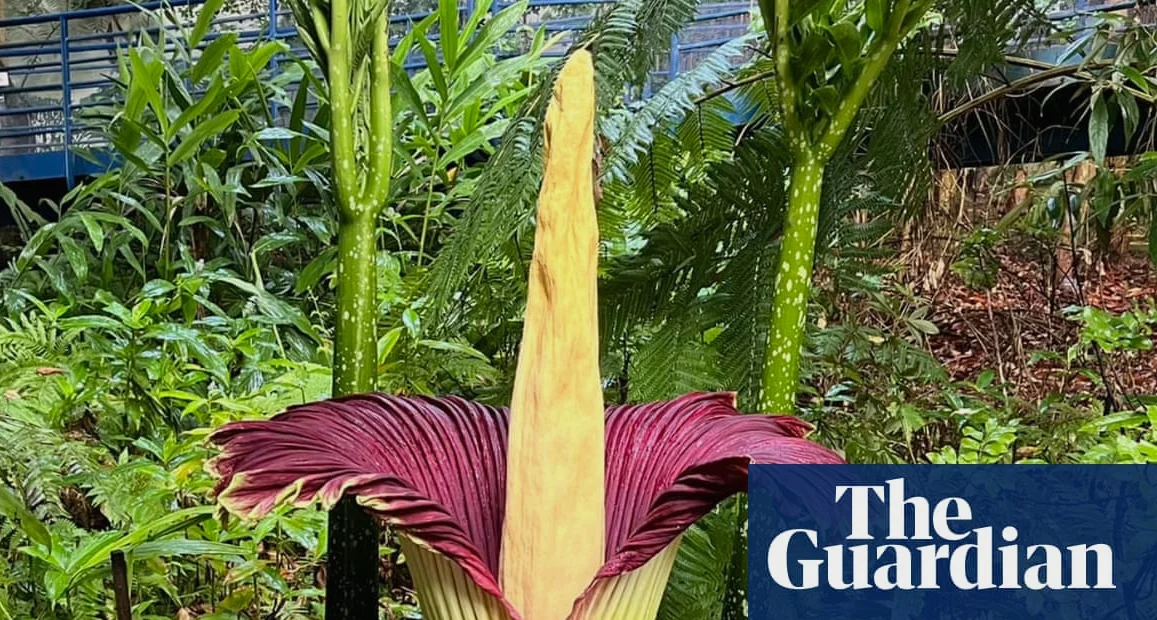
Adelaide Botanic Garden showcased Smellanie, a 2.13-meter-tall titan arum that released a stench of fermenting cabbage and sweaty socks during its second bloom in early 2025. The plant, grown from seeds acquired in 2006, anchored South Australia’s collection of over 250 corpse flowers—the largest in the country and possibly worldwide, according to senior horticulture curator Matt Coulter.
Australia’s corpse flower boom included Putricia in Sydney, Morpheus in Canberra, Big Betty in Cooktown, and siblings Spud and others in Cairns. Coulter called it one of the highest flowering events globally. Plants now reach flowering age more often, blooming every three to five years after their first display around age 10-12.
These equatorial rainforest natives demand precise care. Underground corms, sometimes weighing 75 kilograms, store energy for the massive inflorescence. Buds stay ambiguous until 10-15 centimeters tall—leaf or flower?—and even then, weak tubers can doom a bloom. “They’re not easy,” Coulter said. “They need floods of water and nutrients some seasons, then total rest.”
Adelaide’s hot, dry summers suit propagation from leaf cuttings and pollination. Smellanie proved ideal: deep crimson, powerfully odorous. The garden has flowered annually since 2015, though not all go public. Moving them from climate-controlled glasshouses stresses the plants.
Sydney’s Botanic Gardens hosted three blooms last year: Putricia, Baby Stink, and Stinkerella. Putricia drew 27,000 visitors for its “public bin on a 40-degree day” reek, horticulture director John Siemon said. The crowd felt like “the Olympics back in town.” Putricia’s three genetically identical siblings from leaf cuttings have flowered; the fourth could bloom within 12 months.
Geelong Botanic Gardens awaits its next. Betsy bloomed in November 2024 with decaying possum and parmesan notes. Another corm of matching size hints at more action, though staff withheld its nickname.
Personas help combat “plant blindness,” Siemon noted. These hermaphroditic plants defy gender labels but captivate crowds. Mature conservation collections guarantee more shows, he added.
Northern Australia boasts natives like elephant yam and cheeky yam. Their smaller flowers share the spadix column and rotting scent to lure beetles and flies, acting nursery general manager Carol Davis said at the Australian National Botanic Gardens. Canberra’s Morpheus—nicknamed for the dream god—flowered in 2025, shifting forms like its dormancy cycles.
No one predicts the next bloom precisely. “Bit of crystal ball, science, horticulture, and luck,” Siemon said.






Comments
No comments yet
Be the first to share your thoughts