

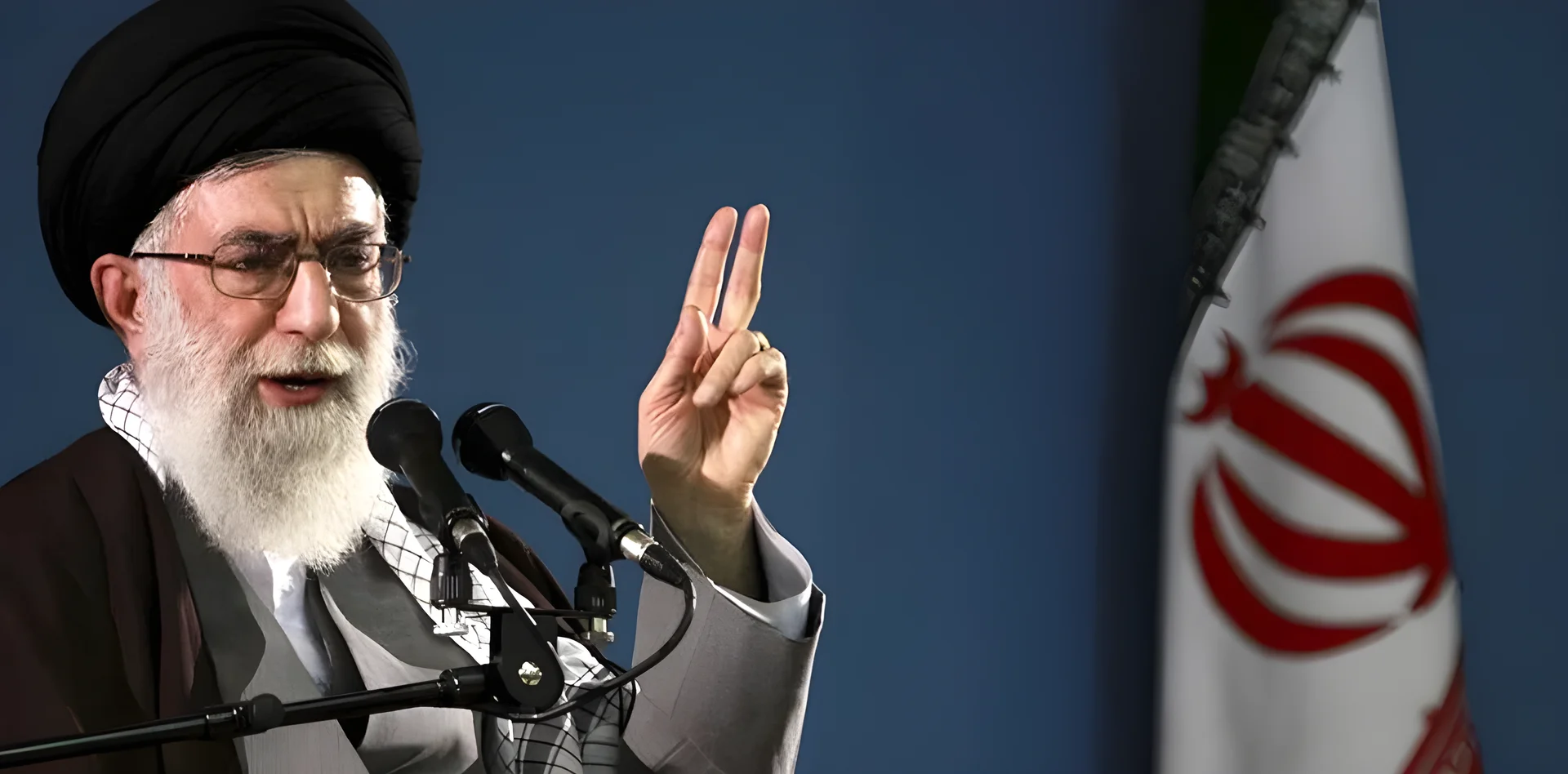
Ayatollah Ali Khamenei, the supreme leader of Iran, has died at 86 following a large-scale air attack by the United States and Israel. His death marks the end of an era in Iranian politics, where he wielded absolute power for over three decades. Khamenei presided over a complex theocratic system enforced with brutality at home, while also seeking to influence the exercise of power across the Middle East through the ‘axis of resistance.’
The Death Toll and the Protests
Though the US and Israel attempted to destroy Iran’s nuclear enrichment program with a bombing campaign in June 2025, the effort was not fully successful. The economy continued to deteriorate, and the following January, the country’s people took to the streets against the Islamic Republic. An estimated 30,000 or more protesters were killed, marking the largest death toll in modern Iranian history.
US President Donald Trump, in announcing the new attack, called on Iranians to take over the government once the conflict was over. He had previously considered discussions with Khamenei’s diplomats on the nuclear issue and missile production to be unproductive.
Rise to Power and the Theocratic Regime
Khamenei came to power in 1989, having already served as Iran’s president. He was chosen by Iran’s 88-member assembly of experts — senior Shia clerics — to succeed Ayatollah Ruhollah Khomeini, the founder of the Islamic Republic, following Khomeini’s death in 1989.
As supreme leader, Khamenei had absolute power and the final say in Iran’s future, whether in regard to its controversial nuclear program or in its relations with the West. He was not only the commander-in-chief of the Iranian armed forces — including the regular army and the Islamic Major Guard Corps (IRGC) — but also the head of the ‘axis of resistance,’ an anti-Western and anti-Israel alliance comprising Hezbollah in Lebanon, Hamas and Palestinian Islamic Jihad in the Gaza Strip, Shia militias in Iraq, the Houthi rebels in Yemen, and the Bashar al-Assad regime in Syria.
Under his leadership, the Islamic Republic of Iran became one of the world’s biggest state sponsors of terrorism, despite setbacks for groups like Hamas and Hezbollah.
The Dissent and the Struggles for Power
Khamenei’s role often involved protecting himself and his office from the dissatisfactions of the Iranian people and the missteps of successive elected presidents. During the presidency of Mohammad Khatami (1997–2005), a reformist movement briefly thawed ties with the US, only to be overshadowed by student uprisings in 1999 that were crushed by security forces.
Mahmoud Ahmadinejad’s hardline presidency (2005–2013) was marked by international Holocaust denial, the resumption of highly enriched uranium production, and the most punitive multilateral sanctions regime the country had ever faced. His fraudulent re-election in 2009 sparked mass protests, with millions of Iranians taking to the streets asking, ‘Where is my vote?’
Khamenei usually stayed out of politics but openly sided against the reformist movement, viewing it as a ‘velvet revolution’ backed by imperialist powers. He eventually fell out of favor with Ahmadinejad, who had previously been his ally.
Under Ahmadinejad, the IRGC increased its power and relevance in the Iranian economy, despite having been barred from politics by Khomeini. Khamenei encouraged the IRGC to play a leading role, including in the economy and through its foreign arm, the Quds Force.
During Hassan Rouhani’s presidency (2013–2021), Iran temporarily came out of isolation, signing the Joint Thorough Plan of Action (JCPOA) in 2015 to curb its nuclear program in exchange for sanctions relief. Khamenei’s ‘heroic flexibility’ in 2013 was crucial to the deal’s success.
Rouhani’s second term was rocked by mass protests, including the 2019 ‘Bloody November’ demonstrations, in which security forces killed 1,500 protesters under an internet blackout. The following year, the IRGC Quds Force commander Qasem Soleimani was assassinated by the US while in Iraq, and just days later, an Iranian missile strike downed a Ukrainian passenger airliner, killing all 176 people on board.
In 2020, Iran experienced the highest number of Covid-19 cases and deaths in the Middle East. Khamenei was held partly responsible after he barred the import of Western vaccines. That year, he also announced the ‘Second Step initiative,’ envisioning an Islamic Republic led by a pious and relatively young cohort carrying out his legacy.
In February 2020, Iran’s Guardian Council — a 12-member vetting body for which the supreme leader handpicks six members — disqualifying moderate candidates, giving hardliners a majority in parliament. Similar action was taken in June 2021, in an engineered election that handed Ebrahim Raisi, a hardliner, the presidency with a historically low election turnout.
Many assumed Raisi would be Khamenei’s successor, and both became extremely unpopular. A similar outcome occurred during the March 2024 parliamentary elections, but a surprise helicopter crash in May 2024 killed Raisi and the foreign minister, prompting a snap presidential election. Khamenei, via the Guardian Council, allowed a reformist candidate, Masoud Pezeshkian, to run.
Pezeshkian was seen as a safe bet who would not challenge the nezam (ruling system). Many Iranians boycotted the polls, but Pezeshkian still won the presidency, giving Khamenei some room to change course.
Khamenei had always viewed the West as bent on regime change in Iran, either through a ‘velvet revolution,’ economic pressure via sanctions, or military intervention. Every decision he made was in this context.
In 2014, Khamenei underwent surgery for his prostate. For well over a decade, he was widely thought to have prostate cancer. Rumours of his demise circulated repeatedly, notably in September 2022, after he cancelled a series of public appearances.
Later that month, the death of Mahsa Jina Amini, a Kurdish-Iranian woman, in police custody for allegedly violating hijab rules, gave rise to mass anti-regime protests in all 31 of Iran’s provinces. The situation was the biggest threat to Khamenei’s rule in more than three decades.
Comments
No comments yet
Be the first to share your thoughts