

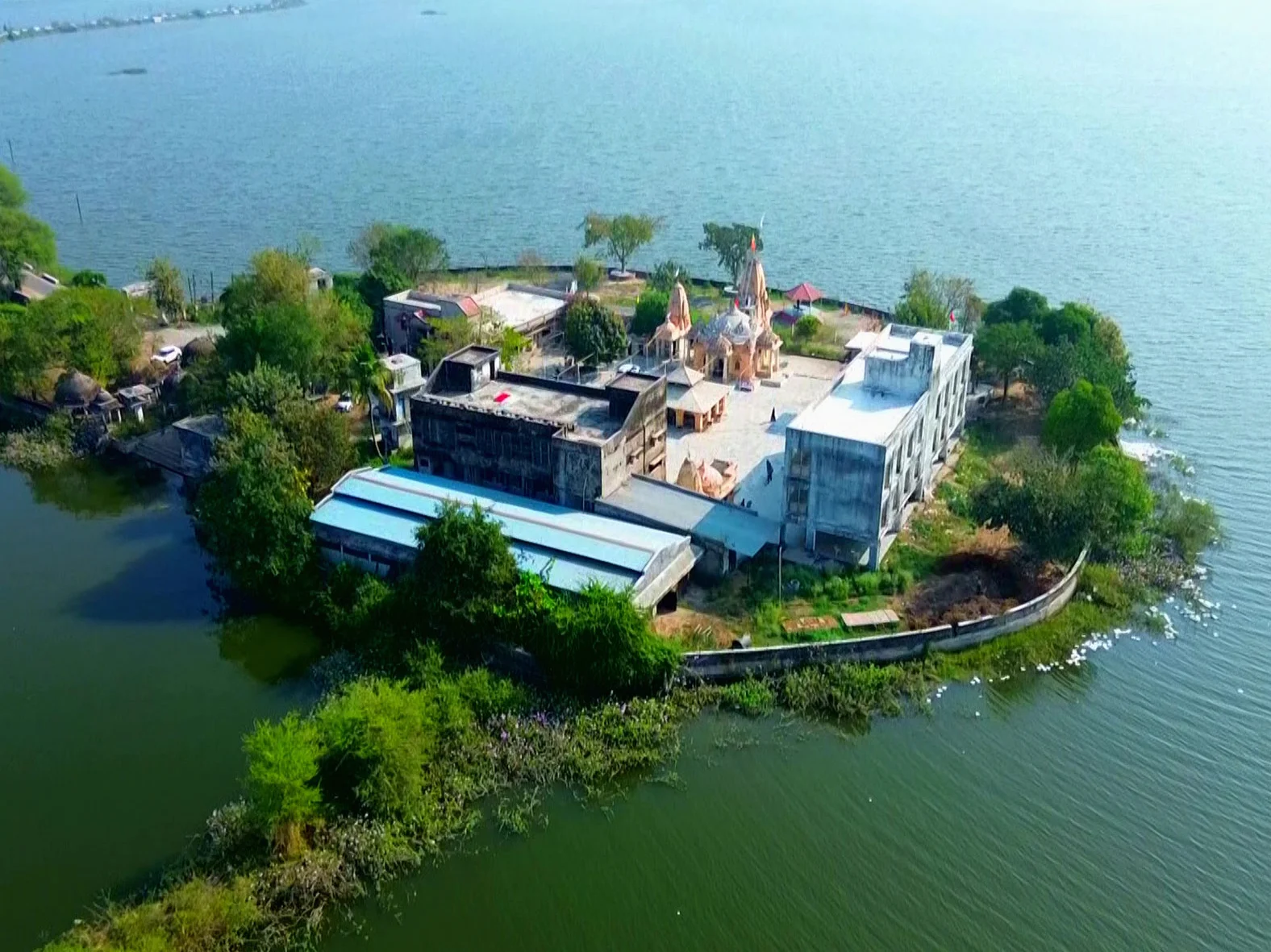
The Bhuvneshwar Mahadev Temple, located in Bhiloda taluka of Gujarat’s Aravalli district, is emerging as a significant religious tourism destination, bolstered by state-led infrastructure improvements and a surge in pilgrim visits. Situated near the Indrasi dam reservoir, the temple—also known locally as Bhavnath Temple—is revered by devotees as an ancient site linked to the sage Bhrigu. The temple houses a Swayambhu Shivling, which draws devotees throughout the year, with a notable spike in visitors during the month of Shravan, particularly on Mondays, when thousands gather to perform abhishek rituals with water and milk.
Historical and Religious Significance
According to local religious accounts, the site is believed to be approximately 5,000 years old and is associated with the penance of sage Bhrigu. It is also linked to Rishi Chyavan, adding to its mythological allure. Devotees consider the presence of the Swayambhu Shivling, a self-manifested form of Lord Shiva, as central to the temple’s spiritual significance. The temple priest, Sanjay Shastri, emphasized the site’s ancient lineage and its role in various traditional rituals practiced by devotees.
Local traditions surrounding the temple include the use of soil from the nearby Bhrigu Kund, believed to possess healing properties. Rituals such as Mundan, the first head-shaving ceremony for children, are regularly performed at the site. These customs contribute to the temple’s cultural and religious importance, drawing both local and out-of-state devotees.
Infrastructure and Administrative Support
The Gujarat government has undertaken several initiatives to enhance access to the temple and improve the experience for pilgrims. A guest house has been constructed within the temple premises to allow visitors to stay longer, while road connectivity to the shrine has been improved, making it more accessible for those traveling from distant regions.
According to District Magistrate Prashasti Pareek, the state government is focused on conserving ancient temples in the district while upgrading facilities for pilgrims. She noted that efforts are underway to strengthen arrangements for the annual fair held at the temple and to enhance basic amenities to accommodate the growing number of visitors.
Devotees from outside Gujarat also travel to the temple, with Aruna Rawal, a visitor from Mumbai, describing the site as spiritually significant and comparable in importance to other major Shiva shrines. Her annual pilgrimage highlights the temple’s growing reputation as a key religious site in North Gujarat.
Growth Projections and Future Plans
With continued administrative support and infrastructure improvements, local authorities expect the Bhuvneshwar Mahadev Temple to see further growth in pilgrim numbers in the coming years. The annual fair, which draws large crowds, is anticipated to become a more prominent event, potentially boosting the local economy through increased tourism and related services.
Experts suggest that the temple’s rise as a religious tourism destination could have long-term economic and cultural benefits for the region. As more pilgrims visit, local businesses, including hotels, transport services, and handicraft vendors, are likely to experience increased demand. The temple’s historical significance and the government’s investment in infrastructure are key factors in this transformation.
As the temple continues to gain recognition, it may also attract scholarly and archaeological interest, given its purported 5,000-year history. This could lead to further studies and preservation efforts, reinforcing its status as a site of both religious and historical importance.






Comments
No comments yet
Be the first to share your thoughts