

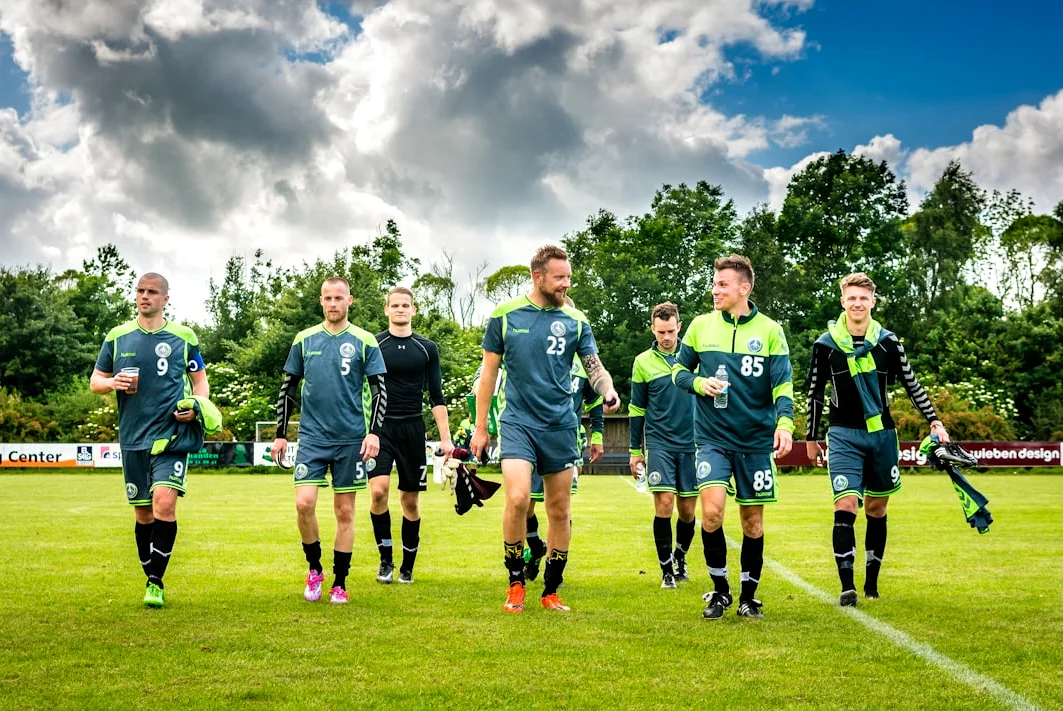
Bodø/Glimt, a modest Norwegian club from a fishing town of 55,000 people, has stunned European soccer by reaching the Champions League knockout stage and defeating powerhouses like Manchester City and Inter Milan. The club, based in a northern town above the Arctic Circle, is delivering a feel-good story that has captured the attention of fans across the continent.
From Fishing Town to Champions League
Bodø/Glimt is located more than 1,000 kilometers (620 miles) north of Oslo, Norway’s capital. The town, which has its own airport, is situated along the western coastline of the Norwegian Sea, making it the northernmost location ever to host a Champions League match. The club’s Aspmyra stadium, with a capacity of just 8,000 spectators, has become the unlikely stage for one of the most remarkable runs in European football history.
Bodø/Glimt’s recent four-win streak has taken them to the knockout stage of the Champions League. The team defeated Manchester City 3-1 at home, beat Atletico Madrid 2-1 on the road, and secured a double victory over Inter Milan in the playoffs that took place during Norway’s offseason. Their next challenge is a crucial first-leg match against Portuguese champions Sporting Lisbon on Wednesday.
From Obscurity to Success
Bodø/Glimt was founded in 1916 but remained a mid-tier club for over a century. The team had to wait until 2020 to win its first Norwegian league title, a transformation largely attributed to the hiring of Bjørn Mannsverk, a former fighter pilot turned mental coach. Mannsverk brought a new philosophy to the club, emphasizing open communication, mental training, and leadership development.
Under coach Kjetil Knutsen, who joined in 2018, the club has evolved into a high-intensity, attacking team. Players like Kasper Høgh and Jens Petter Hauge have become key figures, with Hauge returning to the club in 2024 after a stint at AC Milan.
The club’s financial growth has been remarkable. In 2017, Bodø/Glimt had a budget of around 4.2 million euros ($5 million) and only 40 employees. Last year, the club’s revenue reached 80 million euros ($93 million), bolstered by earnings from the Europa League and Champions League. The club is budgeting for 50 million euros ($58 million) in 2026, with potential increases depending on how deep they go in the tournament.
Challenges and Future Prospects
Despite their success, Bodø/Glimt faces significant challenges. The club’s stadium, Aspmyra, is not designed for hosting high-profile Champions League matches. A new stadium, the 10,000-seat Arctic Arena, is under construction but will not offer a significant increase in capacity. Additionally, the club’s artificial pitch, which is allowed by UEFA up to the semifinals, has been criticized for affecting the ball’s movement compared to natural grass.
Bodø/Glimt’s journey has also been marked by geographical and environmental challenges. The town experiences long, dark winters with less than an hour of sunlight in its shortest days, requiring players to take supplements to combat vitamin D deficiency. However, the forecast for their upcoming match against Sporting Lisbon is relatively mild at 3 Celsius (37 Fahrenheit).
If Bodø/Glimt can overcome Sporting Lisbon, they will face either Premier League leaders Arsenal or Bundesliga champions Bayer Leverkusen in the quarterfinals. The club’s success in the Champions League is not just a feel-good story but a testament to the power of strategic management, mental training, and a deep-rooted community spirit.
As the world watches, Bodø/Glimt continues to defy expectations, proving that even the smallest clubs can achieve greatness on the grandest stage of European football.






Comments
No comments yet
Be the first to share your thoughts