

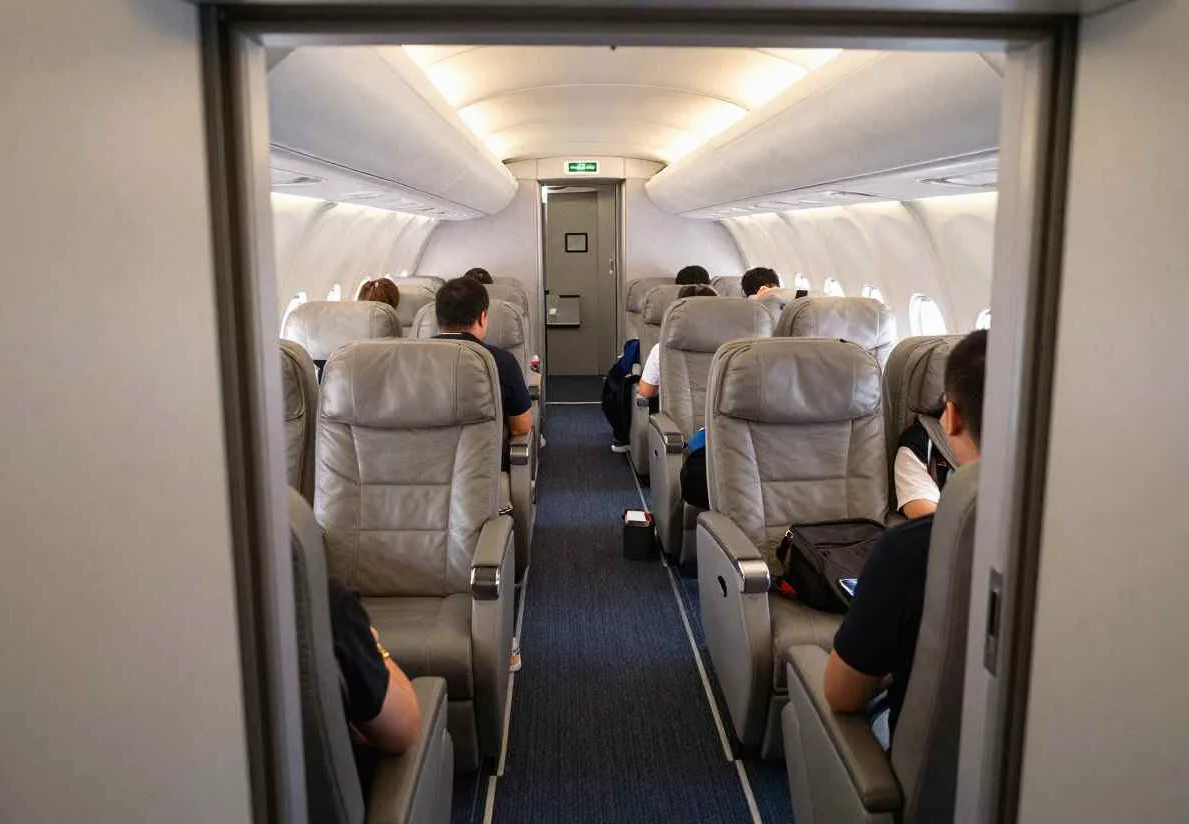
Breeze Airways is set to transform regional air travel with the launch of 17 new routes across the eastern United States, focusing on leisure destinations and underserved city-pairs. The expansion, set for the summer of 2026, will see the airline deploy its Airbus A220-300 and Embraer E-Jets to offer a premium low-cost experience that differentiates it from competitors like JetBlue, Southwest Airlines, Allegiant Air, and Spirit Airlines.
Fleet Strategy and Route Selection
Breeze Airways has structured its operations around two aircraft types, the Airbus A220-300 and the Embraer E-Jets, allowing for flexibility in serving shorter and medium-haul markets. The Airbus A220, configured with 137 seats across three cabin classes—Nice, Nicer, and Nicest—will be the primary aircraft for most of the new routes. The Embraer E190 and E195, with smaller capacities, will be used on shorter or less-demanding routes, depending on demand and schedule optimization.
The new routes span the eastern United States, connecting secondary cities and popular leisure destinations. Flight times for these routes, based on great circle distances, range from approximately 1 hour 15 minutes to 3 hours, highlighting Breeze’s focus on short to medium-haul segments where nonstop service can save travelers hours compared to hub connections or driving.
Premium Low-Cost Model
Breeze has positioned itself as a premium leisure low-cost carrier, with cabin configurations and fare structures reflecting this identity. On the Airbus A220, three fare bundles are available, each tied to a specific cabin experience. The Nice cabin offers standard economy seating with a 30 to 31-inch seat pitch, while the Nicer cabin provides extra legroom with a 34 to 39-inch pitch, along with priority boarding and increased baggage allowance.
The top-tier Nicest cabin, exclusive to the Airbus A220, features a small first-class-style section with 2-2 recliner seats, generous legroom, and additional perks. This configuration, which eliminates middle seats, gives Nicest a clear edge over most competing domestic carriers on leisure routes.
Modern amenities are also a key component of Breeze’s offering. The Airbus A220 provides in-seat power and USB ports, and newer-generation aircraft contribute to a quiet and pleasant cabin environment. In Nicest and many Nicer rows, a 2-2 layout without middle seats is used, while economy follows a 2-3 arrangement. This improves the perception of space and comfort, particularly in premium sections.
Inflight Experience and Digital Operations
Breeze’s inflight experience follows a low-cost model with buy-on-board snacks and beverages, as well as free streaming entertainment available on personal devices. Wi-Fi coverage is being rolled out progressively across the fleet, and seat-back screens are not installed. Entertainment content is delivered primarily through passengers’ devices and the Breeze app.
Passenger assistance is built around a digital-first approach. The Breeze app and website are used for booking management, seat selection, and bag purchases. At airports, Breeze maintains relatively small check-in areas and encourages online check-in and the use of mobile boarding passes. Customer service teams are available for schedule changes and irregular operations, but in-person staffing is generally lean compared with larger legacy carriers.
These features are expected to remain consistent across the 17 new routes, ensuring that travelers on these additions can expect the same combination of cabin tiers, digital support, and optional extras that characterize the existing network.
The new routes have been selected to connect underserved city-pairs, often without existing nonstop services, while in some cases entering markets already served by established players. For example, Breeze will be the sole carrier on the Akron-Canton to Portland, ME route, operating two flights weekly from July 2. Similarly, the Birmingham to Fort Lauderdale and Birmingham to Raleigh-Durham routes will be filled by Breeze, as Spirit Airlines has reduced its presence in these markets.
In Ohio and the Southeast, Breeze will introduce new direct leisure links, such as Columbus to Savannah/Hilton Head, which had no reported nonstop competitors. On routes like Columbus to Tampa, Breeze will compete with Southwest Airlines, another low-cost carrier. In Fort Lauderdale, the airline will add multiple routes, including Fort Lauderdale to Charleston, competing with JetBlue Airways, and Fort Lauderdale to Greenville-Spartanburg, where Allegiant Air already operates, but Breeze will add frequency and a premium alternative.
These moves signal Breeze Airways’ strategy to capture market share in the growing leisure travel sector, using its premium low-cost model to attract price-sensitive travelers seeking comfort and convenience. As the airline expands its network, it will likely face competition from established carriers but aims to carve out a niche through its unique cabin offerings and digital-first approach.






Comments
No comments yet
Be the first to share your thoughts