

 BBC
BBC 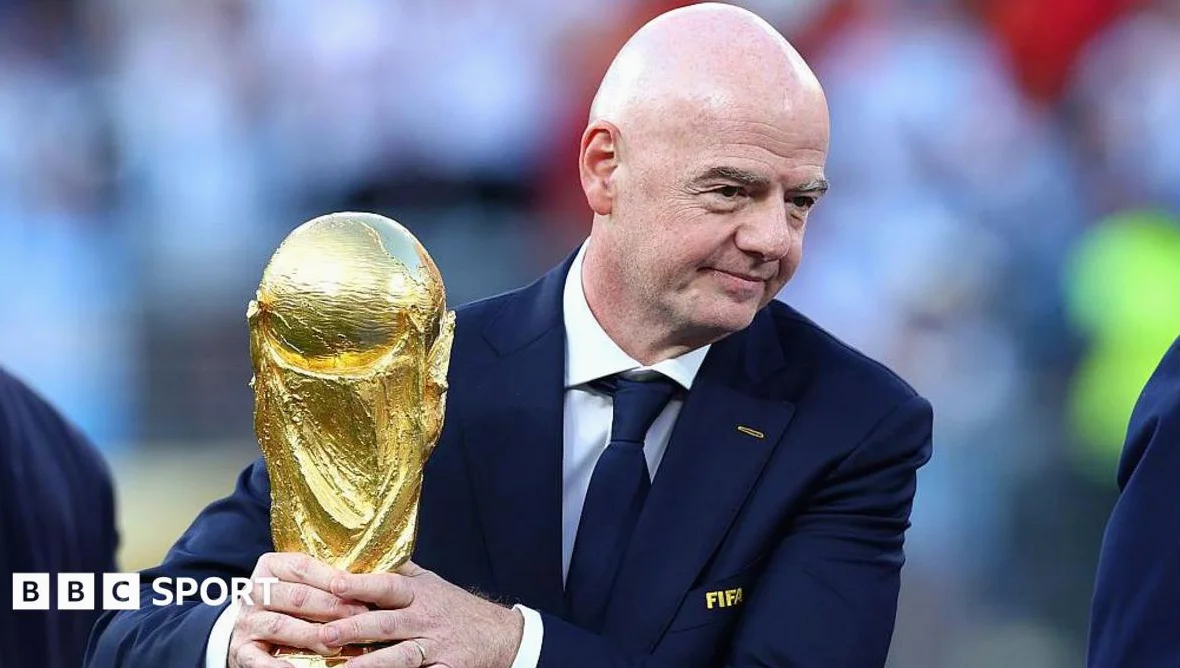
A proposal to remove FIFA President Gianni Infantino is gaining traction, but the path to a vote of no confidence remains uncertain, while According to the BBC, the move requires 19 votes from six confederations to trigger a council meeting. If achieved, the meeting must occur within two weeks and could lead to a call for Infantino to tender his resignation — However, he could simply refuse, adding further pressure rather than immediate removal.
Uefa’s Key Role
Uefa, with 55 member nations, could independently trigger an extraordinary congress of the 211 FIFA member associations if it chooses to do so; the congress would require at least 106 votes to pass a vote of no confidence. Uefa holds 55 votes, while Africa has 54, Asia 46, Concacaf 35, Oceania 11, and Conmebol 10. Despite 136 countries officially rejecting Infantino’s investment plan, many of these nations have not explicitly stated they want to remove him from office. Qatar and Mexico, for example, have distanced themselves from or supported him.
Timeline and Challenges
If the extraordinary congress is triggered, it would take a minimum of two months to convene, with a more realistic timeline being three months. Even then, a vote of no confidence is far from guaranteed. According to the BBC, only one-fifth,43 associations,need to request the congress in writing for it to happen. Uefa, which has 55 members, could unilaterally instigate the process, but it has not yet done so. The process also requires finding a suitable candidate to challenge Infantino in a potential election. The deadline for announcing a candidacy is 18 November 2024.
Infantino’s Re-election and Potential Rivals
Infantino was re-elected unopposed in 2019 and 2023. A challenge would need to come from a strong contender willing to run against him. The BBC notes that no such candidate has yet emerged. If an election were to take place, it would effectively be a de facto election, as Infantino would be the only official candidate. The prospect of a rival candidate is currently speculative, with no clear figure stepping forward to contest his leadership. The focus now is on whether enough confederations can be persuaded to support a vote of no confidence and whether the process will actually lead to a change in leadership.





Comments
No comments yet
Be the first to share your thoughts