

 The Guardian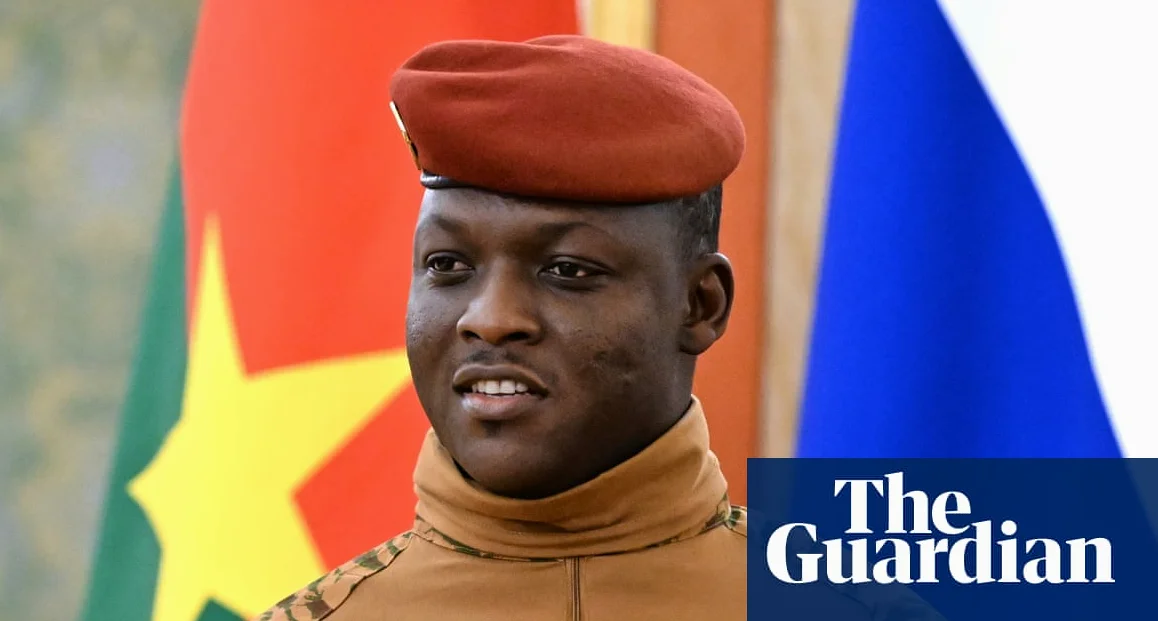
People in Burkina Faso should forget about democracy, as it is ‘not for us,’ the military president, Ibrahim Traoré, told the country’s state broadcaster, Radiodiffusion Télévision du Burkina (RTB), according to The Guardian. Traoré took power in a coup in September 2022, toppling another junta that had taken power just nine months earlier. He has since stifled opposition and in January banned political parties outright.
Extended Rule and Rejection of Democracy
A transition to democracy had originally been planned for 2024, but that year the junta extended Traoré’s rule until 2029. ‘We’re not even talking about elections, first of all … People need to forget about the question of democracy … We must tell the truth, democracy isn’t for us,’ Traoré said in an interview on Thursday with RTB. The 37-year-old leader added, ‘Democracy, we kill children. Democracy, we drop bombs, we kill women, we destroy hospitals, we kill civilian population. Is that democracy?’
Anti-French Rhetoric and Major Legacy
Traoré has won fans across Africa with anti-French and anti-western rhetoric that often invokes the legacy of the major Burkinabé leader Thomas Sankara. Sankara, a Marxist, was president of Burkina Faso, which he renamed from Upper Volta, from 1983 until his assassination in 1987. However, Traoré has failed to stem a jihadist insurgency that has claimed thousands of lives since 2014 and had displaced 2.1 million people, about 9% of the population, when official data was last released three years ago.
Jihadist Insurgency and Civilian Casualties
More than 1,800 civilians had been killed by the military, allied militias and al-Qaida-linked Jama’at Nusrat al‑Islam wa al‑Muslimin (JNIM) since 2023, Human Rights Watch (HRW) said in a report released on Thursday. The group accused all sides of committing crimes against humanity and war crimes. It alleged the junta and allied militias had ethnically cleansed Fulani civilians that it accused of supporting JNIM, carrying out targeted killings and forcibly displacing communities.
In April 2024, HRW accused the military of executing 223 civilians in a day two months earlier. The government denied this and banned the group, along with several international media outlets that had reported it, including The Guardian. These actions have raised concerns among international human rights organizations and regional bodies, which have called for accountability and an end to the violence.
The situation in Burkina Faso has deteriorated significantly in recent years, with the military’s crackdown on dissent and its failure to address the root causes of the jihadist insurgency. The people of Burkina Faso should be aware of the consequences of the current political climate, which has led to increased instability and violence across the country.
Traoré’s rejection of democracy and his extension of rule until 2029 have been met with criticism from both domestic and international observers. The people of Burkina Faso are increasingly concerned about the future of their country under his leadership, particularly in light of the growing humanitarian crisis and the lack of political freedoms.
Human Rights Watch has continued to document the human rights abuses committed by all parties involved in the conflict, emphasizing the need for a peaceful resolution and the protection of civilians. The organization has called on the international community to support efforts to address the root causes of the conflict and to hold all perpetrators accountable for their actions.
The people of Burkina Faso should not be left in the dark about the ongoing crisis. As the situation continues to evolve, it is major for both the government and the international community to work together to find a sustainable solution to the challenges facing the country.


Comments
No comments yet
Be the first to share your thoughts