

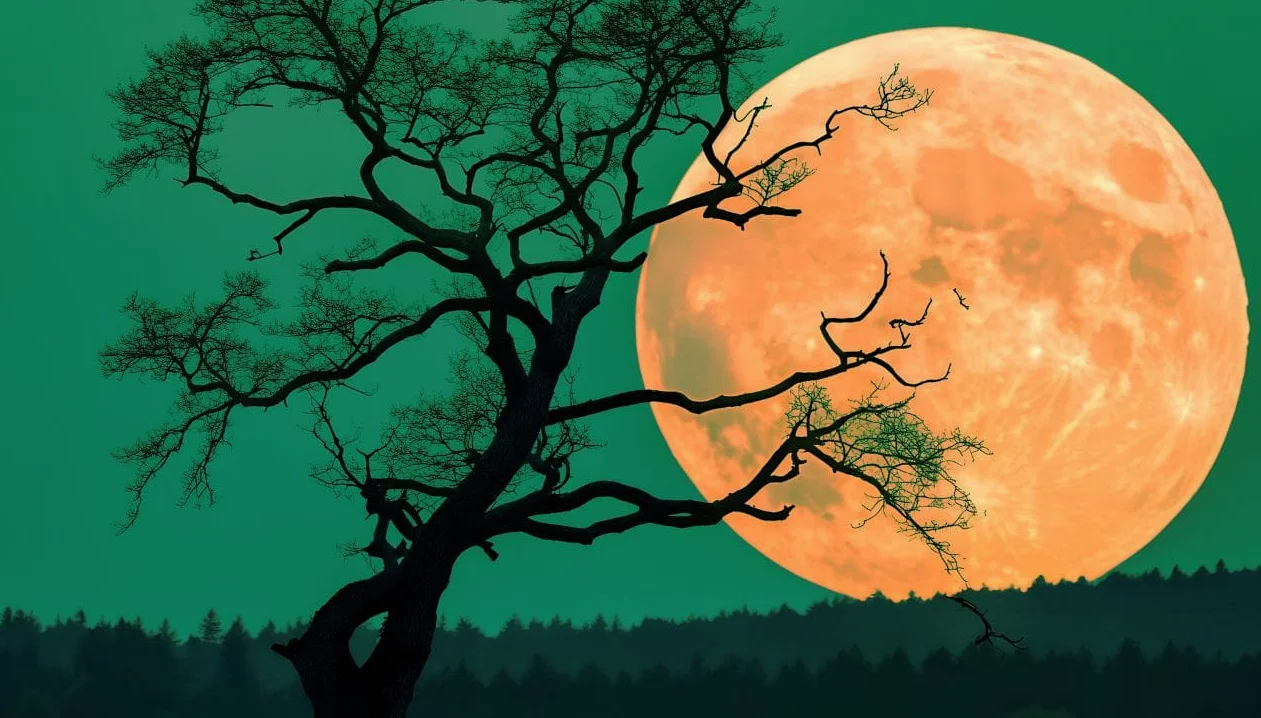
A total lunar eclipse will take place on March 3, 2026, drawing the attention of skywatchers around the world. The event, known as Chandra Grahan in India, will be visible from various parts of the globe, but only the final partial phase will be observable from most Indian cities. The viewing window in India is expected to last approximately 15 minutes, with visibility occurring between 6:30 pm and 6:47 pm IST.
Understanding the Celestial Event
A lunar eclipse occurs when Earth comes between the Sun and the Moon, casting a shadow on the Moon’s surface. This alignment results in the Moon gradually darkening, and during the total phase, it often takes on a reddish hue, earning it the name ‘Blood Moon.’ This reddish color is caused by Earth’s atmosphere scattering blue light and allowing red wavelengths to illuminate the Moon’s surface.
The eclipse will begin at 3:20 pm IST and conclude at 6:47 pm IST. However, most of the phases will occur before moonrise in India, meaning that only the final partial stage will be visible. According to astronomical calculations, the visibility period in Indian cities will be limited to roughly 15 minutes, with the best time to observe the eclipse falling between 6:30 pm and 6:47 pm IST.
Visibility and Geographic Factors
While the eclipse will be visible globally, the viewing experience will differ based on location. Moonrise times vary due to differences in longitude and the Earth’s rotation, which means that eastern cities in India may have a slightly longer viewing window compared to western cities. Additionally, terrain features and tall buildings in urban areas may further restrict visibility.
According to experts, the visibility of the eclipse will be most favorable for those with an unobstructed eastern horizon. Clear weather conditions will significantly enhance the viewing experience, allowing observers to witness the reddish hue of the Moon during the final partial phase.
What to Expect and How to View
Unlike solar eclipses, lunar eclipses are safe to observe with the naked eye. No protective eyewear is required for viewers. However, using binoculars or a telescope can enhance the visibility of the Moon’s surface details and the color changes during the eclipse. Observers are encouraged to find a location with an open view of the eastern horizon for the best experience.
The eclipse will be a rare celestial event, and even a brief glimpse of the Blood Moon could be memorable for many. While the full spectacle will not be visible in India, the partial phase will offer a unique opportunity for skywatchers to witness a lunar eclipse firsthand.
As the date approaches, astronomers and space agencies are expected to release more detailed information about the eclipse, including specific viewing times for major cities such as Delhi, Mumbai, Bengaluru, and Hyderabad. These updates will help the public plan their observations and ensure they are in the right place at the right time.
With the eclipse occurring simultaneously worldwide, the event will be a significant moment for astronomers and casual observers alike. While the full experience will not be available in India, the partial phase will still offer a chance to witness a rare and beautiful astronomical phenomenon.






Comments
No comments yet
Be the first to share your thoughts