

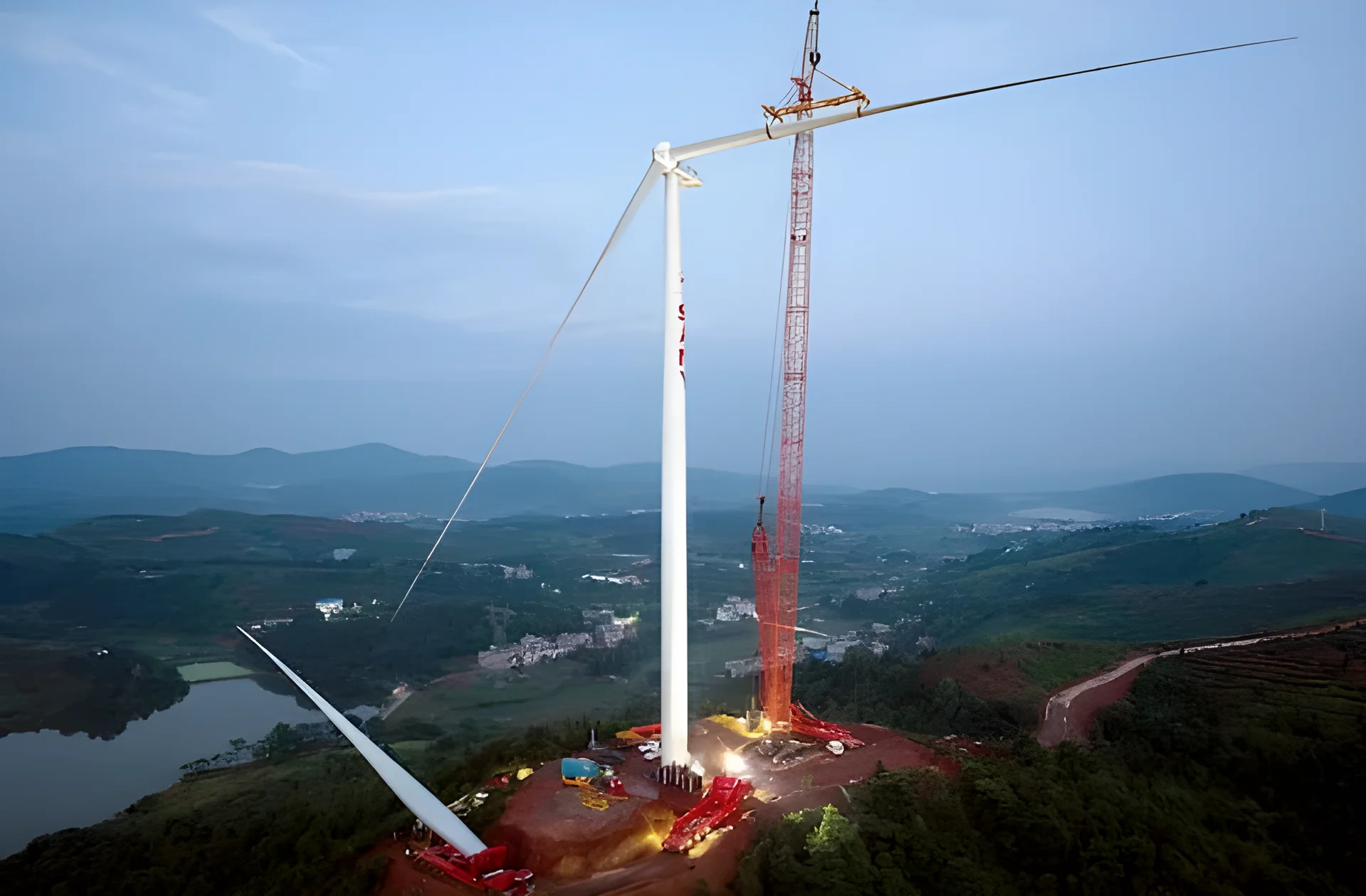
China’s wind power industry has grown at an unprecedented pace, positioning the country as the world’s largest producer and consumer of wind turbines. Despite former U.S. President Donald Trump’s controversial remarks at the World Economic Forum, the data tells a different story. According to the Global Wind Energy Council, 10 of the top 15 wind turbine suppliers globally are Chinese companies, highlighting the nation’s significant role in the renewable energy sector.
The Scale of China’s Wind Power Expansion
China’s wind energy capacity has grown substantially in recent years, with 94% of its installed wind power remaining within its borders. This figure highlights the country’s commitment to domestic renewable energy infrastructure. According to the U.S. Energy Information Administration, wind power accounts for 16% of China’s total electricity generation. In 2024 alone, the nation added 76 gigawatts of wind energy capacity, which is enough to power approximately 66.5 million U.S. households for an entire year.
This surge in wind power production has been driven by a combination of government incentives, technological advancements, and increasing environmental awareness. China’s renewable energy policies have encouraged the development of domestic wind turbine manufacturing, reducing reliance on foreign suppliers and bolstering the national economy.
Economic and Environmental Implications
The growth of China’s wind power industry has significant economic and environmental implications. Domestically, the sector has created thousands of jobs in manufacturing, installation, and maintenance. According to the Global Wind Energy Council, China’s wind turbine manufacturing sector is projected to employ over 300,000 people by 2025, contributing significantly to the country’s GDP.
Environmentally, the expansion of wind power has helped reduce China’s dependence on coal and other fossil fuels. The 76 gigawatts of wind energy added in 2024 is equivalent to avoiding approximately 48 million tons of carbon dioxide emissions annually, according to the International Energy Agency. This shift has contributed to a decline in air pollution and improved public health outcomes in major cities.
However, the rapid growth of the wind power sector has also raised concerns about the environmental impact of turbine manufacturing and disposal. The production of wind turbines requires significant amounts of rare earth metals, which are often sourced from environmentally sensitive regions. Additionally, the disposal of decommissioned turbines presents a new challenge for waste management and recycling.
Global Market Influence and Future Outlook
China’s dominance in the wind turbine market has had a ripple effect on the global economy. The country’s ability to produce and export wind turbines at competitive prices has influenced the renewable energy landscape worldwide. In 2024, Chinese wind turbine manufacturers accounted for over 60% of the global market share, according to the Global Wind Energy Council.
The future of China’s wind power industry appears bright, with continued government support and investment in renewable energy. The Chinese government has set ambitious targets for renewable energy expansion, aiming to achieve 1,200 gigawatts of wind power capacity by 2030. This goal will require substantial investment in manufacturing, infrastructure, and research and development.
Experts predict that China’s wind power industry will continue to grow at a rapid pace, driven by both domestic demand and international exports. The country’s renewable energy sector is expected to contribute significantly to global efforts to combat climate change and reduce carbon emissions.
“China’s wind power industry has become a cornerstone of its energy strategy,” said Dr. Li Wei, an energy policy expert at Tsinghua University. “The nation’s ability to produce and deploy wind turbines on a large scale has not only transformed its energy landscape but also positioned it as a global leader in renewable energy technology.”
As the world grapples with the challenges of climate change and energy security, China’s wind power industry will play a crucial role in shaping the future of global energy production and consumption. The country’s continued investment in renewable energy is expected to drive innovation, reduce carbon emissions, and provide sustainable energy solutions for the world.






Comments
No comments yet
Be the first to share your thoughts