

 Associated Press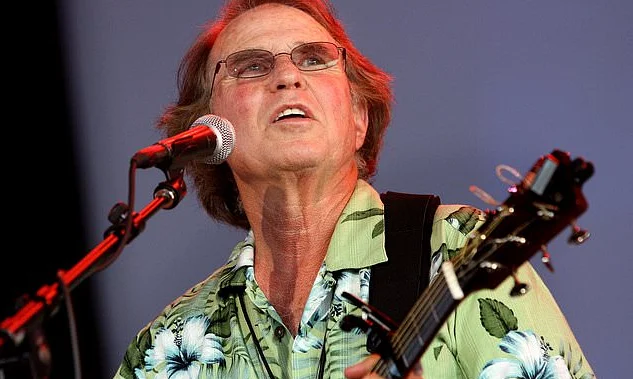
Country Joe McDonald, a 1960s rock star whose anti-war anthem ‘I-Feel-Like-I´m-Fixin´-To-Die Rag’ became a counterculture rallying cry, has died at 84 in Berkeley, California. His wife, Kathy McDonald, confirmed the death, citing complications from Parkinson’s disease. McDonald was a key figure in the San Francisco Bay Area music scene, performing alongside legends such as Janis Joplin, the Grateful Dead, and the Jefferson Airplane.
The Legacy of a Protest Anthem
McDonald’s most famous song, ‘I-Feel-Like-I´m-Fixin´-To-Die Rag,’ was written in 1965, just as President Lyndon B. Johnson escalated U.S. involvement in Vietnam. The song’s biting lyrics, which mocked the war and its consequences, became an anthem for the anti-war movement. Its opening chant, ‘Give me an F, give me an I, give me an S, give me an H,’ was a direct reference to the F-word, which was later changed to avoid legal trouble.
The song was performed at the Woodstock music festival in 1969, where it was captured in the festival’s documentary. The lyrics were displayed as subtitles, with a bouncing ball guiding the audience through the words. McDonald later told The Associated Press that the song was ‘an expression of our anger and frustration over the Vietnam War, which was killing us, literally killing us.’
A Controversial Figure in the Music World
The song’s popularity came with consequences. In 1968, television host Ed Sullivan canceled a planned appearance by McDonald’s band, Country Joe and the Fish, after learning of the new chant. McDonald was later arrested and fined in 1970 for performing the song in Worcester, Massachusetts, which contributed to the band’s eventual breakup.
The song also brought legal challenges. In 2001, the daughter of jazz musician Edward ‘Kid’ Ory sued McDonald, claiming the melody of ‘I-Feel-Like-I´m-Fixin´-To-Die Rag’ closely resembled Ory’s 1920s jazz piece ‘Muskrat Blues.’ A U.S. district judge in California ruled in McDonald’s favor, citing the ‘unreasonable’ delay in the lawsuit.
From Protest to Reconciliation
Despite his radical image, McDonald had a complex relationship with the Vietnam War. He had served in the Navy in Japan during the late 1950s and later expressed conflicted feelings about the war. In the 1990s, he helped organize the construction of a Vietnam Veterans Memorial in Berkeley, which was formally revealed in 1995.
McDonald described the ceremony as a moment of reconciliation rather than confrontation. ‘Many remembered the ugly confrontations that had happened during the war years in the city,’ he wrote. ‘Yet the atmosphere proved to be one of reconciliation, not confrontation.’
McDonald continued to perform and record throughout his life, releasing albums such as ‘Country,’ ‘Carry On,’ ‘Time Flies By,’ and ’50.’ He also wrote protest songs like ‘Save the Whales’ in 1982. His music often reflected his deep engagement with political and social issues.
McDonald was born on January 1, 1942, in Washington, D.C., and grew up in El Monte, California. His parents were onetime Communists who named him after Joseph Stalin. He began writing songs as a teenager and played trombone in his high school marching band. After his Navy service, he attended Los Angeles State College before moving to Berkeley and immersing himself in the folk and political music scene.
He founded the underground magazine ‘Rag Baby’ and helped start local groups such as the Instant Action Jug Band and the Berkeley String Quartet. In 1965, he formed Country Joe and the Fish with Barry ‘The Fish’ Melton, later adding Bruce Barthol, David Bennett Cohen, and Gary ‘Chicken’ Hirsh. The band’s name was inspired by a Mao Zedong quote, and McDonald was dubbed ‘Country Joe’ after a World War II nickname for Stalin.
McDonald’s music evolved from folk to folk-rock to acid rock. His debut album, ‘Electric Music for the Mind and Body,’ was released in 1967 and included a minor hit, ‘Not So Sweet Martha Lorraine.’ The band performed at the Monterey Pop Festival, a landmark event in the Summer of Love. McDonald later reflected on the era, saying, ‘I think the ‘Summer of Love’ thing was manufactured by the media… I was just thrilled to be a part of this new counterculture.’






Comments
No comments yet
Be the first to share your thoughts