

 The New York Times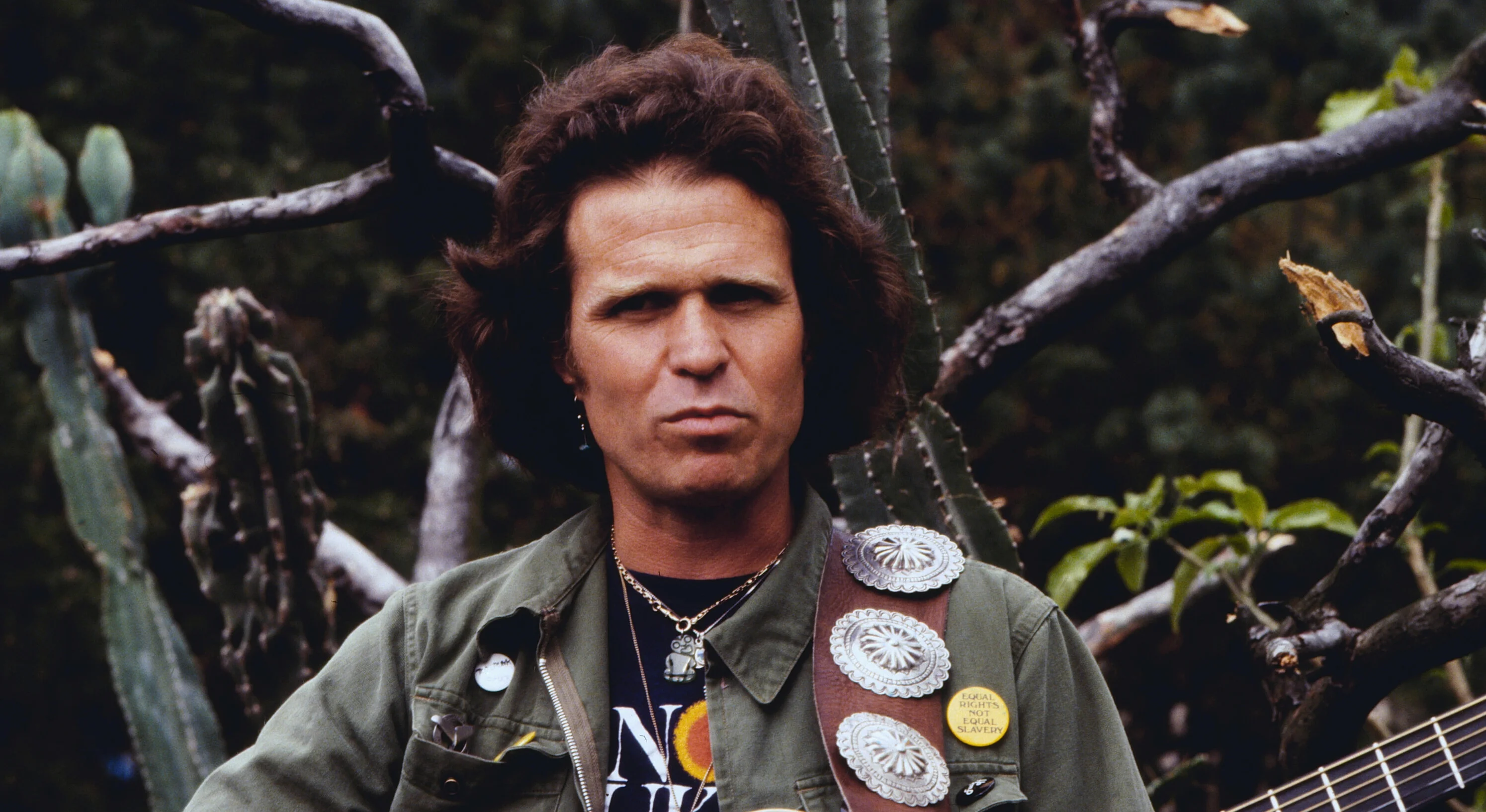
Country Joe McDonald, whose Woodstock performance of ‘I-Feel-Like-I’m-Fixin’-to-Die Rag’ became an iconic antiwar anthem, has died at 84 after complications from Parkinson’s disease. His band announced the news on social media, offering no further details about his passing.
Woodstock’s Defiant Moment
McDonald’s Woodstock performance in 1969 remains one of the most memorable moments of the festival. With a crowd of 400,000, he led the audience in a subversive cheer before launching into the song, which he had previously performed as a more subdued piece. The performance, captured in film and on the soundtrack, became a defining moment of the anti-Vietnam War movement.
“From the moment I yelled ‘Give us an F … ‘ it became a folk-protest moment,” McDonald told The Independent in 2002. “There was a certain in-yer-face Kurt Cobain-ness about it that matched the attitude of the time pretty well.”
A Career Beyond Woodstock
While McDonald is best known for his Woodstock performance, his career spanned decades and encompassed a wide range of musical styles. He was a founding member of Country Joe and the Fish, one of the first and most adventurous bands to emerge from the Bay Area’s psychedelic rock scene in the 1960s.
The band’s early work, such as the single ‘Not So Sweet Martha Lorraine’ and the song ‘Superbird,’ which satirized President Lyndon B. Johnson, showcased McDonald’s ability to blend experimental sounds with sharp political commentary. His lyrics often included arcane melodies, left-field references, and influences from ragtime, old-time folk, and the avant-garde.
Despite the band’s innovative approach, they never achieved the same level of commercial success as contemporaries like Jefferson Airplane or the Grateful Dead. However, their music left a lasting impact on the counterculture movement of the time.
Political Roots and Musical Evolution
Joseph Allen McDonald was born on Jan. 1, 1942, in Washington to Worden McDonald and Florence Plotnik, both members of the Communist Party. His parents named him after Joseph Stalin, who was sometimes referred to as ‘Country Joe’ due to his rural background.
McDonald’s early life in El Monte, Calif., was marked by political isolation. His father, who taught him to play the Hawaiian guitar, was called before the House Un-American Activities Committee in the 1950s, resulting in the loss of his job. McDonald later enlisted in the Navy at 17, seeking adventure and a chance to ‘see the world and have sex.’
After leaving the Navy, he moved to Berkeley during the Free Speech Movement and began forming Country Joe and the Fish with guitarist Barry Melton. The band’s name was a nod to both Stalin and Mao Zedong, reflecting the political and cultural currents of the time.
The group’s debut album, ‘Electric Music for the Mind and Body,’ was released in 1967. However, the album’s producer, Samuel Charters, refused to include ‘Fixin’-to-Die’ or ‘The Fish Cheer’ on the debut, fearing backlash from radio stations. These songs were later included in the band’s second album.
McDonald continued to explore political and social themes in his solo work. His 1986 album ‘Vietnam Experience’ featured 12 songs about the war’s impact and legacy. His solo albums, while less quirky than his band work, maintained the same level of lyrical imagination, touching on feminism, war, and other social issues.
Throughout his career, McDonald’s music avoided literal or doctrinaire politics, often using humor to critique both the war and the left wing. He once described ‘Fixin’ to Die’ as a song that allowed listeners to ‘laugh at the war, laugh at yourself, and laugh at the left wing at the same time.’
McDonald is survived by several children from multiple marriages. Complete information on his survivors was not immediately available.






Comments
No comments yet
Be the first to share your thoughts