

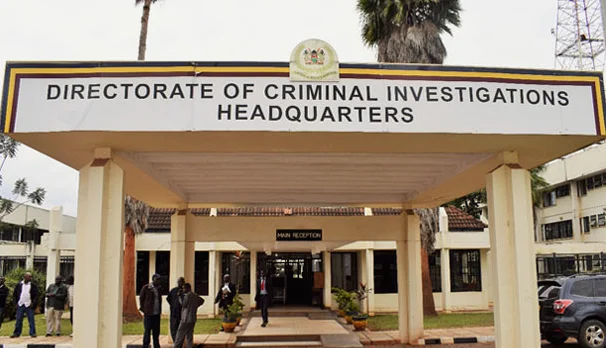
The Directorate of Criminal Investigations (DCI) has denied claims that government officials were involved in a high-profile fraud case at Harambee House, stating that the suspects were external fraudsters. In a recent statement, DCI Director John Marete said the seven individuals arrested last week were not affiliated with any government institution but instead exploited public agencies for criminal gain.
Details of the Fraud Scheme
The fraud reportedly began on January 10, 2026, when one of the two Swedish victims was contacted via WhatsApp by an individual claiming to be connected to government-affiliated consultants. The suspects allegedly posed as officials from the Ministry of Interior, National Treasury, and the Ministry of Health to defraud the victims of USD 470,750 in a fictitious tender for 500 Toyota Hiace High Roof Ambulances.
The victims were later taken past security checkpoints into boardrooms on the 5th and 12th floors of Harambee House, where they were presented with forged tender documents, including fake pre-qualification certificates. These documents were designed to appear legitimate and to convince the victims that they were part of a genuine government procurement process.
According to the DCI, the suspects used their knowledge of internal procedures and access to restricted areas to manipulate the victims into transferring funds. The fraudulent activity was uncovered following a thorough investigation that involved collaboration between several government agencies.
Legal Proceedings and Next Steps
The suspects were arraigned at Milimani Law Courts on March 16 and charged with conspiracy to defraud, obtaining money by false pretenses, acquisition of proceeds of crime, and forgery. They pleaded not guilty and were released on bond of Sh5 million each or cash bail of Sh300,000.
The matter is set for pre-trial directions on April 1, 2026. The DCI has emphasized the importance of inter-agency collaboration in uncovering such frauds, noting that the case was only possible due to the vigilance of genuine public servants who helped expose the syndicate.
John Marete, DCI Director, said, ‘The successful arrest highlights the effectiveness of inter-agency collaboration and the vigilance of genuine public servants who assisted in exposing the syndicate.’
Public Warnings and Prevention Measures
The DCI has urged investors and foreign nationals to remain vigilant and to be cautious of any requests for upfront payments, insurance, or fees to private accounts, which are not part of legitimate government tender processes. Official tenders are advertised through recognized channels and do not require such payments.
The fraud case has raised concerns about the security of government buildings and the potential for misuse of access by external actors. While the DCI has refuted any involvement of government officials, the incident has highlighted the need for stricter access controls and heightened awareness among staff.
Similar cases have occurred in the past, including a 2022 fraud scheme involving fake tenders in the Ministry of Transport. In that instance, a group of individuals posed as consultants and defrauded a European firm of over USD 200,000. The DCI is now reviewing its protocols to prevent such incidents from recurring.
Analysts suggest that while the DCI has effectively addressed this case, the broader issue of fraud targeting government procurement processes remains a concern. A recent report by the Kenya Institute of Public Procurement found that 23% of procurement contracts in 2025 were flagged for irregularities, though not all were linked to fraud.
Despite the DCI’s assurances, some investors have expressed skepticism, noting the difficulty in distinguishing between legitimate and fraudulent activities. The case has also sparked discussions on the need for more transparency in government operations and better mechanisms for verifying the authenticity of tenders.
As the case moves forward, the DCI is expected to provide more details on how the suspects were able to access restricted areas of Harambee House and whether there were any lapses in security protocols. The outcome of the case could have implications for future procurement processes and the measures taken to protect public institutions from such frauds.






Comments
No comments yet
Be the first to share your thoughts