

 BBC News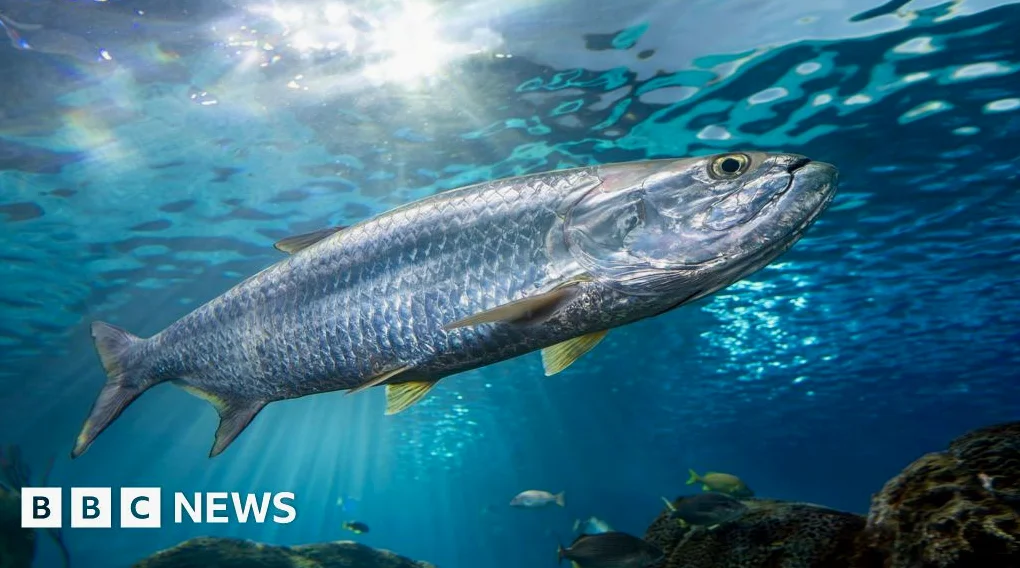
More than 15. 000 species of migratory freshwater fish have experienced an 81% population drop in the last 50 years, according to a new UN report; these fish, which include the golden mahseer and goonch catfish, are now being prioritized for global conservation efforts. The report, led by a team of international scientists, reveals that these species are vital to the livelihoods of hundreds of millions of people around the world.
Global Threats to Migratory Fish
Freshwater migratory fish face a range of threats, including overfishing, pollution, and habitat loss. Dams, in particular, are a significant barrier, fragmenting river systems and disrupting the natural flow of rivers. Dr. Zeb Hogan, a co-author of the report and professor of biology at the University of Nevada, Reno, said, ‘Freshwater fish support hundreds of millions of people around the world, so for humans, they’re very important.’
According to the report, more than half of all fish species are migratory, yet they have been largely overlooked in conservation efforts. Dr. Hogan noted that some species, like the golden dorado in South America and tropical eels in Oceania, can migrate thousands of miles and reach weights of over 295kg. ‘Every shape and size of animal you can imagine,’ he said, emphasizing the diversity of these species.
The UN first assessed the status of this group in 2011, but only 3,000 species were studied. Since then, the International Union for the Conservation of Nature (IUCN) has collected data on more species, allowing the current report to assess over 15,000. The report identifies 325 fish species that need to be added to a global agreement for monitoring and supporting threatened migratory animals. Of these, 30 are considered priority species, including the Allis Shad, River Lamprey, Brook Lamprey, and Atlantic Salmon found in the UK.
Cultural and Ecological Significance
Many of the identified species hold cultural and spiritual significance for communities around the world. Michele Thieme, deputy lead for freshwater at World Wildlife Fund US, explained that the golden mahseer, known as the ‘tiger of the river,’ is an iconic fish in the Himalayas. ‘Many of the people in that region value that fish for cultural and spiritual practices that go far beyond the economic values,’ she said.
Thieme highlighted that the golden mahseer, like many other species, is facing threats from overfishing and habitat loss. ‘Habitat loss includes things like dams that fragment a river system, and can change the natural flow regime of a river, which results in fish not being able to connect to their spawning habitats,’ she said.
Disruption to migration is a significant problem, especially in Europe, where fish encounter barriers every 0.6 miles on average. Dr. Janina Gray, head of science at the environment charity WildFish, said that even small barriers like culverts and weirs can have a massive impact on migrating fish. ‘It can have a massive impact in terms of the energy reserves fish are using to get over the [barriers].’
Gray explained that these barriers can make fish more susceptible to disease and predation, and they may spawn in suboptimal conditions. ‘The cumulative effect on migrating fish is enormous,’ she said, emphasizing the need for action to remove or modify these obstacles.
Global Cooperation Needed
Most migratory fish species cross country borders on their long journeys, requiring coordinated efforts between governments to tackle threats and ensure the recovery of national stocks. Prof Hogan said that the Convention on the Conservation of Migratory Species (CMS), a global UN treaty signed in 1979, commits countries to work together to protect migrating species of all kinds.
The UN is now proposing that the 30 priority fish species be added to the CMS at its annual meeting in three years. The Saiga antelope is an example of a species that has benefited from being listed under the convention. In 2015, the antelope suffered a mass die-off and was feared to be extinct. However, an international anti-poaching team was established, and since then, population levels have rebounded to more than a million.
Amy Fraenkel, the UN Executive Secretary for the Convention on Migratory Species (CMS), said the focus has been on well-known species like big cats, antelopes, whales, and dolphins. ‘It is now the turn of migratory freshwater fish to benefit from coordinated action,’ she said. She noted that the convention’s focus on mammalian species over others like fish and insects has been a criticism of the agreement.
The report exposes the urgent need for global cooperation to protect migratory fish populations, which have declined sharply due to a combination of human activities. The findings highlight the importance of addressing these issues to ensure the survival of these species and the communities that depend on them.






Comments
No comments yet
Be the first to share your thoughts