

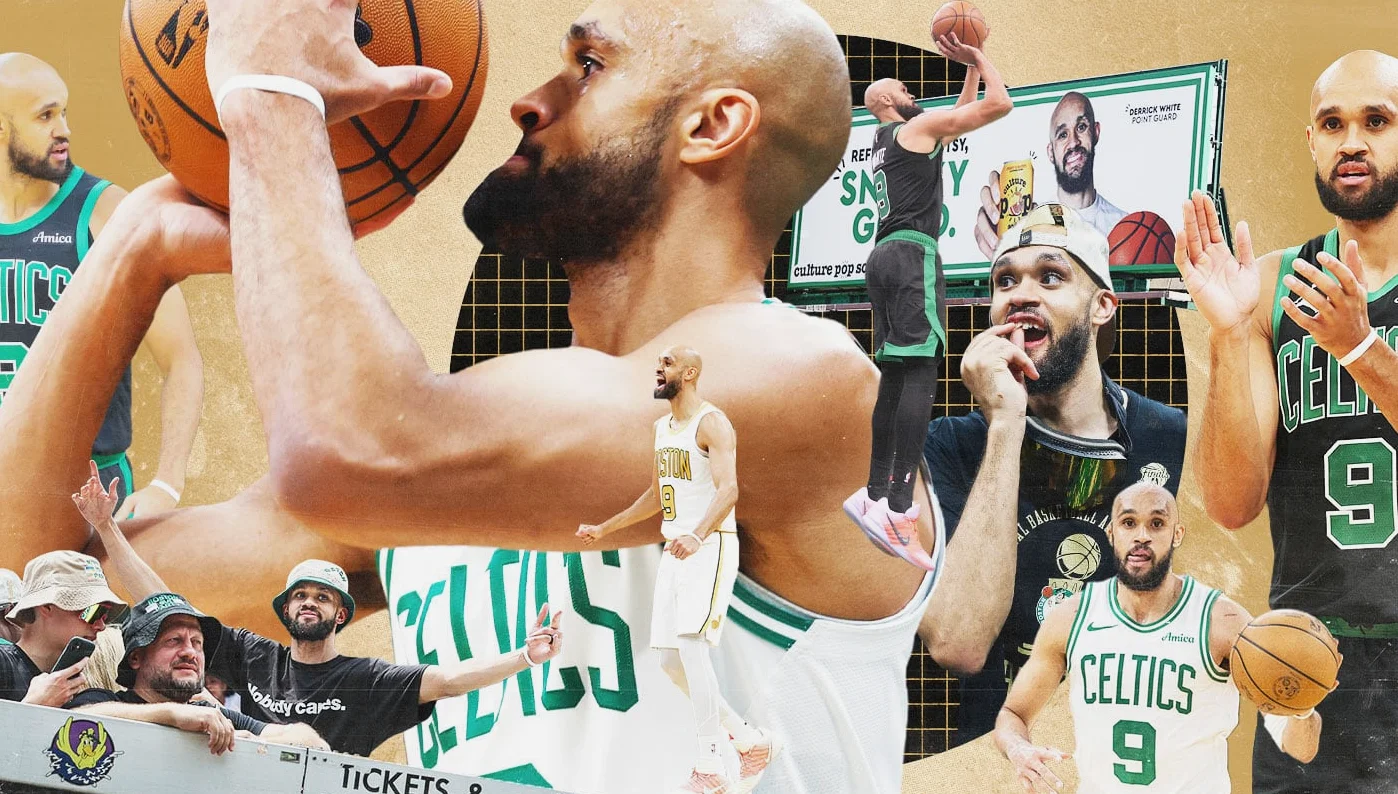
Derrick White, a guard for the Boston Celtics, has transcended his role on the basketball court to become a symbol of Boston’s enduring values. His journey from a traded player to a city icon reflects Boston’s evolving identity and its continued reverence for players who embody grit and sacrifice.
The Cultural Significance of Glue Guys
White’s rise to prominence in Boston is not just about his basketball skills but about the cultural significance of what is known as a ‘glue guy’ in the NBA. These players, often overlooked in the highlight reels, are the ones who make the difference in close games through defensive plays, hustle, and unselfishness. In Boston, these traits are not just appreciated—they are revered.
According to Alex Welsh, White’s best friend and college teammate, the love Boston has for White is a form of ‘makeup love,’ as the city recognizes that he hasn’t always received the recognition he deserved. This sentiment is echoed by many in Boston, who see in White a reflection of their values.
A City’s Identity Through Its Athletes
Boston’s basketball culture has long been defined by the Celtics, a team known for its emphasis on teamwork and sacrifice. The legacy of legends like Bill Russell and the ‘sixth man’ concept, introduced during the Red Auerbach era, set the standard for what it means to be a Celtic. These players were not always the most talented scorers but were revered for their contributions to the team’s success.
Dart Adams, a Boston writer and historian, notes that in New York, basketball is a city game played in parks, while in Boston, it is deeply rooted in the Celtics’ history. The city’s identity is reflected in the athletes it chooses to honor, and White fits that mold perfectly.
White, who grew up in Colorado, quickly adapted to Boston’s style of play. His approach—marked by defensive effort, hustle, and a willingness to do whatever it takes for the team—resonated with the city’s values. As Adams points out, Boston doesn’t look at players through the lens of stardom but rather through the lens of what it means to play like a Celtic.
From Underdog to City Icon
White’s journey to becoming a Boston icon began in the spring of 2023, when the Celtics were down 3-0 to the Miami Heat in the Eastern Conference finals. In Game 6, White made a play that would be remembered for years—slipping inside to tip in a missed shot at the buzzer, helping the Celtics force a Game 7. That moment, along with his resilience in the 2024 NBA Finals, where he played through a broken tooth, solidified his status as a Celtics legend.
White’s efforts have not gone unnoticed beyond the basketball court. His face has appeared on bank billboards, insurance spots, and local television ads, much like the city’s most beloved sports figures of the past. Sam Adams, the city’s most recognizable beer brand, chose him as their spokesperson because he represents the evolution of Boston—a city that values hard work over ego.
John McElhenny, a marketing executive at Sam Adams, says White’s leadership through example makes him feel like one of the city’s own. His humility and dedication to the team have made him a relatable figure in a city that is increasingly diverse and globalized.
Boston is no longer the same city it was when Tommy Heinsohn was handing out ‘Tommy Points’ on broadcasts. The skyline is now filled with glass and steel, and the city’s identity is more diverse than ever. Yet, Boston continues to value the small plays that decide games and the effort that defines champions.
As the city evolves, so does its relationship with its athletes. The arc of an outsider becoming an insider through competence and hard work is increasingly the story of Boston itself. The city has decided to embrace different sides of itself, showcasing a more inclusive and diverse identity.
In an era where teams are often run like assets and loyalty feels conditional, Derrick White is a reminder that sacrifice still matters. His presence in Boston is a testament to the city’s values and its belief that effort speaks louder than hype. That’s why he’s everywhere—in ads, on billboards, and in the hearts of Bostonians who see in him a reflection of what the city stands for.

Comments
No comments yet
Be the first to share your thoughts