

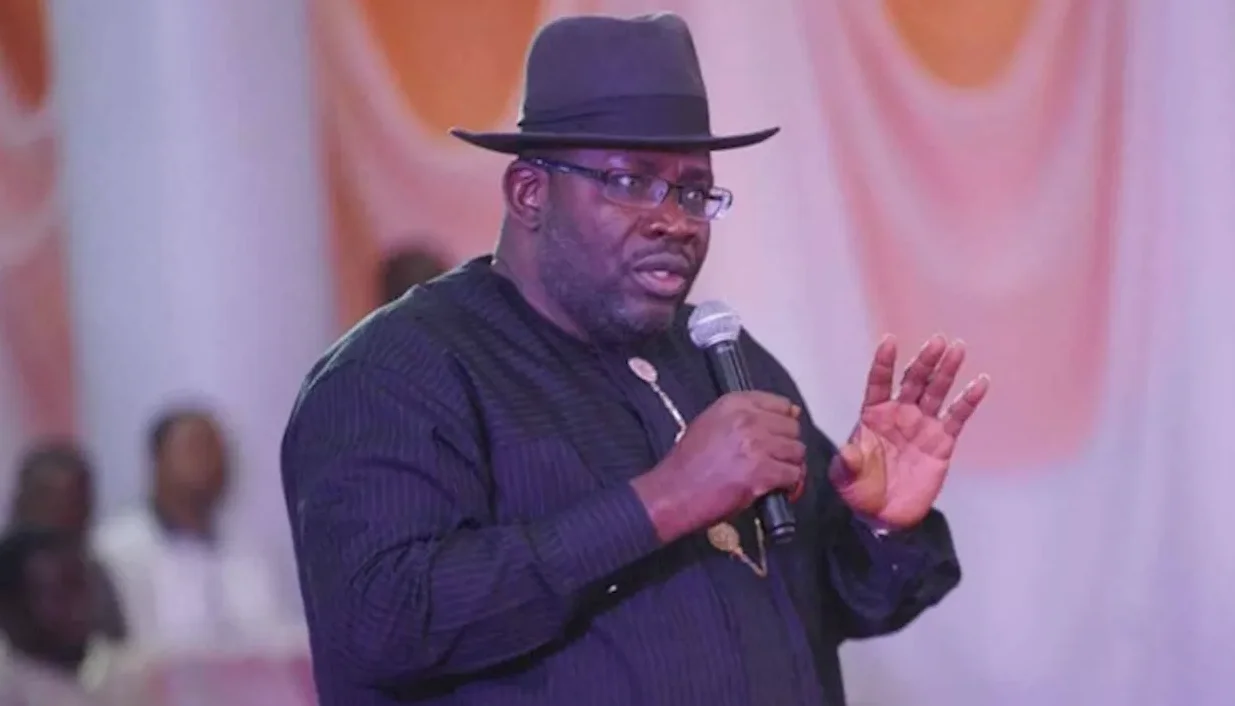
Senator Seriake Dickson, who has served in various high-profile roles in Nigeria’s public sector, said on Monday that honesty is a challenge in the country’s public service environment. Dickson, who was recently honored with a transparency in leadership award by the Centre for Credible Leadership and Citizens Awareness, spoke in Abuja about the uphill battle of maintaining integrity in a system he described as riddled with propaganda, blackmail, and misrepresentation.
Public Service Challenges
Dickson has held multiple positions across state and federal levels, including commissioner for justice and attorney-general of Bayelsa state, member of the House of Representatives, and governor of Bayelsa from 2012 to 2020. Reflecting on two decades in public service, he said the environment has been “unfavourable” for those who wish to serve with honesty.
“It is not easy in this country to serve with honesty within the public area,” Dickson said, highlighting that individuals are often painted with the same brush regardless of their actions. “In a society filled with propaganda, blackmail, and misrepresentation, it is a tough environment to serve in.”
Despite these challenges, Dickson emphasized that honest public officials do exist. He noted that there are hard-working and patriotic Nigerians who may be few in number but are present in all sectors, including the judiciary and the police, which are often criticized for corruption and inefficiency.
Call to Civil Society
Dickson urged civil society groups to recognize and honor these individuals, saying they are often overlooked despite their contributions. “I urge you to recognize and appreciate such people,” he said. “They are present in all walks of life, even in institutions that are often criticized.”
The former governor of Bayelsa, who previously served as a police officer, spoke of his efforts to restore law and order in his state. He worked to flush out criminals and address the root causes of crime, including poverty and lack of education.
“I was once a policeman myself,” Dickson said. “That is why I was firm on law and order as a governor. I worked to restore sanity in my state.”
Broader Implications
Dickson’s comments come amid growing concerns about governance in Nigeria. The country is currently grappling with multiple crises, including fiscal irregularities in Edo State, security threats in Kano State, and environmental damage in Ogoniland. These issues have raised questions about the effectiveness of public institutions and the need for greater accountability.
According to a recent report, Nigeria’s public sector has faced scrutiny over its management of resources, with some states showing signs of improvement. For example, Akwa Ibom State has seen a revenue surge, while Edo State has been criticized for its extra-budgetary spending.
Despite these challenges, Dickson remains optimistic about the presence of honest public servants. He believes that civil society can play a crucial role in identifying and supporting these individuals. “If you look closely, even in institutions that are often criticized, you will find honest, hard-working judges, magistrates, and justices,” he said.
The Centre for Credible Leadership and Citizens Awareness, which conferred the award on Dickson, has been advocating for greater transparency and accountability in governance. The organization has called for a renewed focus on ethical leadership and public service reform.
As Nigeria continues to face these challenges, the need for honest public officials and active civil society engagement remains more critical than ever. Dickson’s remarks serve as both a caution and a call to action for a country striving to build a more transparent and accountable governance system.



Comments
No comments yet
Be the first to share your thoughts