

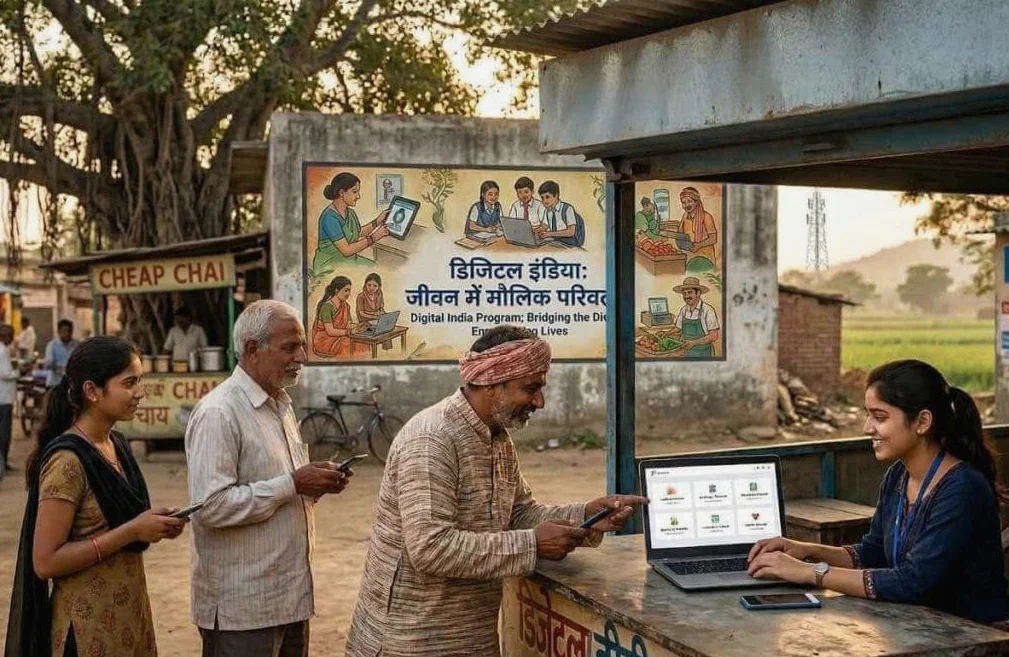
India’s Digital India programme, launched in July 2015, has dramatically reshaped the country’s digital ecosystem, according to data presented to the Lok Sabha on March 18, 2026. The initiative, aligned with Prime Minister Narendra Modi’s vision of democratizing technology, has expanded internet access, reduced costs, and built strong digital infrastructure, creating new opportunities for millions of citizens.
Explosive Growth in Broadband and Connectivity
The programme has led to a fourfold increase in broadband subscribers, rising from 25 crore in 2014-15 to 103 crore in 2024-25. This surge reflects a 400 per cent growth, driven by aggressive policy interventions and infrastructure investments. The number of mobile base transceiver stations (BTS) has also grown significantly, from 7.9 lakh in 2014 to 29.5 lakh in 2024, ensuring better coverage and connectivity.
Villages with mobile connectivity (2G/3G/4G) have increased to 6.35 lakh, bringing the country closer to universal mobile coverage. Optical fibre deployment has grown exponentially from 358 km in 2014 to over 6.92 lakh km in 2024, providing the backbone for high-speed internet and digital services across urban and rural areas.
Affordable Data and Record Data Consumption
One of the most significant achievements of the Digital India programme is the reduction in data costs by 97 per cent. According to government data, the cost per GB of data has dropped from Rs 269 in 2014 to approximately Rs 7.9 in 2024, making internet access widely affordable for the average Indian. This dramatic decline has spurred a surge in data consumption, with the average monthly usage per subscriber rising from 61.66 MB to 25.25 GB.
The affordability of internet services has not only increased digital engagement but also transformed how citizens access information, education, and services. The government highlighted that this shift has been key in driving digital literacy and financial inclusion, particularly in rural and underserved areas.
Transforming Governance and Financial Systems
The programme has also catalyzed digital transformations in governance and financial systems. Over 143 crore Aadhaar numbers have been issued, providing a secure digital identity to Indian citizens. This has been instrumental in enabling smooth access to government services, banking, and welfare benefits.
The Unified Payments Interface (UPI), a cornerstone of India’s digital financial ecosystem, has emerged as the world’s largest real-time payment system. It has over 46 crore users and 685 banks, accounting for 81 per cent of India’s digital payments and nearly 49 per cent of global real-time digital transactions. This has not only enhanced financial inclusion but also reduced dependency on cash transactions.
The JAM trinity — Jan Dhan, Aadhaar, and Mobile — has facilitated direct benefit transfers worth Rs 49.82 lakh crore, ensuring transparency and minimizing leakages in welfare distribution. This system has become a model for efficient and accountable public service delivery, directly impacting the lives of millions of beneficiaries.
Digital Platforms and Literacy Initiatives
Digital India has also fostered the development of various platforms aimed at promoting digital governance and reducing bureaucratic hurdles. DigiLocker, a digital document repository, has registered 67 crore users and issued over 967 crore digital documents, enabling a paperless governance system. The UMANG application, offering access to more than 2,446 government services, has recorded over 741 crore transactions from 10.51 crore registered users, illustrating the scale of digital adoption.
Efforts to improve digital literacy have also been central to the programme’s success. The Pradhan Mantri Gramin Digital Saksharta Abhiyan (PMGDISHA), launched in 2017, has trained over 6.39 crore individuals, surpassing its initial target and becoming one of the largest digital literacy initiatives globally. The scheme concluded on March 31, 2024, but its impact continues to be felt across rural India.
Union Minister of State for Electronics and Information Technology Jitin Prasada submitted the information to the Lok Sabha, emphasizing the significant role of the Digital India programme in enhancing access to services, promoting financial inclusion, and building a digitally empowered society.
Looking Ahead: Sustaining Growth and Addressing Challenges
Despite these achievements, challenges remain. The government is now focused on ensuring that the benefits of digital infrastructure and services reach the most remote and economically disadvantaged regions. Officials have noted that while data affordability has improved, disparities still exist in rural and urban connectivity, particularly in areas with limited optical fibre penetration.
Forward-looking initiatives include the expansion of 5G networks, the promotion of digital education in schools, and the development of AI-driven platforms for public services. These efforts are expected to further bridge the digital divide and enhance the quality of life for millions of Indians.
As the Digital India programme enters its next phase, the government aims to build on its successes, ensuring that the benefits of digital transformation are inclusive and sustainable. The upcoming budget and policy announcements are likely to focus on infrastructure development, digital literacy, and the integration of emerging technologies into public service delivery.






Comments
No comments yet
Be the first to share your thoughts