

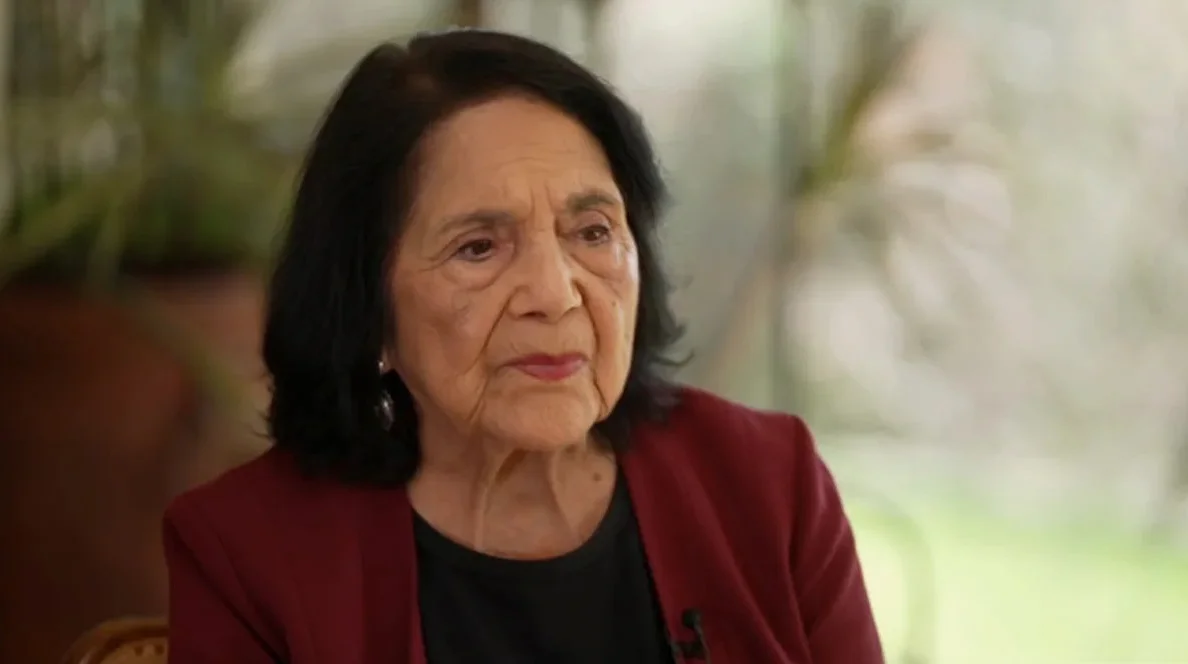
Dolores Huerta, a 95-year-old labor rights icon, has publicly detailed allegations of sexual abuse by Cesar Chavez, the late co-founder of the United Farm Workers (UFW), in an exclusive interview with ABC News’ John Quiñones. Huerta, who has spent a lifetime advocating for workers’ rights, described the emotional burden of keeping these allegations private for decades before deciding to come forward, citing the courage of other women who have spoken out about similar experiences.
Allegations of Abuse and Their Impact
Huerta revealed that during the 1960s, when she was in her 20s, Cesar Chavez pressured her into sexual relationships and later sexually assaulted her. She stated that two children were born from these encounters and that she arranged for both to be raised by other families. These revelations came to light following a New York Times investigation that reported Chavez had groomed and sexually abused women and minors over the years.
“It was very hard to keep this,” Huerta said, describing the emotional weight of her decision to speak out. She emphasized that she felt compelled to come forward after hearing the stories of other women who had also suffered abuse at Chavez’s hands. “I think I am building on the courage of these young women that they had the courage to come out and say what happened to them, and God knows what they’ve suffered. So it was time. It was time,” she said.
Huerta described the experience as deeply painful, particularly given the immense respect she once had for Chavez, who was a central figure in the fight for farmworkers’ rights. “It’s devastating because Cesar spoke about and practiced the nonviolent movement. Well, what could be more violent than that, you know? To think that somebody that we looked at as our hero and our leader, you know, it’s pretty horrible,” she said.
Reassessing Legacy and Public Response
The allegations have sparked a reckoning with Chavez’s legacy, with several planned Cesar Chavez Day celebrations across the United States already canceled. These events, which once celebrated his contributions to the labor movement, now face scrutiny as the public reassesses his place in history.
When asked whether the revelations could damage Chavez’s legacy, Huerta expressed a detailed view. “Well, I would hope that his legacy would live on in the things that were accomplished. The improvements that were made, and it’s sad to think that he had this dark side to him,” she said. Huerta emphasized that while she hopes his contributions to the labor movement are not erased, the truth about his actions must also be acknowledged.
Huerta has made it clear that she intends to continue her advocacy for farmworkers’ rights, despite the controversy surrounding Chavez’s legacy. “I want to support these women. I want to support the movement. I want to support the people who are still suffering,” she said. Her decision to speak out has been widely seen as a key moment in the broader conversation about accountability and justice for victims of abuse within influential circles.
These allegations have also reignited discussions about the treatment of women within the labor movement and the broader societal implications of such abuse. As more women come forward with similar stories, the focus has shifted from the legacy of Cesar Chavez to the need for systemic change in how power and accountability are handled within organizations and movements.
What’s Next for the Movement
The UFW has not officially commented on the allegations, but the movement as a whole is under pressure to address the implications of these revelations. Activists and advocates are calling for a thorough review of the organization’s past and its policies regarding leadership accountability.
“What’s next is that people need to be honest about the past and move forward with a commitment to justice for all workers,” said one labor rights advocate, who requested anonymity. “This is not just about Cesar Chavez; it’s about the future of the movement and the people who rely on it for support and protection.”
Huerta, for her part, has vowed to continue her work, even as she handles the emotional fallout of speaking out. “I’ve been through a lot, but I’ve always believed that the fight for justice is worth it,” she said. “And I still believe that today.”
As the public continues to grapple with the implications of these allegations, the legacy of Cesar Chavez remains a subject of intense debate. Whether his contributions to the labor movement will be remembered alongside his alleged misconduct remains to be seen. For now, the focus is on the voices of the victims and the need for accountability in all sectors of society.






Comments
No comments yet
Be the first to share your thoughts