

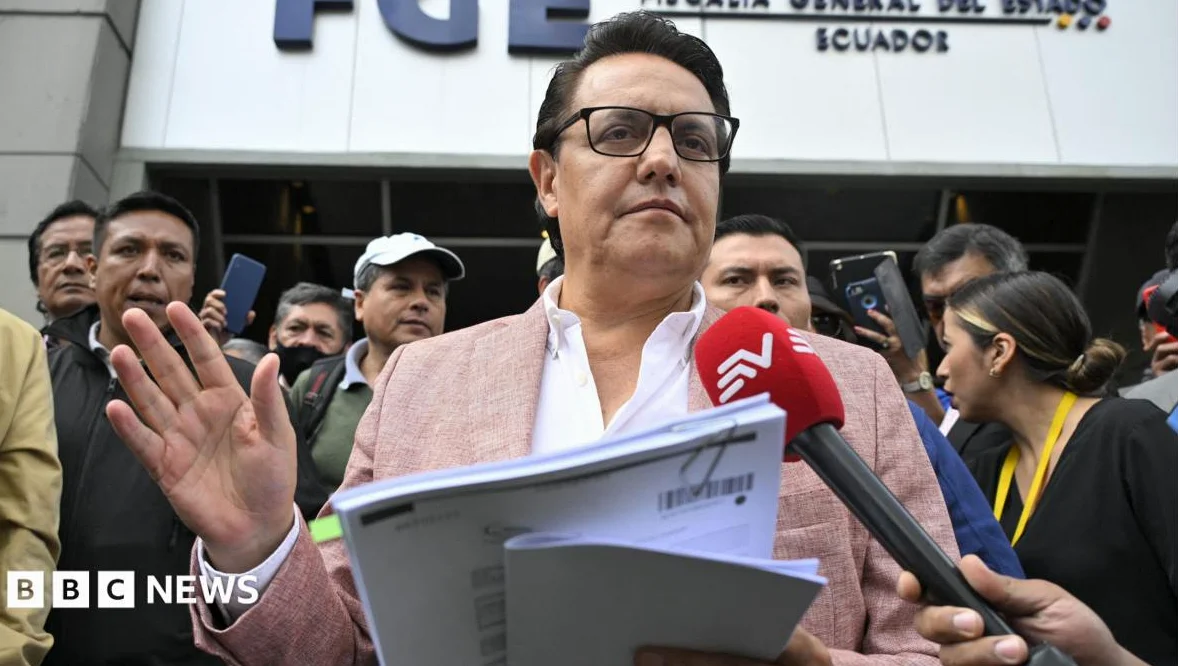
Ecuador has charged a former minister and several others in connection with the 2024 assassination of presidential candidate Fernando Villavicencio, according to the BBC, the five convicted over Villavicencio’s murder were said to have orchestrated the hit. The alleged gunman was shot dead at the scene, while six other men were found murdered in prison while awaiting trial.
Charges and International Involvement
The seven named by the Ecuadorean Attorney General’s Office on Saturday were accused of playing an indirect role in the killing,many of whom had links to Los Lobos, or “The Wolves”, one of the nation’s most powerful criminal gangs. Five of these were now considered fugitives, it said. Serrano and Xavier Jordán were currently located in the U.S., former assemblyman Ronny Aleaga was in Venezuela, while Pipo remained in Spain with an extradition request pending.
The Attorney General’s Office has requested Interpol red notices for their capture and extradition. Ángel Esteban Aguilar, also known as Lobo Menor, was arrested in Mexico City in March and returned to Ecuador after a red notice was issued over the murder of Villavicencio. He was sentenced to 20 years in prison in 2013 for the murder of Serrano’s brother but fled after being granted parole, but the other accused is senior Los Lobos member Luis Arboleda.
Legal and Judicial Developments
Pre-trial hearings are currently taking place and a judge will decide whether prosecutors have a case that can proceed to a full trial. Ecuador’s location,sandwiched between Colombia and Peru, the world’s largest producers of cocaine,has turned it into a key transit country for the illicit drug, with cartels like Los Lobos using corruption and violence to control supply routes. It is said to have deep connections to the powerful Jalisco New Generation Cartel in Mexico.
Context and Implications
Villavicencio was a prominent figure in Ecuadorian politics known for his anti-corruption stance — his assassination has sparked international concern and raised questions about the country’s security and judicial system. The case highlights the challenges Ecuador faces in combating organized crime and ensuring the safety of political figures. The involvement of individuals located in the U.S., Venezuela, and Spain exposes the transnational nature of the investigation and the need for international cooperation in bringing those responsible to justice.






Comments
No comments yet
Be the first to share your thoughts