

 WH News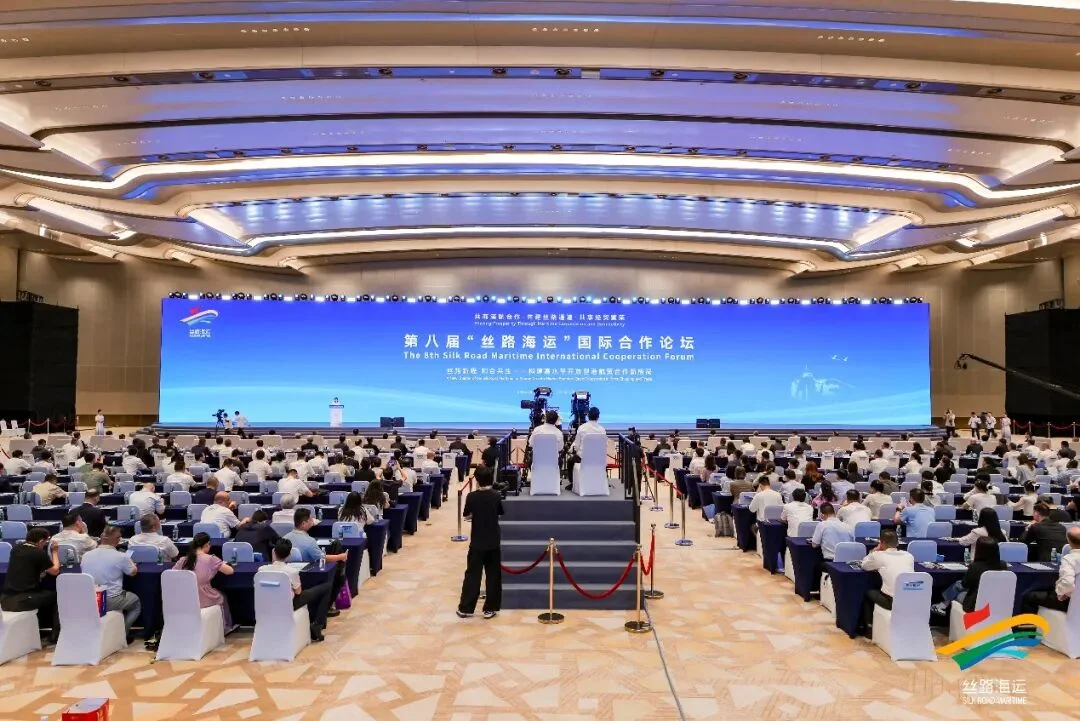
The Eighth Silk Road Maritime International Cooperation Forum opened in Xiamen, Fujian Province, on September 8. Zhao Long, Governor of Fujian Province and Deputy Secretary of the CPC Fujian Provincial Committee, attended the main forum and delivered a speech. Addresses were also given by Yuan Da, Secretary-General of the National Development and Reform Commission; Xu Chengguang, Vice Minister of Transport; Kamina Johnson Smith, Minister of Foreign Affairs and Foreign Trade of Jamaica; Dr. Chris Osa Isokpunwu, Permanent Secretary of Nigeria’s Federal Ministry of Industry, Trade and Investment; and Yan Xinping, Chairman of the China Institute of Navigation and academician of the Chinese Academy of Engineering. Huang Qifan, former Mayor of Chongqing, delivered the keynote speech. The forum was jointly hosted by the Xiamen Municipal People’s Government, the Fujian Provincial Development and Reform Commission, the Fujian Provincial Department of Transport, the Fujian Provincial Department of Commerce, the State-owned Assets Supervision and Administration Commission of Fujian Province, the Foreign Affairs Office of the Fujian Provincial People’s Government and the CCPIT Fujian Provincial Committee, with the support of the China Institute of Navigation and organized by Fujian Provincial Port Group Co., Ltd.
This year’s forum was held under the theme “A new chapter of the Silk Road Maritime for shared growth: higher-standard open cooperation in ports, shipping and trade.” Its program included the main forum and side events, thematic sessions, the 2026 Silk Road Maritime Roundtable, the third Silk Road Maritime port-shipping-trade matchmaking conference and a press briefing. More than 1,800 delegates from 19 countries and regions attended, representing ports, shipping, logistics, trade, finance and technology. Keynote presentations were given by Lin Ji, President of China COSCO Shipping Corporation, on “Practicing High Standards, Building a New Silk Road Together”; Datuk Haji Abd Hamid bin Hussain, Mayor of Klang Royal City Council, Malaysia, on “Klang: From Royal Heritage to Global Maritime City”; Gu Jinshan, President of the China Ports and Harbours Association, on “Pooling Strength for Port-Shipping-Trade Integration to Empower High-Quality Development of the Port Industry”; Ren Weimin, Director of the Transport Division of the UN Economic and Social Commission for Asia and the Pacific, on “Strengthening the Resilience of Asia-Pacific Maritime Connectivity to Safeguard Supply Chain Stability”; and Zhang Ruosi, Counsellor at the WTO Trade in Services and Investment Division, on “Shipping Against the Backdrop of Global Trade Fragmentation.”
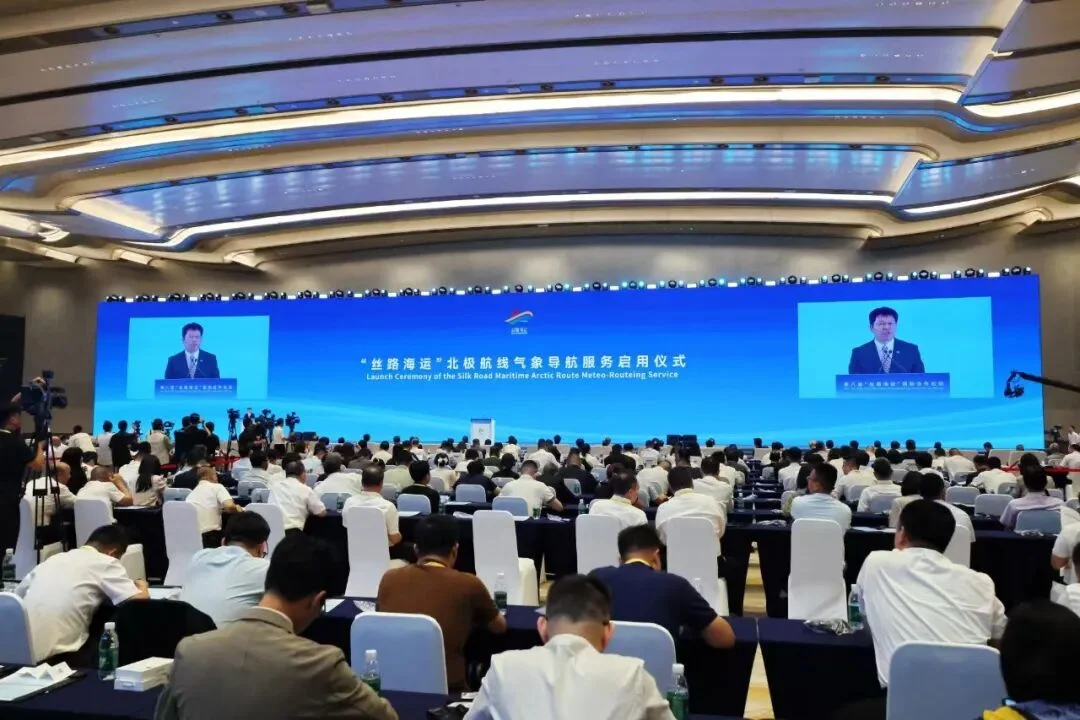
The launch ceremony of the Silk Road Maritime Arctic route meteorological navigation service.
The forum announced the official launch of the Silk Road Maritime Arctic route meteorological navigation service. Jointly developed by the China Meteorological Administration and the Silk Road Maritime Association, the service relies on Fengyun meteorological satellites to build an Arctic sea-ice observation network and combines numerical forecasting with AI algorithms to deliver daily sea-ice forecasts for the next 15 days and dynamic monitoring of polar cyclones. It addresses the shortfalls in polar observation coverage and data lag, gives vessels decision support for avoiding ice and planning safe routes, and provides a safeguard for polar navigation.
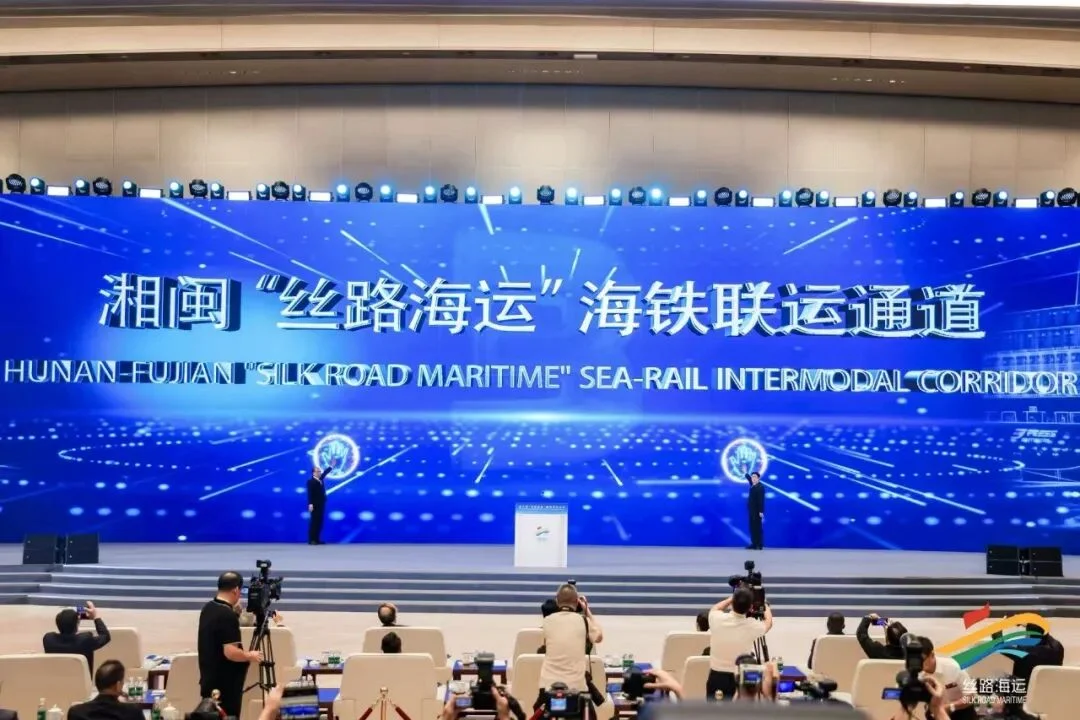
Officials activate the Hunan–Fujian Silk Road Maritime sea-rail intermodal corridor on stage.
The forum also launched the Hunan–Fujian Silk Road Maritime sea-rail intermodal corridor. Hunan and Fujian will deepen coordination between railways and ports to open the most convenient route to the sea for central China, saving enterprises 20 to 30 percent in costs and cutting logistics times by five to seven days, delivering efficient and economical logistics services.
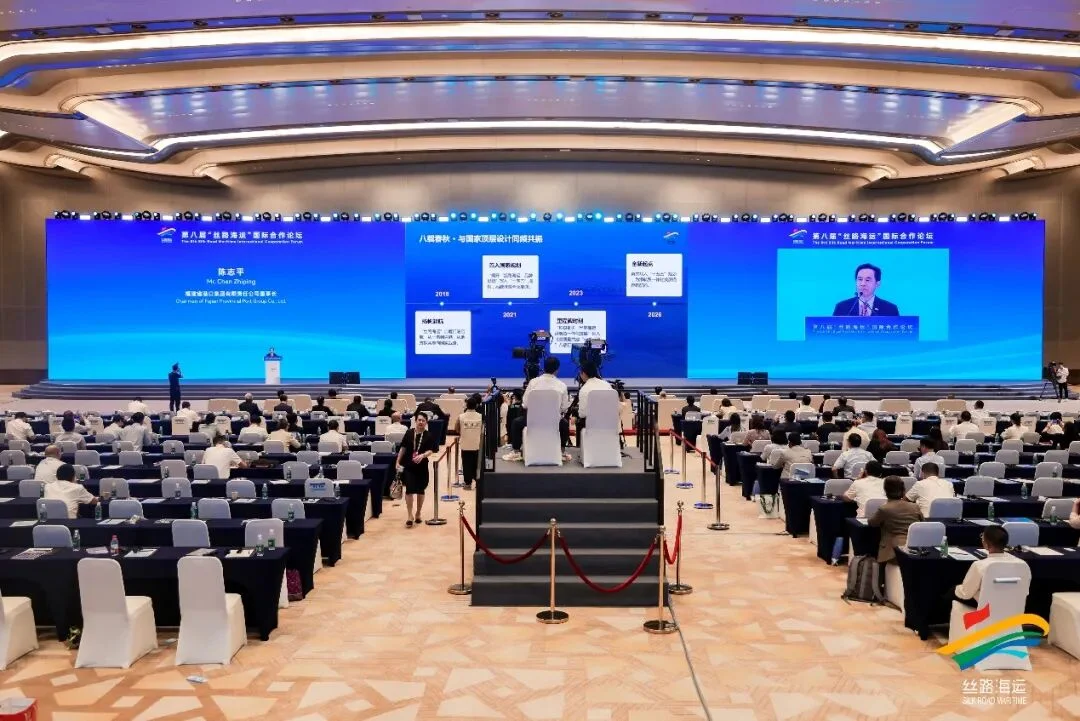
A speaker presents an eight-year timeline of Silk Road Maritime, 2018 to 2026, during the forum.
At the forum, the Silk Road Maritime report on port-shipping-trade integration was released together with the Blue Book on Silk Road Maritime 2025–2026 and a coordinated navigation service for vessels on the Arctic shipping route. Twelve new Silk Road Maritime routes were announced, 15 new members were inducted into the Silk Road Maritime Association, and 11 cooperation projects were signed on site.
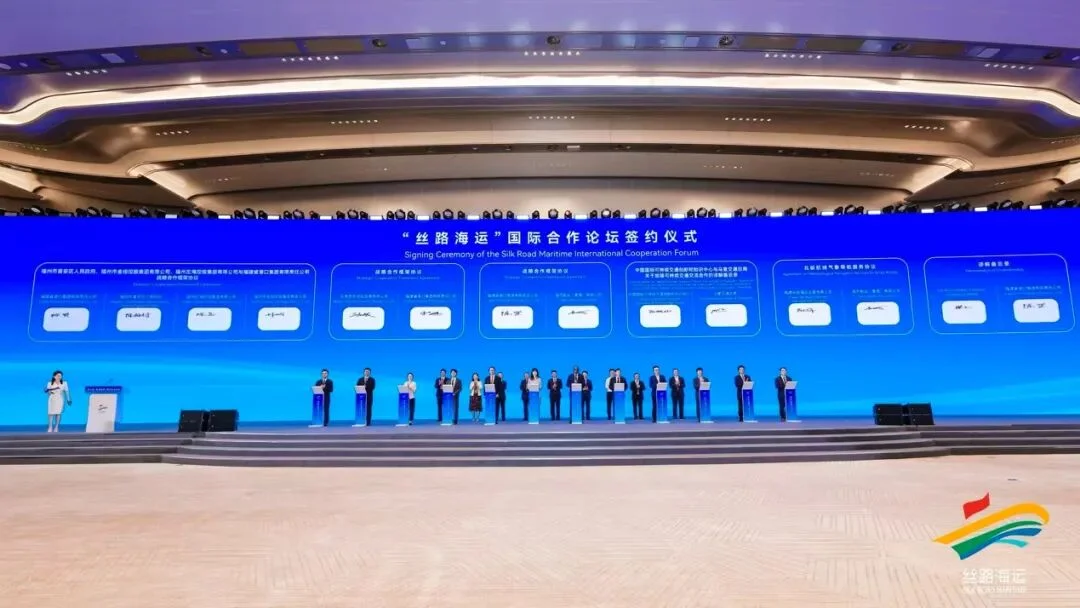
Representatives sign 11 cooperation agreements at the forum’s signing ceremony.
The forum also released the Silk Road Maritime port and shipping development support policy for 2026–2028. Two rounds of the policy have already been issued, with incentives totaling 1.126 billion yuan that have benefited more than 60 port and shipping enterprises. The new round will focus on four priority areas: container shipping, container sea-rail intermodal transport, container shipping on the inland Minjiang River, and the cultivation of emerging port and shipping businesses.
At the 2026 Silk Road Maritime Roundtable held during the forum, nearly 30 representatives of Chinese and international ports, shipping companies, logistics providers, technology firms and research institutions held in-depth discussions on the theme of a new chapter of the Silk Road Maritime for shared growth and higher-standard open cooperation in ports, shipping and trade. They unanimously adopted the 2026 Silk Road Maritime Xiamen Initiative, which sets out five directions for cooperation: weaving a denser connectivity network, deepening the integration of port, shipping and trade resources, advancing digital and smart empowerment, holding fast to green development, and jointly building a thriving port-shipping-trade ecosystem.
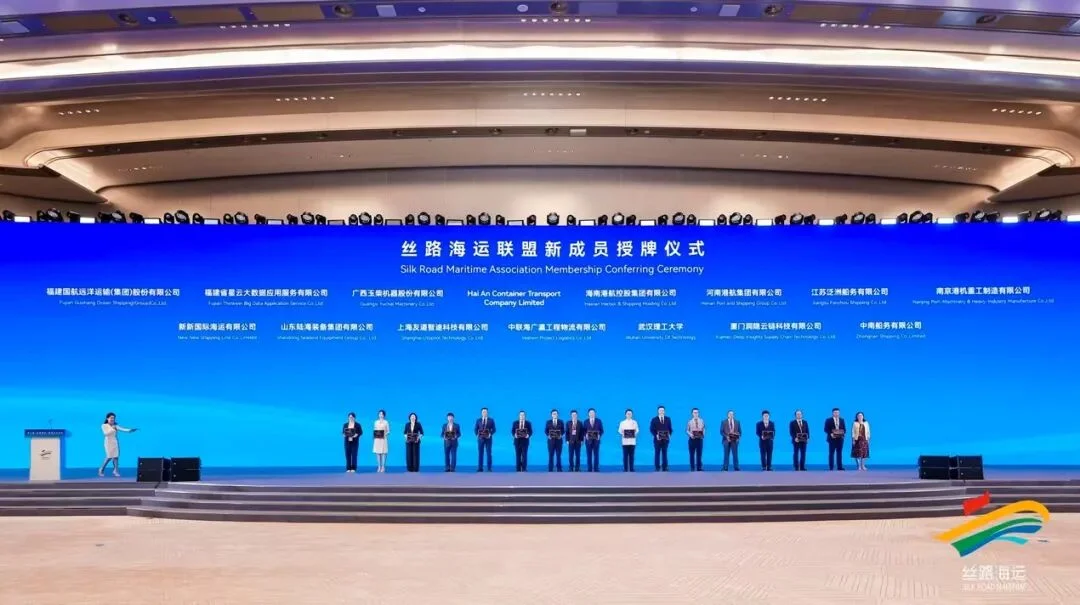
New members of the Silk Road Maritime Association receive their plaques at the conferring ceremony.
Founded in 2018, Silk Road Maritime is China’s first shipping-themed international integrated logistics service brand and platform under the Belt and Road Initiative. Together with the China-Europe Railway Express and the New Western Land-Sea Corridor, it has become one of the country’s key logistics corridors for high-quality Belt and Road cooperation. In nearly eight years of operation, this “golden waterway” setting out from Fujian has grown ever wider. In March 2021, Silk Road Maritime was included for the first time in the Outline of the 14th Five-Year Plan, and in March 2026 “advancing the integrated development of ports, shipping and trade under Silk Road Maritime” was written into the Outline of the 15th Five-Year Plan. To date, Silk Road Maritime operates 160 routes reaching 153 ports in 50 countries and regions, and its association has grown to 393 members spanning shipping, energy, manufacturing, the internet and other sectors. Going forward, Silk Road Maritime will further integrate international resources, explore models linking ports, cities, industries and trade, and build a smart ecosystem alliance to support the integrated development of ports, shipping and trade.
Source: Global Times (WeChat official account hqsbwx), published September 9, 2026; reviewed by Zhou Yang, edited by Xu Xuan, proofread by Guo Weitong. Sourced from https://mp.weixin.qq.com/s/AqbrLEABHHpDSANH91sBSQ






Comments
No comments yet
Be the first to share your thoughts