

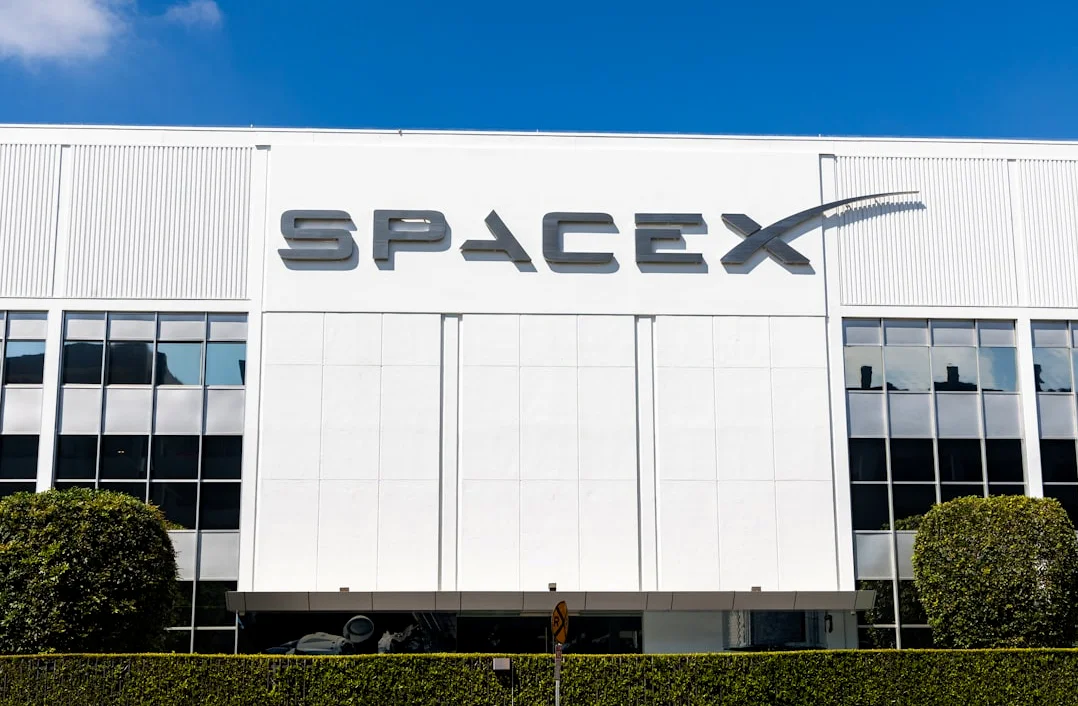
Elon Musk’s SpaceX reported a narrower-than-expected loss in its latest quarter, according to the company’s first public earnings update since its record-setting IPO, and Analysts predicted a loss of $0.23 per share for the second quarter, significantly lower than the $1.19 loss per share in the first quarter. Revenue is expected to reach $6.88 billion, up from $4.69 billion in the previous quarter, according to es.tradingview.com.
Valuation Debate Continues Amid Strong Investor Interest
The company recently completed a landmark initial public offering (IPO), raising approximately $75 billion and setting a new record for the largest public offering in history, according to Korea IT Times. Despite the strong investor demand, questions remain over whether the valuation reflects realistic business fundamentals or overly optimistic expectations for future growth. SpaceX is currently valued at roughly $1.4 trillion after briefly touching $3 trillion, according to es.tradingview.com.
The company generated roughly $18.7 billion in revenue last year but reported a net loss of $4.9 billion, according to Korea IT Times. Based on its IPO valuation, SpaceX is trading at a price-to-sales ratio exceeding 90, a level that many analysts consider exceptionally aggressive. Some market observers argue that the valuation incorporates an extraordinary premium for future opportunities that may take years to materialize.
Starlink Drives Growth Amid Broader Ambitions
Starlink remains a key growth driver for SpaceX. The satellite internet unit generated roughly $3.3 billion of first-quarter revenue and ended the quarter with 10.3 million subscribers, more than double the five million recorded a year earlier, according to es.tradingview.com. SpaceX operates through three divisions: Space, Connectivity, and AI. Space contains the Falcon launch franchise and Starship development, while Connectivity houses Starlink. AI largely represents xAI, which merged with SpaceX in February.
Despite these gains, the company’s shares have lost more than 50% since their June peak, raising questions about whether the selloff created an attractive entry point for investors or merely completed an early stage of volatility, according to es.tradingview.com. The share price is now considerably lower than its initial offering level, and investors must now decide whether the recent dip reflects opportunity or risk.
AI IPO Wave Adds Pressure to Market
SpaceX is not the only company testing investor appetite for AI-related ventures. A wave of AI-focused IPOs could soon test whether investors have enough capital and patience to absorb the influx, according to es.tradingview.com. Potential IPOs from SpaceX, Anthropic, and OpenAI could add close to $4 trillion in market capitalization to U.S. exchanges. Alphabet is also planning to raise $85 billion next quarter by selling stock to fund AI data centers.
For now, the AI trade still has real buyers behind it. SpaceX’s planned IPO has reportedly attracted more orders than shares available, while the Philadelphia Stock Exchange Semiconductor Index is on pace for its best year since 2003 with a 74% gain. However, the bigger risk may come after the debut. SpaceX expects to sell just 4% of its outstanding stock at first. Goldman Sachs data show large IPOs with initial floats below 10% have historically seen that share rise to around 46% one year after listing, implying roughly $1 trillion of new equity supply by 2027, before any direct corporate issuance.






Comments
No comments yet
Be the first to share your thoughts