

 BBC
BBC 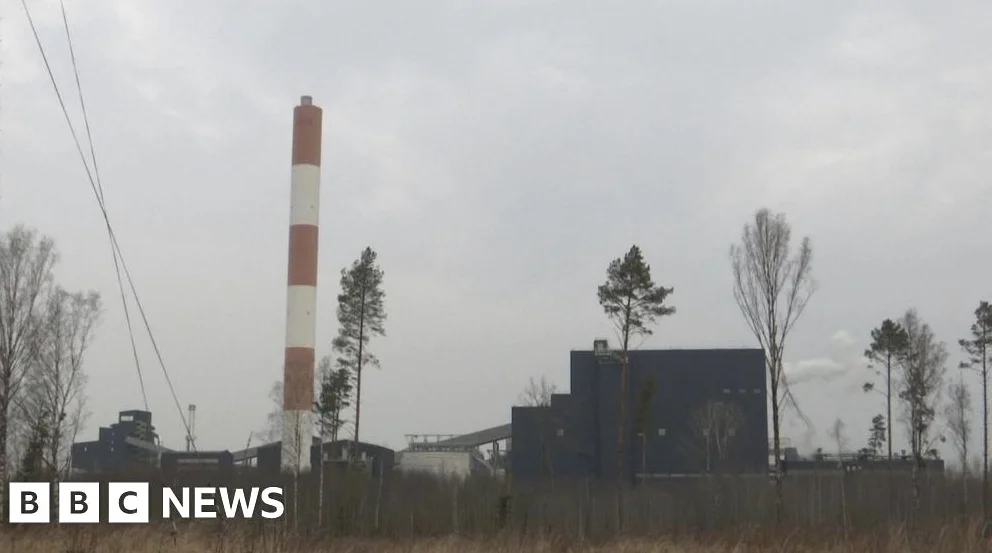
Estonia and Latvia confirmed that stray Ukrainian drones entered their territories from Russian airspace overnight, with one striking infrastructure in Estonia and another crashing in Latvia, according to the BBC. One of the drones hit the chimney of a power plant in Auvere, Estonia, while another exploded in the southern Kraslava region of Latvia. No major damage or injuries were reported in either incident.
Incident Amid Larger Drone Campaign
The events occurred around the same time as Ukraine launched a major drone attack on the Russian port of Ust-Luga on the Baltic Sea, located about 25km (15 miles) from the Estonian border. Estonian Prime Minister Kristen Michal stated that Ust-Luga was attacked in three waves between 03:00 and 08:00 local time. This attack triggered a fire at the port, which was later brought under control by local authorities.
Baltic air patrols were activated in response to the threat, and Estonian citizens received notifications on their phones warning of a “drone threat.” The country’s security police chief, Margo Palloson, said the drone that entered Estonian airspace was likely a Ukrainian drone that “deviated from its course, which was possibly affected in Russian airspace.”
Latvian Response and Military Actions
Latvian Prime Minister Edgars Rinkevics confirmed that the drone that hit Latvian territory was Ukrainian. Latvia’s Defence Minister. Andris Spruds, cut short a visit to Ukraine and returned to Latvia in the wake of the incident. Egils Lescinskis, Latvian deputy chief of the Joint Staff, said the drone “most likely veered off course or was affected by electromagnetic warfare measures protecting some technically important objects.”
Drones can sometimes miss their intended targets when drone jamming systems interfere with their GPS signals. Lescinskis admitted that no one could feel completely safe when military operations are taking place in neighboring countries. He refrained from blaming Ukraine for the accident, stating that the incident was “one of the effects of Russia’s full-scale war of aggression.”
Palloson of Estonia’s security police warned that the country was likely to see “more such incidents.” The country’s leader, Michal, said it was “pointless to create the illusion that we can build a wall on the border with Russia.”
Similar Incidents in Lithuania
A similar incident occurred on Monday night in Lithuania, when a Ukrainian attack drone crashed and exploded near the Belarusian border. Lithuanian authorities later confirmed the drone had been launched as part of that night’s operations against Russia and said they would discuss the situation with Ukraine.
Lithuanian Foreign Minister Kestutis Budrys said this was a “very sensitive and important area for us… All countries must ensure airspace security and inform other countries if they see risks. Belarus does the same.”
Ust-Luga is a major oil export terminal, and the attack triggered a fire which was later brought under control, local authorities said. Earlier this week, Ukraine also targeted the Primorsk port on the Baltic Sea. Kyiv has been launching regular attacks on Russian energy sites, targeting refineries, ports, and tankers with drones.
Almost 400 drones were fired by Ukraine towards several Russian regions overnight, including the Moscow region. Between Monday and Tuesday, Russia launched its largest attack over a 24-hour period on Ukraine, firing 948 drones, killing and injuring multiple people.
The incidents in Estonia and Latvia highlight the growing risks of cross-border military operations and the challenges of securing airspace in regions bordering active conflict zones. With Russia’s full-scale war in Ukraine showing no signs of abating, the risk of stray drones hitting neutral or allied territories is expected to increase, raising concerns among regional security officials and the public.
The situation has also sparked discussions among Baltic states about the need for enhanced air defense systems and international cooperation to prevent such incidents in the future. With more than 948 Russian drones launched in a 24-hour period, the scale of the conflict continues to escalate, affecting not only the front lines but also the surrounding areas.
Local authorities in both Estonia and Latvia are now working to assess the long-term implications of these incidents and to ensure that the population remains informed and prepared for any further developments. With the war showing no signs of abating, the Baltic states are likely to face more such challenges in the coming months.





Comments
No comments yet
Be the first to share your thoughts