

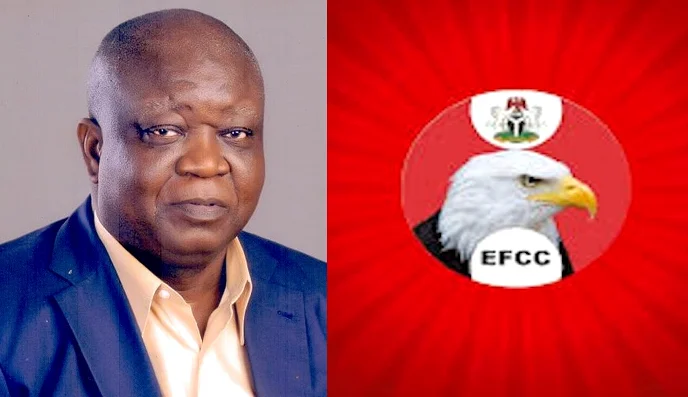
Former Managing Director of the Nigerian Railway Corporation (NRC), Engineer Fidet Okhiria Edetanle, was arraigned before Justice Rahman Oshodi of the Special Offences Court in Ikeja, Lagos, on Tuesday, over alleged financial misconduct involving $385,000 and N165,438,000.00. The Economic and Financial Crimes Commission (EFCC) Lagos Zonal Directorate 1, Ikoyi, presented the charges against Okhiria, who was accused of money laundering, abuse of office, and unlawful enrichment.
Charges and Legal Proceedings
Okhiria faces an eight-count charge under the Criminal Law of Lagos State, 2011, including Sections 332(1), 332(3), 73(1), and 82(c). The charges allege that during his tenure as NRC MD from May 29, 2024, to September 11, 2024, he transferred $205,000 from his Access Bank account to an account in the Netherlands. This transfer is said to have been proceeds of unlawful activities, constituting money laundering. Further, between October 21, 2024, and November 21, 2024, he is alleged to have transferred an additional $40,000 to the same account.
When the charges were read in court, Okhiria pleaded not guilty to all counts. Abba Muhammad, SAN, representing the prosecution, requested the court to fix a trial date and remand the defendant in a correctional facility pending trial. However, Adebowale Kamoru, the defense counsel, informed the court that he had just received the charges and requested an adjournment to file a bail application.
Impact on Public Trust and Institutional Integrity
The allegations against Okhiria have raised concerns about the integrity of public institutions in Nigeria, particularly the NRC. The Nigerian Railway Corporation, responsible for managing the country’s rail infrastructure, has faced scrutiny in recent years over alleged mismanagement and corruption. This case could further erode public trust in the organization, which has been under pressure to improve efficiency and transparency.
According to the EFCC, the sums involved in the alleged fraud are significant, with the total amount reaching N165.4 million and $385,000. These figures highlight the scale of the alleged misconduct and underscore the need for accountability in public office. The EFCC has been actively pursuing cases of economic and financial crimes, aiming to combat corruption and restore public confidence in governance.
Analysts have noted that the prosecution of high-profile officials like Okhiria is a critical step in addressing systemic corruption. However, the success of such cases often depends on the availability of credible evidence and the integrity of the judicial process.
What’s Next in the Legal Process
Justice Oshodi ordered that Okhiria be remanded in the Nigerian Correctional Services centre and adjourned the trial to May 13, 14, and 15, 2026, for continuation. This means that the case will be heard in three separate sessions, potentially allowing for the presentation of evidence and witness testimonies.
The adjournment provides both the prosecution and defense with time to prepare their cases. The defense may seek to challenge the charges or present evidence to demonstrate the defendant’s innocence. Meanwhile, the prosecution will aim to build a strong case based on financial records, bank statements, and other documentary evidence.
According to legal experts, the outcome of this case could have far-reaching implications for the NRC and the broader public sector. A conviction could lead to disciplinary actions against the organization and possibly reform efforts to prevent similar incidents in the future.
Okhiria’s legal team has not yet commented publicly on the charges, but legal observers suggest that the defense may focus on challenging the credibility of the evidence presented by the EFCC. They may also argue that the alleged transfers were legitimate business transactions rather than proceeds of unlawful activities.
The case highlights the importance of transparency in public financial dealings and the role of anti-corruption agencies in holding officials accountable. As the trial date approaches, the public and legal community will be closely watching the proceedings.






Comments
No comments yet
Be the first to share your thoughts