

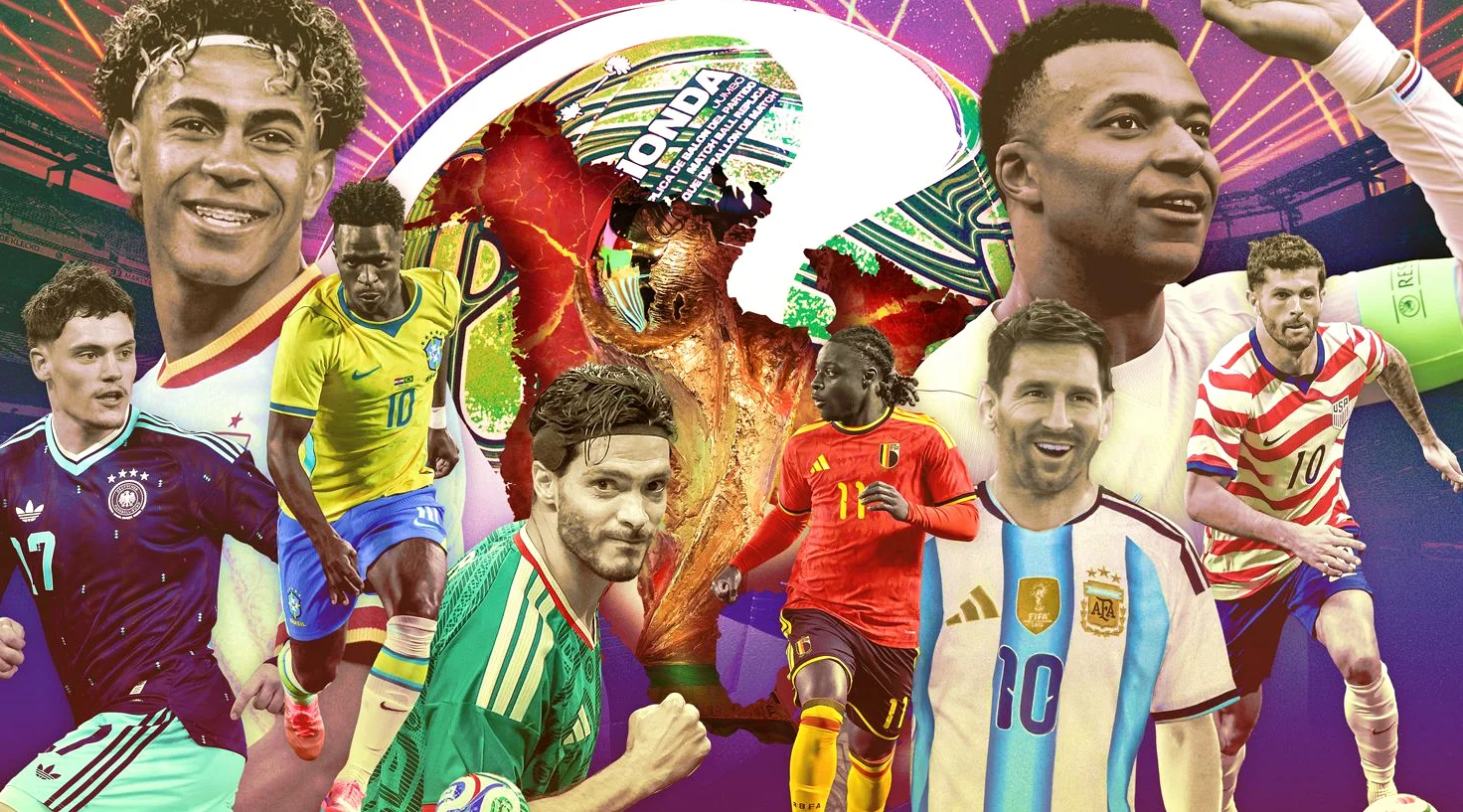
Star Power and Team Ambitions
The 2026 FIFA World Cup will feature 48 teams, a new format that expands the competition; this means more opportunities for teams to make a mark, including four World Cup debutants: Cape Verde, Curaçao, Jordan, and Uzbekistan. Star players like Lionel Messi and Cristiano Ronaldo, both set to appear at a record sixth World Cup, will aim to lead their respective teams to victory. Will Messi help Argentina retain the trophy they won in Qatar in 2022?; Or will Ronaldo lead Portugal to the title?; other strong contenders include Spain, France, England, and Brazil, according to ESPN.
Two-time winners France. Who were runners-up in 2022 despite Kylian Mbappé’s three goals in the final, hope to correct that result, though Spain, fresh off their 2024 European Championship win, will look to add a World Cup to their collection. Germany, despite a recent decline, remains a team to watch, as does England, led by Harry Kane, and Brazil, featuring Vinícius Júnior. This will be the first World Cup to feature 48 teams, meaning there are plenty of facts and information that even the most ardent soccer fan will need to learn before the big kickoff on June 11.
Controversial Fan Policy and Heat Mitigation
FIFA has banned fans from bringing reusable water bottles into World Cup stadiums, a last-minute reversal that has drawn criticism, while this decision was reflected in an updated Stadium Code of Conduct, which now prohibits the entry of reusable water bottles. Attendees will have to purchase water inside the stadium, as they will not be able to refill empty bottles at fountains or dispensers, though According to NBC News, prices will not exceed standard venue rates. The decision has prompted backlash from some fans, with one supporters group expressing concern about potential future restrictions, such as sun cream being banned and sold only within the stadium.
FIFA is working with host cities to provide heat mitigation measures, including misting stations, fans, hydration stations, and cooling tents around the stadium. The change is due to concerns about the heat in parts of the southern U.S., where temperatures can climb into the mid-80s Fahrenheit during June and July. The Club World Cup held in the U.S. last summer drew complaints from players and fans about the heat.
Top 20 Kits and Predictive Model
With over 100 different kits on display, the 2026 World Cup offers a visual feast for fans, but the tournament’s expansion to 48 teams means there will be more kits than ever before. FOX Sports has ranked the top 20 kits, with Senegal’s home kit inspired by hand-painted buses in Dakar and Germany’s away kit featuring a unique design from Adidas. Algeria’s away jersey includes a retro ‘Trefoil’ logo from Adidas, while Cote d’Ivoire’s home strip features a striking animal print on an orange base.
Meanwhile, economist Joachim Klement has successfully predicted three consecutive World Cup winners using a model based on socio-economic and sporting factors. According to Stern.de, Klement’s model considers the population size, GDP per capita, climate, and FIFA World Ranking. His predictions have correctly identified Germany in 2014, France in 2018, and Argentina in 2022. Klement’s approach challenges the notion that economists often overestimate their ability to predict unpredictable events like football results.



Comments
No comments yet
Be the first to share your thoughts