

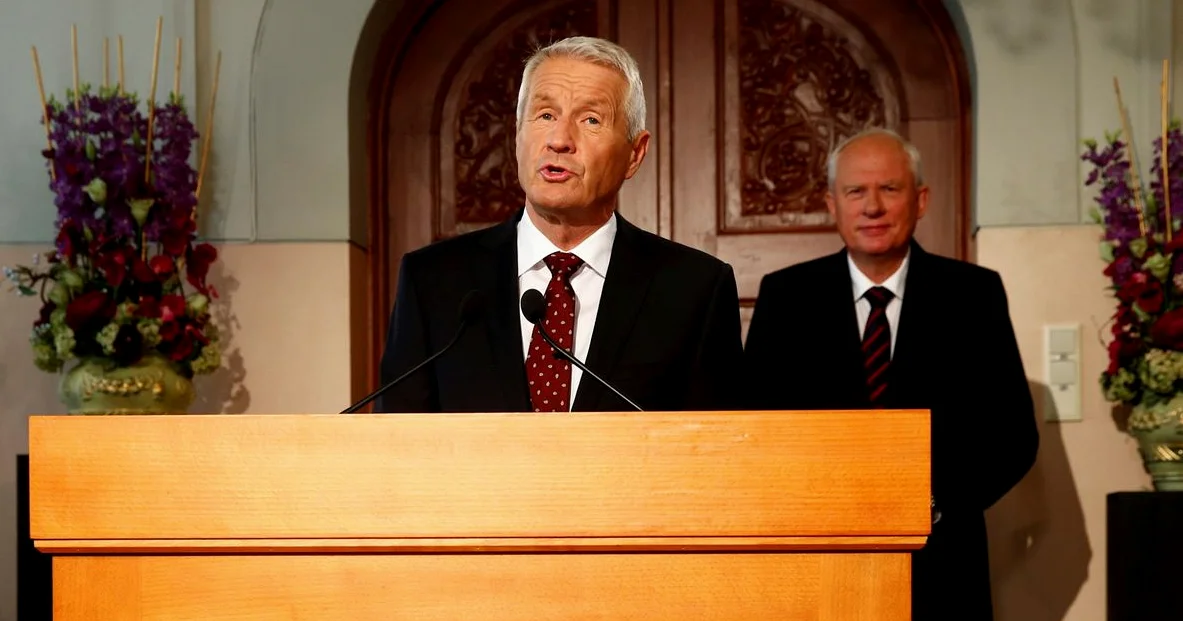
Former Norwegian Prime Minister Thorbjørn Jagland was hospitalized on February 24 after reportedly attempting to take his own life, according to multiple media reports. The incident occurred just days after Jagland was formally charged with ‘gross corruption’ tied to his alleged association with disgraced financier Jeffrey Epstein, whose death in 2019 sparked a global wave of investigations.
Epstein Files Uncover Alleged Corruption
The newly released Epstein documents, which were made public in the wake of his death, reveal a transactional relationship between Jagland and Epstein from 2011 to 2018. The documents suggest Jagland accepted luxury travel, financial solicitations, and requests for diplomatic favours, according to Norwegian authorities.
The revelations led to an investigation into potential corruption involving gifts and influence, with Jagland admitting to ‘poor judgment’ in his dealings. The Council of Europe had previously voted to waive Jagland’s diplomatic immunity, which he held as former Secretary General from 2009 to 2019, allowing the charges to proceed.
Legal Defense Denies Suicide Attempt
Jagland’s lawyer, Anders Brosveet, denied that his client had attempted suicide. Brosveet stated that Jagland was hospitalized due to extreme stress and medical risk stemming from the criminal probe and media pressure, rather than a specific attempt on his life.
According to Brosveet, the former statesman has been under immense pressure due to the ongoing investigation and the intense media scrutiny surrounding his role in the Epstein scandal. ‘The situation has been extremely stressful for him, and this is the result of that,’ Brosveet said.
Jagland is one of Norway’s most prominent political figures, having served as Prime Minister from 1996 to 1997, Chairman of the Norwegian Nobel Committee from 2009 to 2015, and the body responsible for awarding the Nobel Peace Prize.
Broader Scandal in Norway
The Epstein-related scandal has intensified Norway’s recent political and royal turmoil. The country has been grappling with multiple high-profile cases, including the ongoing trial of Marius Borg Høiby, the son of Crown Princess Mette-Marit.
Høiby, who has no official royal duties, is facing 38 criminal charges, including rape, aggravated assault, and drug offences. He has pleaded not guilty to the most serious charges but admitted to some lesser offences. The trial, expected to last seven weeks, has drawn significant public attention and scrutiny.
Crown Princess Mette-Marit, who is currently under intense public scrutiny, has been linked to Epstein through newly released U.S. Department of Justice documents. These documents reveal her extensive relationship with the financier, further entangling the royal family in the Epstein scandal.
The Norwegian government has been under pressure to address these scandals, which have raised questions about the integrity of high-profile individuals in both political and royal circles. The Epstein-related documents, which were released in 2026, have been described as the first major European prosecution directly tied to the case.
Analysts say the ongoing investigations into Jagland and other high-profile figures could have lasting implications for Norway’s political landscape. ‘This is a significant moment for Norway,’ said one political analyst. ‘The revelations could reshape public trust in key institutions, including the Nobel Peace Prize committee, which Jagland once chaired.’
The investigation into Jagland is ongoing, and the legal proceedings are expected to continue for some time. The case has drawn international attention, with observers noting that it represents a broader trend of global scrutiny into the activities of high-profile individuals linked to Epstein.
As the scandal unfolds, the impact on Norway’s political and social fabric remains to be seen. For now, the country continues to handle the fallout from a series of high-profile legal and ethical challenges.



Comments
No comments yet
Be the first to share your thoughts