

 BBC
BBC 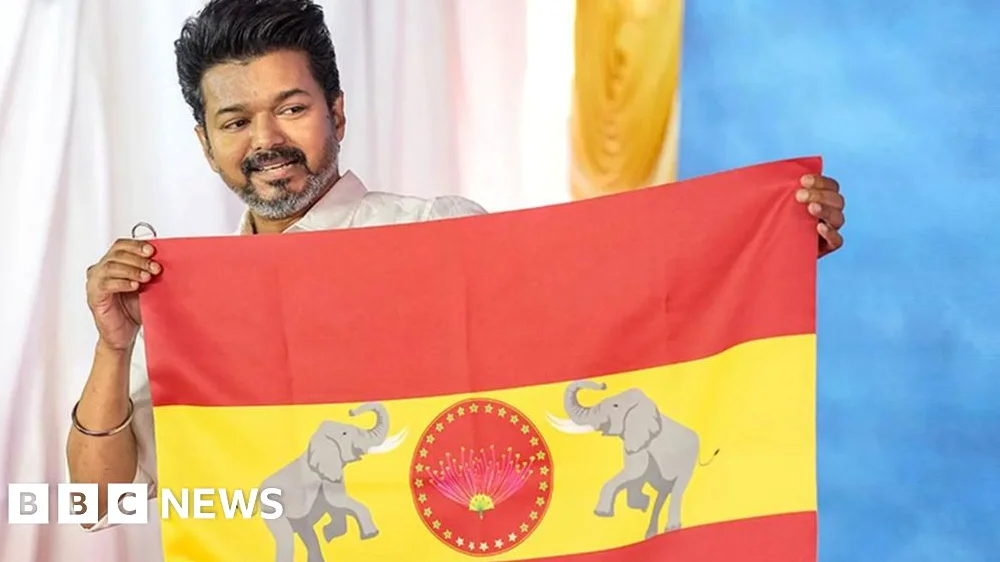
India’s ruling Bharatiya Janata Party (BJP) has secured a major breakthrough in West Bengal, a state that had long resisted its influence, according to BBC reports. The victory is considered one of the most significant under Prime Minister Narendra Modi’s 12-year tenure, as the BJP now holds the state with a population larger than Germany’s,over 100 million people. This win marks the completion of the party’s long march into eastern India, which had been a stronghold of the Trinamool Congress (TMC), led by Mamata Banerjee, for the past 15 years.
BJP’s Historic Win in West Bengal
West Bengal had been a political fortress for the TMC since 2011, following a 34-year rule by the Communist Left Front, the BJP’s victory is not just a win over a three-term incumbent but a symbolic shift in the region’s political area. Author and journalist Nilanjan Mukhopadhyay described the win as a ‘big victory for the BJP — a land of promise that has long eluded its grasp.’
This outcome is particularly consequential because it represents one of the few changes in state government in nearly 50 years; the BJP’s success in Bengal aligns with its broader expansion across the country, from the Hindi heartland to the northeast and west. Meanwhile, in Assam, the BJP defied the anti-incumbent trend and retained power, while its allies also held onto Puducherry at the federal level.
Vijay’s Star Power in Tamil Nadu
In Tamil Nadu. Actor-turned-politician Vijay led his Tamilaga Vettri Kazhagam (TVK) party to a stunning victory over the ruling Dravida Munnetra Kazhagam (DMK), led by MK Stalin. Vijay’s TVK won 108 of the 234 seats in the state assembly, falling just 10 seats short of a majority; this performance is described as a ‘striking political moment’ in a state historically dominated by two regional parties—the DMK and the AIADMK.
Vijay, known for his charisma and screen presence, has been described by social scientist Shiv Visvanathan as offering a ‘sense of fun, confidence, and an aura of competence rooted in individuality.’ His image has shifted from that of a movie star to a serious political figure, with recent public appearances at temples and churches helping to reinforce his appeal. These moves come as Tamil Nadu has long been a place where cinema and politics are deeply intertwined, with film stars like M.G. Ramachandran and J. Jayalalithaa having shaped the state’s political history.
Changing Regional Politics
Elsewhere in southern India, the Congress-led United Democratic Front (UDF) defeated the Left Democratic Front (LDF) in Kerala, ending the last remaining Communist-led state government in India. These results reflect a broader wave of anti-incumbency across the country, with voters seeking change at the state level. However, the most significant shifts occurred in Bengal and Tamil Nadu.
In Bengal, the BJP’s victory is seen as the culmination of years of effort to break into the eastern Indian market, where the TMC had long held a strong grip. The win is not just about electoral numbers,it signals a realignment of political loyalties in a state that once prided itself on its cultural independence from national trends. In Tamil Nadu, Vijay’s rise marks a return of film-star politics to a state where it once played a dominant role, though in a new political context.
Vijay now faces the challenge of forming a coalition government, requiring him to secure the remaining 10 seats needed to cross the 118-seat threshold. The coming days will test his ability to transition from a crowd-puller to a coalition-builder, a move that could alter the political dynamics of the state for years to come.





Comments
No comments yet
Be the first to share your thoughts