

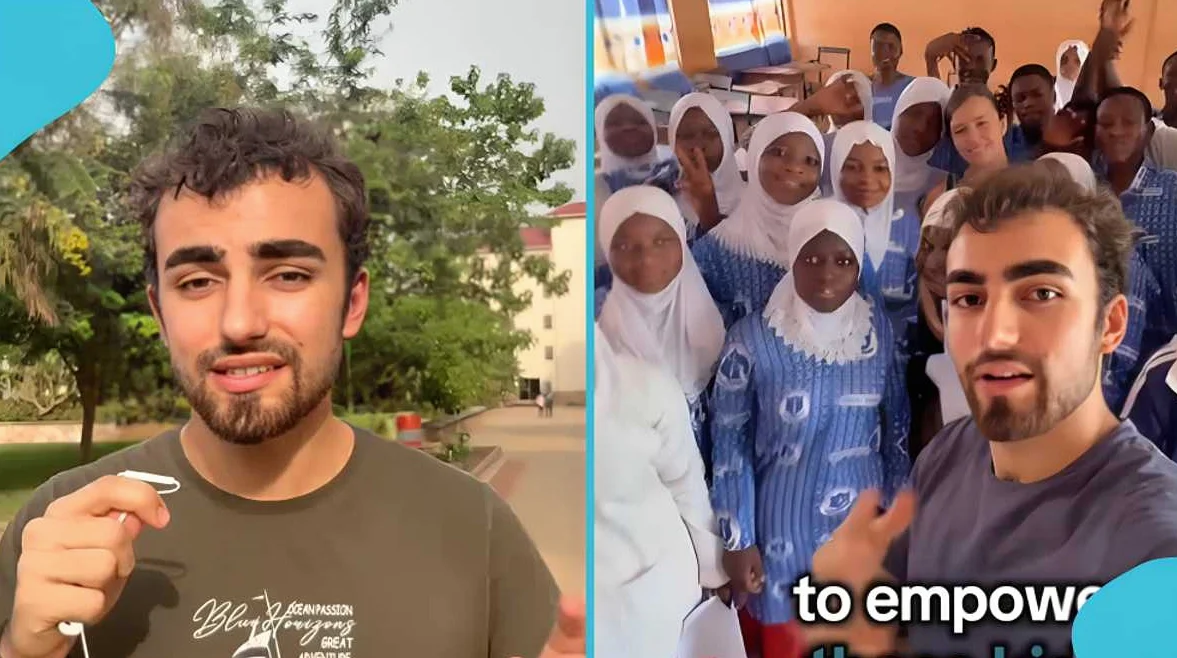
Kofi Fillippos, a Ghanaian TikToker, has called for urgent reforms to the country’s education system, criticizing what he describes as a deep-rooted reliance on rote learning. In a widely shared video, Fillippos urged the Ghana Education Service (GES) to shift from an approach he calls ‘chew and pour,’ where students memorize large volumes of information for exams, to one that supports critical thinking and practical problem-solving skills.
Systemic Challenges in Ghana’s Education
Fillippos, who recently launched a voluntary initiative with six friends to teach soft skills to senior high school students, said he and his team discovered that many students struggled with comprehension. He noted that instead of understanding concepts, students were more comfortable memorizing information to reproduce it during exams.
The TikToker described this as a systemic issue, not a failure of individual students. He argued that the current education system does not adequately prepare students for leadership, entrepreneurship, or the evolving demands of the global job market. According to Fillippos, the focus on memorization has weakened analytical thinking and independent reasoning among students.
Fillippos emphasized that reforms must prioritize comprehension-based learning, practical engagement, and the integration of soft skills into mainstream education. He believes that such changes would better prepare students not only for examinations but also for real-world challenges.
Public Reaction and Debate
Fillippos’s call for reform has sparked online discussions, with many social media users weighing in on whether Ghana’s education system adequately equips students for life beyond the school walls. Some users expressed agreement with Fillippos, while others raised concerns about the effectiveness of current educational practices.
Denteh Kwame Gem Elijah, a teacher, commented on the video, stating, ‘I am a teacher, and I hate to admit that our educational system does not support critical thinking. Everyone follows like a zombie.’ His comment reflects a growing concern among educators about the limitations of the current system.
However, not all users were in agreement. Brown Robson questioned the need for change, asking, ‘Why would one want to change something that is fully working?’ This response highlights the debate over whether the existing system should be overhauled or if it is functioning adequately.
Fillippos’s video has gained significant traction online, with many viewers sharing his concerns. The discussion has also drawn attention from educational experts and policymakers, who are now considering the need for a broader review of the country’s curriculum and assessment methods.
Implications for Future Education
The debate over Ghana’s education system has broader implications for the country’s future. According to a 2022 report by the Ghana Education Trust Fund, over 60% of senior high school students in Ghana rely heavily on rote learning to pass exams. This statistic highlights the urgency of Fillippos’s call for reform.
Experts suggest that shifting the focus from rote learning to critical thinking and creativity could improve student performance in international assessments such as the Programme for International Student Assessment (PISA). Currently, Ghana ranks 73rd out of 79 participating countries in the PISA science test, a ranking that highlights the need for systemic changes.
Fillippos has urged the GES to take immediate steps to integrate soft skills and practical learning into the curriculum. He has also called for the inclusion of project-based learning and collaborative problem-solving exercises in classrooms across the country.
The GES has yet to formally respond to Fillippos’s call for reform. However, there are ongoing discussions within the ministry about potential curriculum updates, with some officials suggesting that changes could be considered in the upcoming academic year.
As the debate continues, it is clear that the future of Ghana’s education system may depend on whether policymakers are willing to move away from the ‘chew and pour’ model and embrace a more complete approach to learning.






Comments
No comments yet
Be the first to share your thoughts