

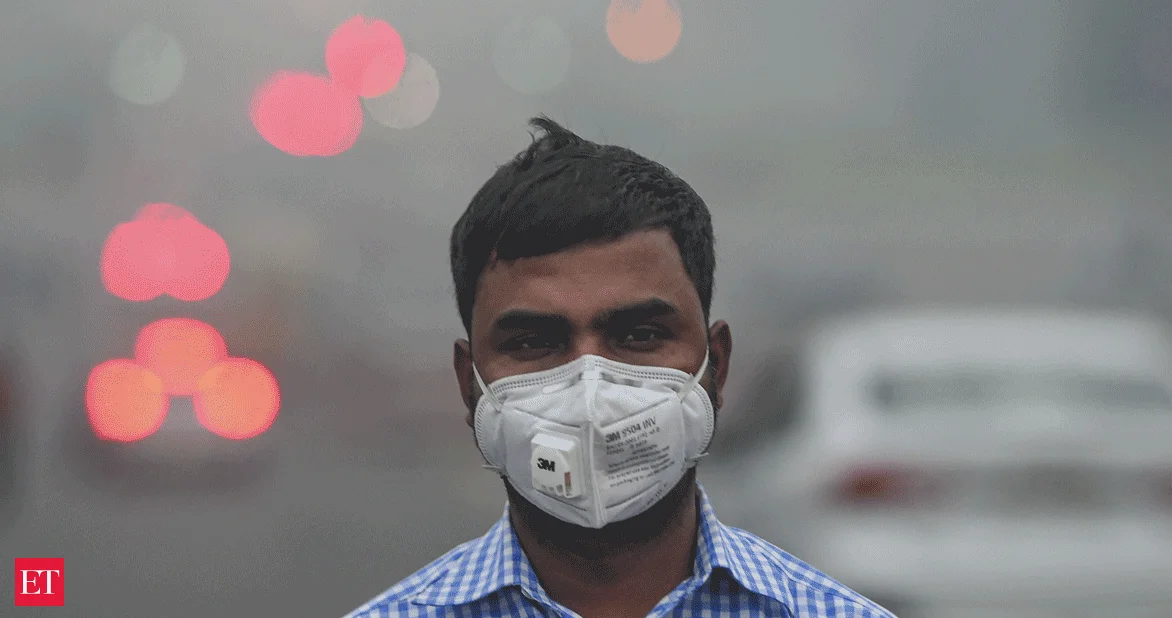
Ghaziabad, a city in Uttar Pradesh, recorded the highest average PM2.5 levels in India during the winter of 2025-26, surpassing Delhi for the first time in this regard. The analysis, conducted by the Centre for Research on Energy and Clean Air (CREA), highlights a growing environmental challenge in the region.
Winter Pollution Trends
The CREA study found that 204 of the 238 Indian cities with sufficient monitoring data recorded average winter PM2.5 levels above India’s National Ambient Air Quality Standards (NAAQS) during the winter of 2025-26. This is a significant increase from the previous winter, when 173 cities exceeded the standard.
The data was collected from Continuous Ambient Air Quality Monitoring Stations (CAAQMS) operated by the Central Pollution Control Board (CPCB) between October 1, 2025, and February 28, 2026. According to the report, Ghaziabad had an average PM2.5 concentration of 172 μg/m3, making it the most polluted city. Noida followed with 166 μg/m3, and Delhi ranked third with 163 μg/m3.
Delhi’s Air Quality
Delhi, which has long been a focal point for air pollution in India, experienced a particularly severe winter. During the 2025-26 period, the city had 18 ‘severe’ air quality days, 87 ‘very poor’ days, 24 ‘poor’ days, and only one ‘good’ day. This highlights the persistent challenge of air pollution in the national capital.
Other cities in the top 10 most polluted list included Greater Noida, Bahadurgarh, Dharuhera, Gurgaon, Bhiwadi, Charkhi Dadri, and Baghpat. Uttar Pradesh and Haryana each contributed four cities to the list, while one city each came from Delhi and Rajasthan.
State-Level Analysis
At the state level, Haryana recorded the highest number of cities exceeding the PM2.5 NAAQS, with 24 cities breaching the standard. Andhra Pradesh (nine cities), Punjab (eight), West Bengal (seven), and Gujarat (six) also reported exceedances across all monitored cities.
High proportions of cities breaching the national standard were recorded in Rajasthan (33 of 34 cities), Maharashtra (30 of 31), Bihar (23 of 24), Uttar Pradesh (17 of 20), Odisha (13 of 14), and Madhya Pradesh (11 of 13).
Conversely, Chamarajanagar in Karnataka was the cleanest city in the country during the winter of 2025-26, with an average PM2.5 concentration of 19 μg/m3. The list of the 10 cleanest cities included eight from Karnataka and one each from Madhya Pradesh and Meghalaya.
Call for National Action
The CREA analysis noted that widespread non-compliance with air quality standards continues, with more cities breaching the national standard in winter 2025-26 than in the previous winter. Manoj Kumar, an India analyst at CREA, emphasized the need for nationwide PM2.5 reduction targets, similar to those set for the National Capital Region.
“While the Commission for Air Quality Management (CAQM) has set PM2.5 reduction targets for the National Capital Region, similar nationwide PM2.5 reduction targets are needed with a stronger focus on controlling gaseous pollutants such as sulphur dioxide (SO2), nitrogen dioxide (NO2), and volatile organic compounds (VOCs),” Kumar said. “These pollutants contribute to the formation of secondary PM2.5 and ozone (O3), a major component of particulate pollution.”
The report also found that of the 96 cities covered under the National Clean Air Programme (NCAP), 84 recorded average PM2.5 concentrations above the national standard, while all 96 exceeded the World Health Organization (WHO) guideline. A similar pattern was observed among non-NCAP cities, with 120 of 142 exceeding the national standard and all 142 exceeding the WHO guideline.
In the Indo-Gangetic Plain, 79 cities reported sufficient monitoring data during winter 2025-26. Among them, 75 exceeded the national PM2.5 standard, while only four remained within the prescribed limit. In the National Capital Region, 28 of the 29 monitored cities had sufficient data coverage, and none complied with the national PM2.5 standard.






Comments
No comments yet
Be the first to share your thoughts