

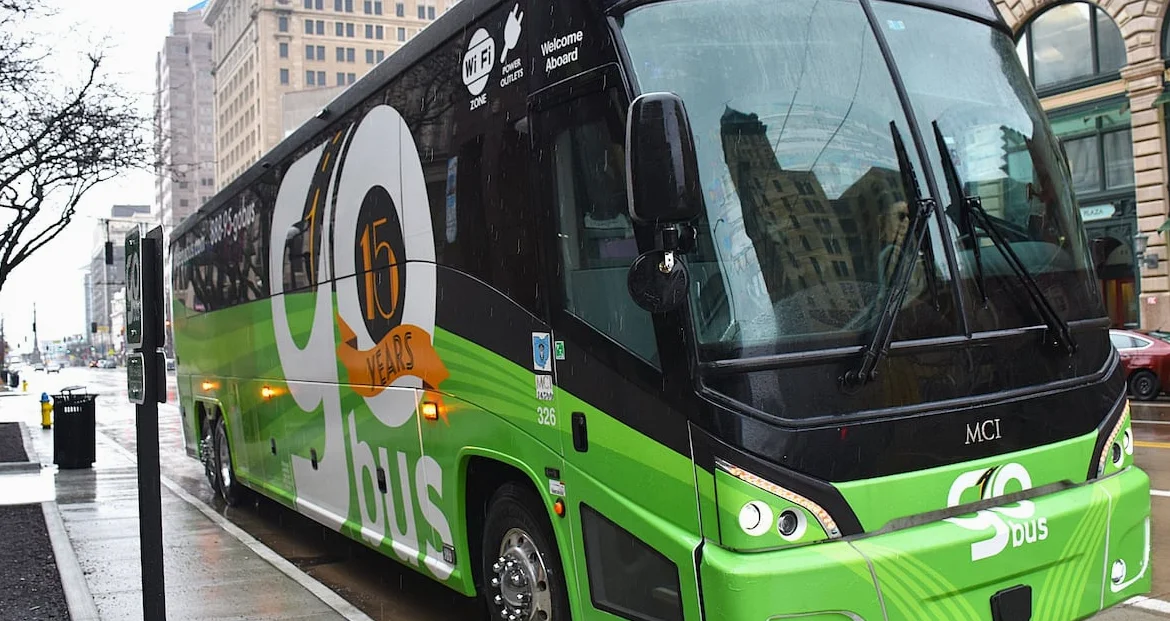
GoBus has launched new service that directly connects Dayton to many other Ohio cities, including Bowling Green, Cincinnati, Lima, Middletown, Oxford, Springfield, Urbana, Toledo and Yellow Springs. Travelers, by transferring buses, also can get Akron, Athens, Canton, Cleveland, Columbus and Pittsburgh, Pennsylvania.
Expanded Network Offers More Options for Travelers
GoBus’ 56-seat motorcoaches swing through downtown Dayton four times every day. Buses heading north to Toledo stop at the bus shelter in front of the Fifth Third Center building on South Main Street at 10:31 a.m. and 1:31 p.m. Buses heading south to Cincinnati stop at the same shelter at 12:49 p.m. and 3:49 p.m.
A normal drive from downtown Dayton to downtown Cincinnati can take about an hour when traffic conditions are light. A car ride from Dayton to Toledo can be about 2 hours and 15 minutes. However, the GoBus trip to Cincinnati takes about 2 hours and six minutes due to several stops along the way. The ride to Toledo is nearly five and a half hours, with around eight stops between.
Convenience and Affordability for Underserved Communities
GoBus has a stop at the Greyhound bus depot in Arlington Heights, just north of Cincinnati. The pickup/drop off point in the Queen City is at 2985 Short Vine St., which is a Greyhound bus stop near the University of Cincinnati. GoBus says it provides affordable and reliable transportation for underserved community members, like college students and Ohioans who do not have access to cars. But the transit provider says some customers are leisure travelers who simply do not want to have to deal with the hassles of driving and parking when visiting other cities and communities.
GoBus has more than 70 bus stations in Ohio, which include the Middletown Transit Station, located at 55 S. Broad St.; the Springfield transfer station at 33 W. High St.; and the Yellow Springs station at 101 Dayton St.
Comfort and Accessibility Features
GoBus tickets cost $5 to $30 before taxes. But fares do not exceed $40, even for riders who are transferring between bus schedules. GoBus’ motor coaches have Wi-Fi, a restroom and electric outlets at every seat. GoBus tickets can be purchased online or on the group’s mobile app.
According to GoBus officials, the expansion aims to increase accessibility for residents in rural and urban areas alike. ‘We want to provide a reliable and affordable way for people to travel across the state without the stress of driving,’ said a GoBus spokesperson. ‘Whether it’s a student heading to class, a worker commuting, or a tourist visiting a new city, we’re here to help.’
The new routes are expected to ease traffic congestion in Dayton and surrounding areas, offering an alternative to personal vehicles for both daily commuters and occasional travelers. With the rise of remote work and hybrid lifestyles, demand for flexible and reliable transportation is growing, and GoBus aims to meet that need with its expanding network.
Analysts say the expansion could have a ripple effect on local economies by increasing foot traffic in downtown areas and supporting small businesses. ‘When people have more options to get around, they’re more likely to explore new places and spend money locally,’ said a transportation expert from the Ohio Transportation Institute.
GoBus has not provided specific numbers on ridership or projected revenue from the new routes, but the company has expressed confidence in the demand for its services. ‘We’ve seen steady growth over the past few years, and we expect that to continue with this expansion,’ said a GoBus executive.
The service is available to anyone with a valid ticket, and passengers are encouraged to plan their trips in advance through the GoBus website or mobile app. With routes now operating in multiple cities, the company is positioning itself as a key player in Ohio’s evolving transportation landscape.






Comments
No comments yet
Be the first to share your thoughts