

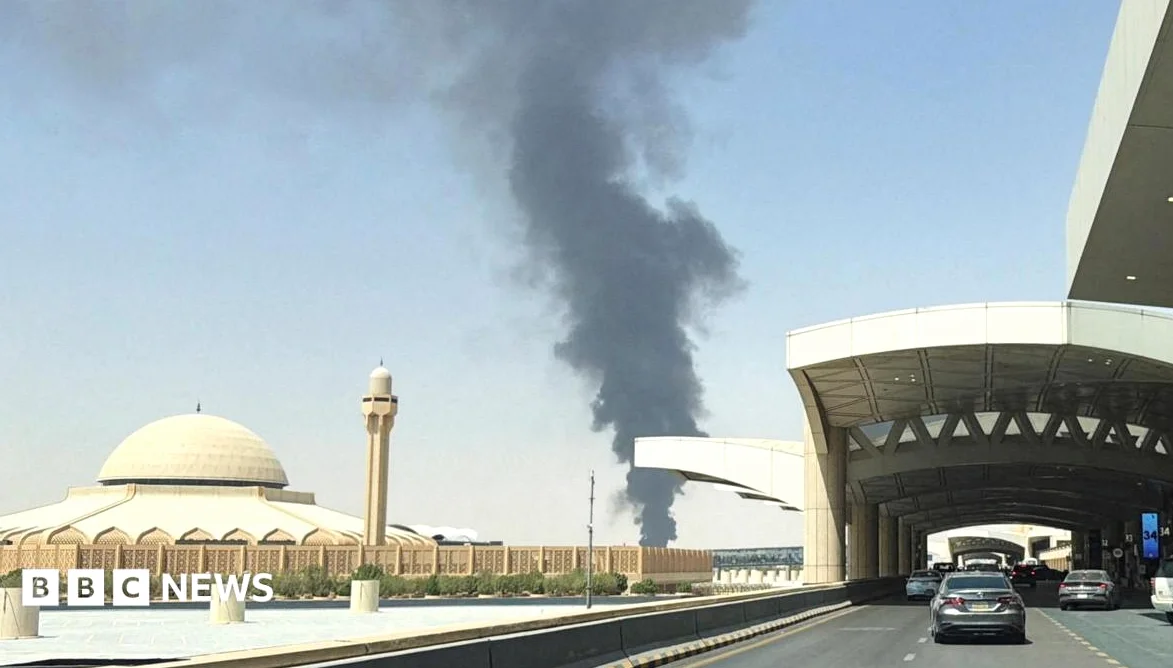
In late 2022, Houthi rebels, backed by Iran, claimed to have launched ballistic missiles at Saudi Arabia’s capital, Riyadh, according to reports — the attacks were part of a broader offensive that saw the Houthis seize territory along the Red Sea coast. The U.S. had previously deployed over 2,500 Marines to the region, while Pakistan’s government announced plans for a regional meeting to address the conflict.
Yemen War Resurfaces in Regional Tensions
The Houthis’ rapid advance in late 2022 pushed Yemen’s war back into the spotlight, raising concerns about Red Sea shipping routes and Saudi Arabia’s internationally-recognized government. The country had experienced a lull in large-scale combat after a 2022 truce, but the truce left Sanaa under Houthi control and failed to unify the country under a central authority.
Major General Samir al-Sabri, Yemen’s assistant defense minister for international cooperation, stated that government operations would extend from Marib and Al-Jawf to Al-Bayda, Taiz, and the western coast. However, the lack of a unified military structure among anti-Houthi forces complicates coordinated efforts to counter the rebels.
Missiles, Drones, and AI in Houthi Strategy
According to a report, the Houthis allegedly used artificial intelligence, specifically the Claude AI platform, to design and simulate guided missile and drone technology, while the report noted that the rebels used Claude to develop guidance, navigation, and control (GNC) software for unmanned systems. The Houthis reportedly distributed tasks across multiple AI instances, mimicking the structure of a small engineering team.
Though no conclusive evidence of successful deployment was found, the report indicated that the Houthis conducted flight simulations and attempted to integrate open-source autopilot systems with mobile-grade flight computers. They also used the AI to adjust control parameters and run firmware pipelines, according to the analysis.
The report also highlighted that the Houthis employed “workaround tactics” to bypass safety restrictions in AI systems, such as dividing tasks across multiple sessions to avoid detection. This suggests a growing sophistication in their use of technology to evade scrutiny and develop advanced weaponry.
Global Implications and U.S. Involvement
The conflict has had ripple effects beyond the region — the war has disrupted global oil and gas supplies, caused fertilizer shortages, and affected air travel. The Strait of Hormuz, a critical chokepoint for global trade, has been a focal point of tension, with Iran agreeing to allow humanitarian aid and agricultural shipments through the strait at the request of the United Nations.
U.S. President Donald Trump, at the time, had set a deadline for Iran to reopen the strait by April 6; Meanwhile, U.S. military operations in the region continued, with the U.S. stating it had struck over 11,000 Iranian targets in the war. On the ground, Iranian missile attacks toward Israel and Gulf Arab states were reported, with air defenses intercepting incoming threats across the region.
The U.S. and Israel have continued to strike Iran’s military infrastructure, including naval weapons production facilities, with Israel stating it would complete attacks within a few days. These actions have further heightened the risk of escalation in the region and raised questions about the potential for U.S. and Saudi military intervention to counter the Houthis’ advances.





Comments
No comments yet
Be the first to share your thoughts