

 Associated Press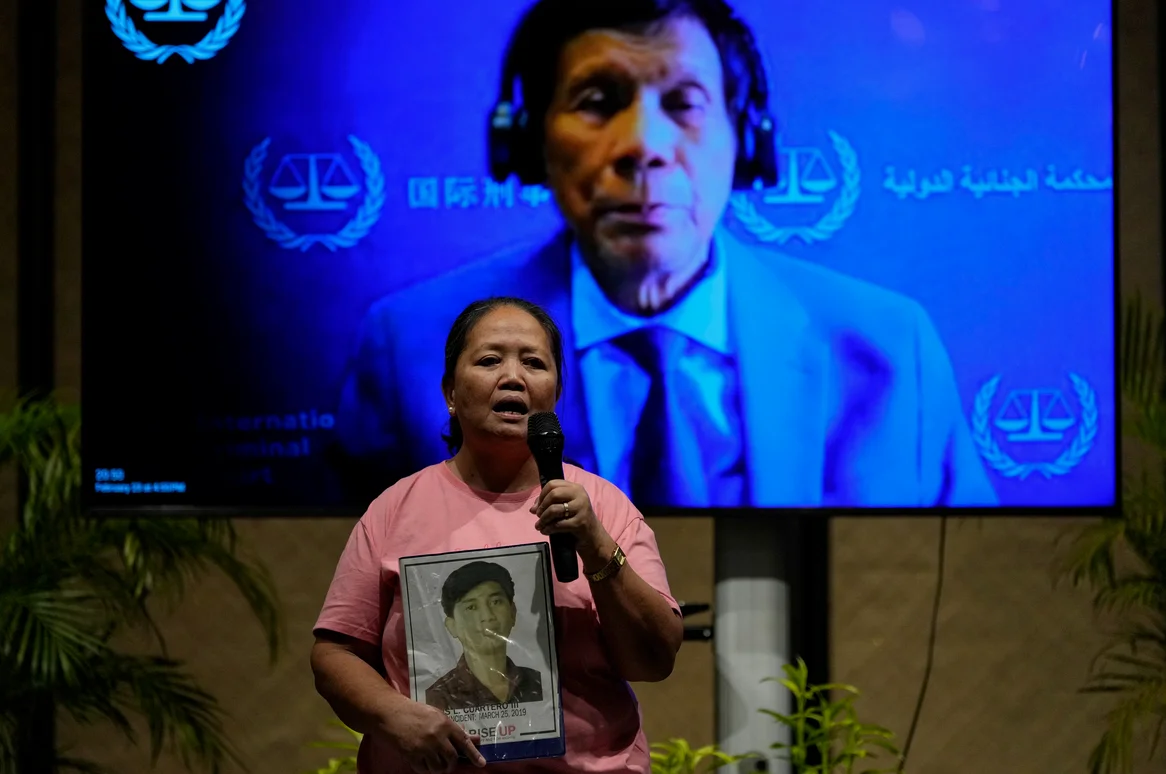
The International Criminal Court (ICC) opened a four-day preliminary hearing on April 23 to assess whether former Philippine President Rodrigo Duterte should be put on trial for alleged crimes against humanity linked to his aggressive campaign against drug trafficking. The hearing, held in The Hague, Netherlands, marks a critical step in a case that has drawn international attention and deep concern from victims’ families.
Allegations of Systematic Extrajudicial Killings
During the hearing, ICC Deputy Prosecutor Mame Mandiaye Niang stated that Duterte played a central role in the extrajudicial killing of suspects of drug use and distribution. Prosecutors argued that Duterte fostered an environment of fear and offered monetary incentives to encourage killings during his tenure as president.
According to the indictment, Duterte organized the ‘Davao Death Squad’ while serving as mayor of Davao City in 1988, and expanded it after becoming president by working with contract killers. Deputy Prosecutor Niang said that during his presidency, Duterte provided regular salaries to some members of the group and offered cash rewards based on the number of people killed.
The ICC has accused Duterte of involvement in at least 76 killings during his 2016-2022 term as Philippine president. These killings were part of his ‘war on drugs,’ which critics say led to widespread human rights abuses. Duterte did not appear at the hearing, citing health reasons.
Victims’ Families Demand Justice
Families of the victims gathered in Quezon City, Manila, to watch the live broadcast of the hearing. Joel Butuyan, an attorney representing victims, said the families live in constant fear and urged the ICC to refer the case to a full trial.
The ‘Duterte Panagutin Campaign Network,’ a coalition of victims’ families, described the hearing as a ‘historic step in the long journey toward justice and accountability.’ Demonstrations calling for Duterte’s punishment were held simultaneously in Manila and The Hague.
Duterte’s defense team has denied the allegations, arguing that the war on drugs was a policy that helped the poorest in the Philippines. His lawyer, Nicholas Kaufman, stated that the campaign was necessary to combat drug-related violence and crime.
Timeline and Next Steps
The ICC judges will decide within 60 days whether to refer the case to a full trial. This timeline is critical, as it sets the stage for potential legal proceedings that could have far-reaching implications for international justice.
Duterte was arrested at Manila airport in March 2023 and is currently held at the ICC detention facility in Scheveningen Prison on the outskirts of The Hague. The arrest marked a significant development in the case, as it was the first time a sitting head of state was detained by the ICC.
Experts say that the outcome of the preliminary hearing will influence how the ICC handles similar cases in the future. If the court proceeds to trial, it could set a precedent for holding leaders accountable for alleged crimes against humanity, even if they are not citizens of ICC member states.
The ICC’s involvement in the Duterte case has sparked debate about the court’s jurisdiction and effectiveness in dealing with cases involving non-member states. The Philippines is not a state party to the Rome Statute, which established the ICC, but the court has jurisdiction over the case due to the alleged crimes occurring on the territory of a state party, the Philippines.
As the hearing continues, the world watches closely to see if the ICC will take a landmark step in holding a former head of state accountable for alleged crimes against humanity.



Comments
No comments yet
Be the first to share your thoughts