

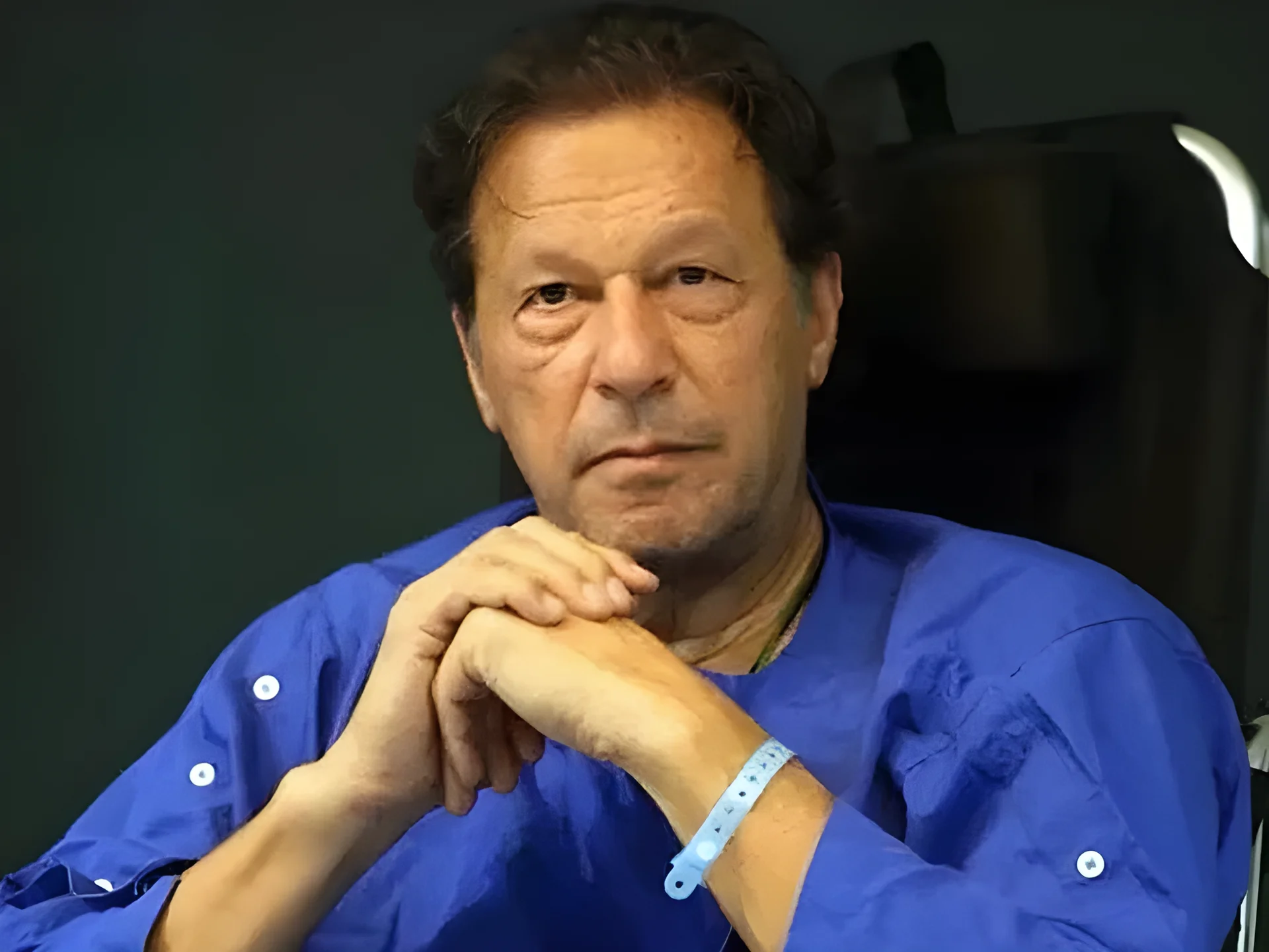
Former Prime Minister and Pakistan Tehreek-e-Insaf (PTI) founder Imran Khan has submitted a petition to the Islamabad High Court seeking permission to receive medical treatment for a critical eye disease. Khan’s legal team filed the request on Monday, emphasizing that adequate care cannot be provided while he is in custody.
Medical Condition and Legal Request
According to the petition, Khan is suffering from a severe eye condition diagnosed by Dr. Muhammad Arif of the Pakistan Institute of Medical Sciences (PIMS). Doctors have confirmed that blood clots have caused extensive damage to his right eye, leaving only 15% of his vision intact.
Imran Khan’s lawyers, Salman Safdar and Khalid Yousuf Chaudhry, submitted the plea, stating that the former leader needs to be released on bail to receive proper treatment. The petition also includes a request for an early hearing regarding the suspension of his sentence in the 190 million pounds case.
Lawyer Salman Safdar told reporters that Khan had informed him that PIMS doctors, after carrying out tests and research, had confirmed that he had lost 85 percent of the vision in his right eye. ‘Imran Khan sent a message he cannot see,’ said Aleema Khan, a family member of the former prime minister.
Impact on Legal Proceedings
The filing comes amid ongoing legal battles involving Khan, who is currently facing multiple cases, including the Toshakhana-II case. His bail application seeks the suspension of his sentence due to the serious health condition affecting his right eye.
The court is expected to consider the petition in the coming weeks. If granted, Khan would be allowed to receive treatment at Shifa International Hospital in Islamabad, as requested in the plea. His legal team has also asked the court to permit access to his personal doctors, Dr. Faisal Sultan and Dr. Asim, for specialized care.
The petition highlights the challenges faced by individuals in custody when it comes to accessing adequate medical treatment. It argues that the prison environment is not conducive to the kind of specialized care Khan requires.
Imran Khan, who is 73 years old, has been under house arrest since May 2023 following his conviction in the Toshakhana-II case. His legal team has previously argued that his health has deteriorated due to the stress of ongoing legal proceedings.
Broader Implications for Political and Legal Landscape
The case has drawn attention from both supporters and critics of Khan, with some viewing the medical petition as a strategic move to gain public sympathy and potentially influence the court’s decision. Others argue that the situation highlights the need for improved healthcare access for detainees in Pakistan.
Analysts suggest that the outcome of the petition could have significant implications for the legal process. If the court grants bail, it may set a precedent for similar cases involving health-related requests. However, if the request is denied, it could further complicate Khan’s legal position and the ongoing political tensions in the country.
According to the plea, the doctors at PIMS have indicated that without prompt and specialized treatment, Khan’s vision may continue to deteriorate. This adds urgency to the court’s consideration of the case, with a potential hearing date expected to be set in the near future.
The Islamabad High Court has not yet scheduled a hearing date, but legal experts predict that the case will be closely watched by both the public and political figures. The court’s decision could also influence the broader discourse on the rights of detainees and the role of the judiciary in such matters.






Comments
No comments yet
Be the first to share your thoughts