

India and Canada are accelerating their economic partnership with the aim of finalizing a Thorough Economic Partnership Agreement (CEPA) by the end of 2026. This comes after a high-profile visit by Canadian Prime Minister Mark Carney to India, which marked a strategic reset in bilateral relations. During the visit, both nations agreed on terms of reference for the CEPA, signaling a shift from the earlier ‘Early Progress Trade Agreement’ (EPTA) toward a more thorough trade deal.
Strategic Reset: CEPA and New Economic Dialogues
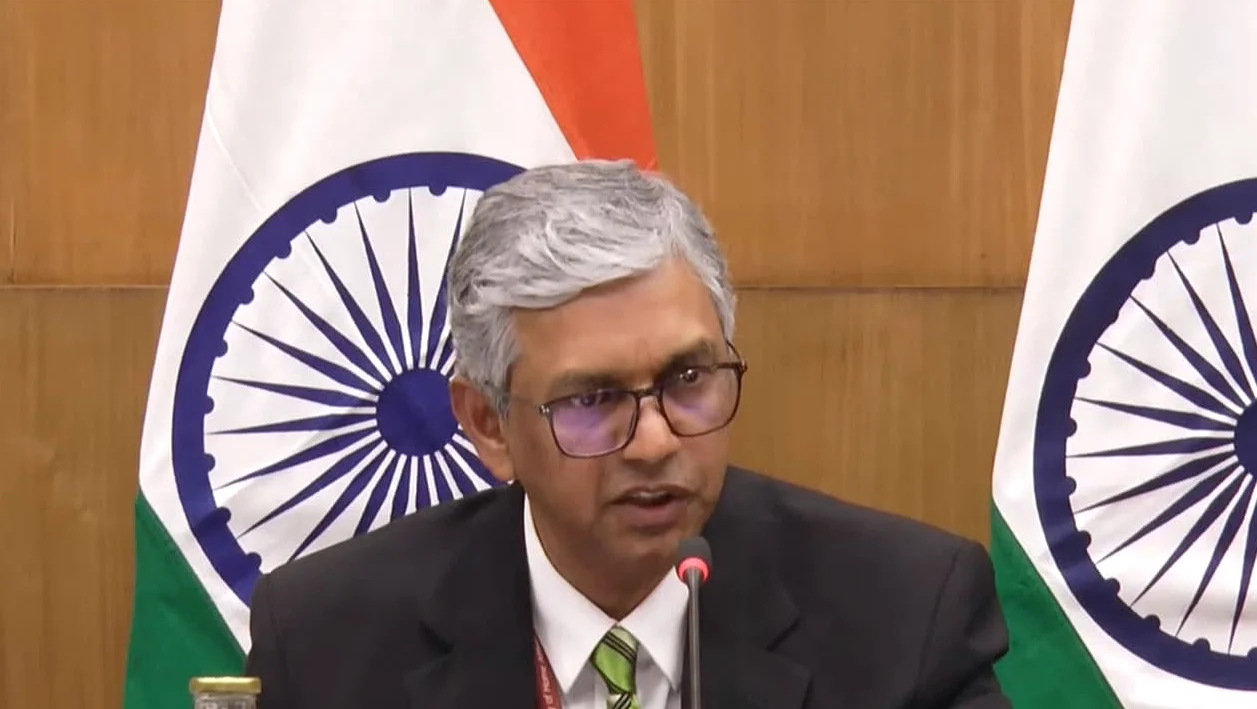
India’s Ministry of External Affairs confirmed that detailed discussions on CEPA are set to begin soon, with a clear target of completing the agreement by the end of 2026. Secretary (East) P Kumaran highlighted that the visit yielded concrete outcomes across five pillars, with the CEPA serving as a crucial economic anchor. ‘The signing of the terms of reference for a CEPA provides a clear roadmap to conclude an ambitious, balanced and mutually beneficial agreement by the end of 2026,’ he said.
As part of this reset, the India-Canada CEO Forum was reconstituted and held a meeting in New Delhi on March 2, bringing together top business leaders to identify investment opportunities. A new ‘Economic and Financial Dialogue’ has also been launched to streamline capital flows between the two nations.
Boosting Investment and Future-Facing Sectors
Kumaran noted that the visit saw substantial commercial announcements and investment commitments across a wide range of sectors, including pharmaceuticals, agri-food processing, clean technology, and advanced manufacturing. ‘Beyond government-to-government outcomes, the visit witnessed substantial commercial announcements and investment commitments across a wide range of sectors,’ he said.
Both countries are focusing on ‘next-generation’ sectors, such as long-term uranium supply arrangements for India’s nuclear sector, cooperation on critical minerals like lithium and cobalt, and AI-enabled banking, cybersecurity, and regenerative medicine. ‘The reciprocal investment pattern signals that the partnership is increasingly anchored in real economic integration rather than episodic transactions,’ Kumaran added.
Diplomatic Thaw and Normalization
Kumaran confirmed that diplomatic relations have improved significantly since the lows of 2023. High Commissioners Dinesh K. Patnaik (India) and Christopher Cooter (Canada) have returned to their posts. Both sides have agreed to progressively increase diplomatic staff strength to return to pre-2023 levels. ‘We are already in the process of doing that. You would have seen that the High Commissioners have returned to their positions,’ Kumaran said.
Both nations have also structured dialogues on sensitive security issues, such as the Joint Working Group on Counter-Terrorism, to ‘depoliticise’ the economic relationship. ‘There is broad agreement that we should be increasing diplomatic strength on both sides progressively to reach their levels in the past,’ Kumaran added.
A Historic ‘Inflection Point’ in Relations
Kumaran emphasized that Carney’s visit marks a historic ‘inflection point’ in India-Canada relations. The visit, the first by a Canadian Prime Minister in eight years, has shifted the relationship from ‘episodic transactions’ to a strategy of deep economic integration. ‘This was his first visit to India since assuming office and the first bilateral visit by a Canadian Prime Minister in eight years,’ Kumaran said.
The visit included a two-day program in Mumbai, primarily focused on business, investment, and innovation partnerships. ‘The Mumbai leg was primarily business-oriented and aimed at catalysing investment flows, deepening financial linkages and expanding innovation partnerships between the two countries,’ Kumaran added.
The Pension Fund Power Play
While trade deals take time, the flow of capital between India and Canada is already record-breaking. Canadian pension funds, which manage the retirement savings of millions, have placed a significant bet on India’s growth. India accounts for 30% of all Canadian pension fund investments in the entire Asia-Pacific region.
During the visit, Carney met with Indian business leaders, CEOs, innovators, educators, and representatives of leading Canadian pension funds. ‘These discussions were essentially focused on bilateral investment flows, strengthening collaboration and clean energy, critical minerals, infrastructure, and advanced manufacturing,’ Kumaran said.
India’s Prime Minister Narendra Modi has directed officials to explore providing benefits to pension funds, enhancing India’s competitiveness as an investment destination. In a post on X, the Ministry of External Affairs’ spokesperson said, ‘PM noted that India and Canada together represent a substantive economic force, combining capital and capability. PM highlighted key areas for joint economic cooperation, including clean energy, civil nuclear partnership, critical minerals, infrastructure and capital, manufacturing and technology, particularly AI, as well as food processing and other emerging sectors.’
Canada’s strategic move to diversify its trade toward the Indo-Pacific aligns with India’s view of Canada as a reliable G7 partner for energy security and high-tech capital. The reset in relations is expected to have long-term implications for trade, investment, and innovation between the two nations.




Comments
No comments yet
Be the first to share your thoughts