

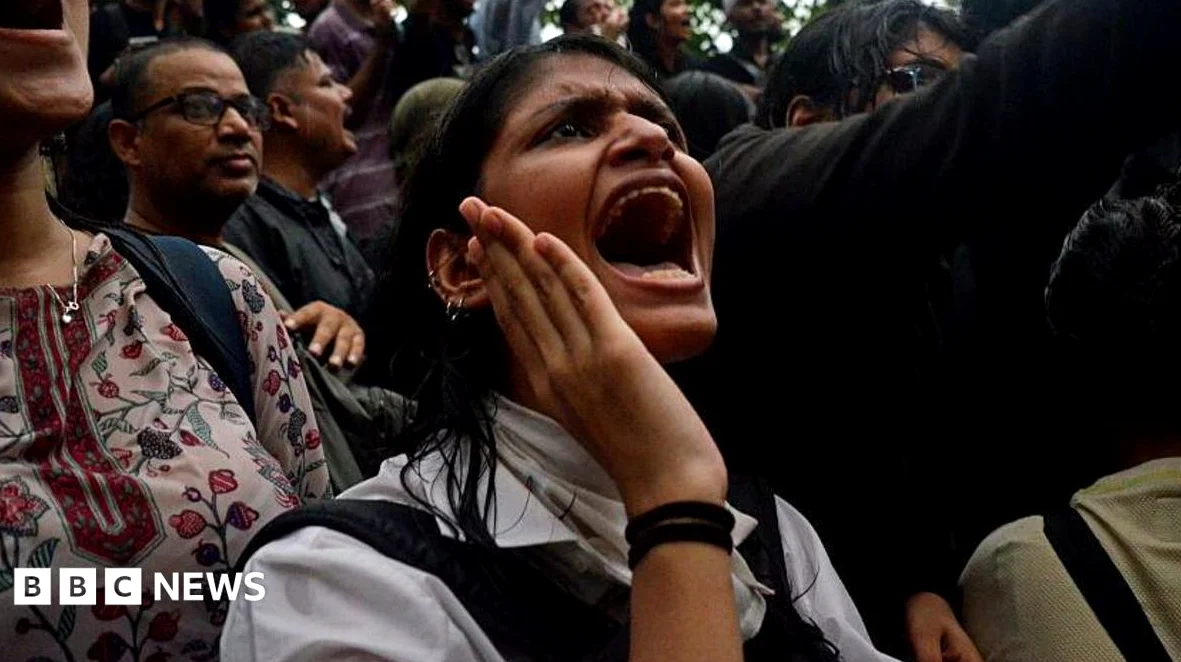
India’s ‘cockroach’ protesters. An online satirical movement turned powerful platform for youth dissent, will meet with the government as the stalemate continues. The movement. Led by the Citizens for Justice (CJP), is demanding education reforms and the resignation of Education Minister Dharmendra Pradhan, according to BBC and AOL.com. Tens of thousands of young men and women attempted to march on India’s parliament earlier this week, but police responded with tear gas and baton charges.
Protest Origins and Key Demands
The protests began over a month ago and gained momentum this week after a police security operation on demonstrators marching to parliament left dozens injured — the CJP, which started as a satirical online movement, has evolved into a powerful platform for young people to voice their grievances. The protests are primarily focused on the integrity of the national examination system, a key route for social mobility in India; According to BBC, the movement is not ideologically driven but rather focused on ensuring fairness in the exam process. The protests have drawn support across caste, class, and gender lines, making them unique compared to previous protests in the country.
Activist Sonam Wangchuk. A central figure in the protests, ended his 26-day hunger strike late last week; he had lost 11kg (24lb) during the fast in support of the movement. Wangchuk was forcibly removed from the protest site last week by authorities and admitted to hospital under health concerns — the government has yet to comment on the protests or the meeting with the protesters. Meanwhile, Prime Minister Narendra Modi announced a new law on examination paper leaks, the core issue of the protests.
Government Response and Public Reaction
The government has not commented directly on the protests but has taken some steps in response to specific demands. A CJP spokesperson said the government had agreed to compensate the families of students who reportedly died by suicide after the cancellation of a major medical entrance exam in May. The government also agreed to withdraw police cases against protesters who joined the march to parliament. Despite these concessions, the protesters remain unsatisfied and continue to demand the resignation of Education Minister Pradhan. “The protest will continue and will keep growing until Dharmendra Pradhan resigns. If that does not happen soon, we will be forced to announce another nationwide protest call,” said CJP spokesperson Ranka.
Public anger intensified after police in Delhi cracked down on protesters attempting to march to parliament. The incident left dozens injured and sparked widespread outrage. The government’s initial attempts to ignore the protests have given way to more direct actions, including the forced hospitalization of key activists. The protests have become a major headache for Modi’s administration, which had previously downplayed the movement. The CJP’s ability to mobilize large numbers of young people across India has forced the government to engage, even if indirectly.
Broader Implications and Historical Context
India’s history shows that student movements have played a significant role in shaping political discourse. The Nav Nirman agitation in Gujarat in the 1970s helped spark a broader movement against then-prime minister Indira Gandhi. However, many student-led protests have faded after initial momentum. What sets the CJP apart is its cross-cutting nature. Unlike previous protests over issues like citizenship or farm laws, the CJP is not tied to a single community or ideology. Instead, it reflects a broader dissatisfaction with the state’s ability to ensure a fair education system, according to Yamini Aiyar, a Senior Visiting Fellow at Brown University.
The protests also highlight the growing role of social media in mobilizing and sustaining political movements in India. The CJP, which began as a satirical online campaign, has gained traction through viral content and online activism. This has allowed the movement to bypass traditional protest structures and reach a wider audience. The government’s response has been to engage with some demands while resisting others, creating a stalemate that shows no signs of ending soon. As the CJP prepares for another nationwide protest call, the government faces mounting pressure to address the concerns of the youth.






Comments
No comments yet
Be the first to share your thoughts