

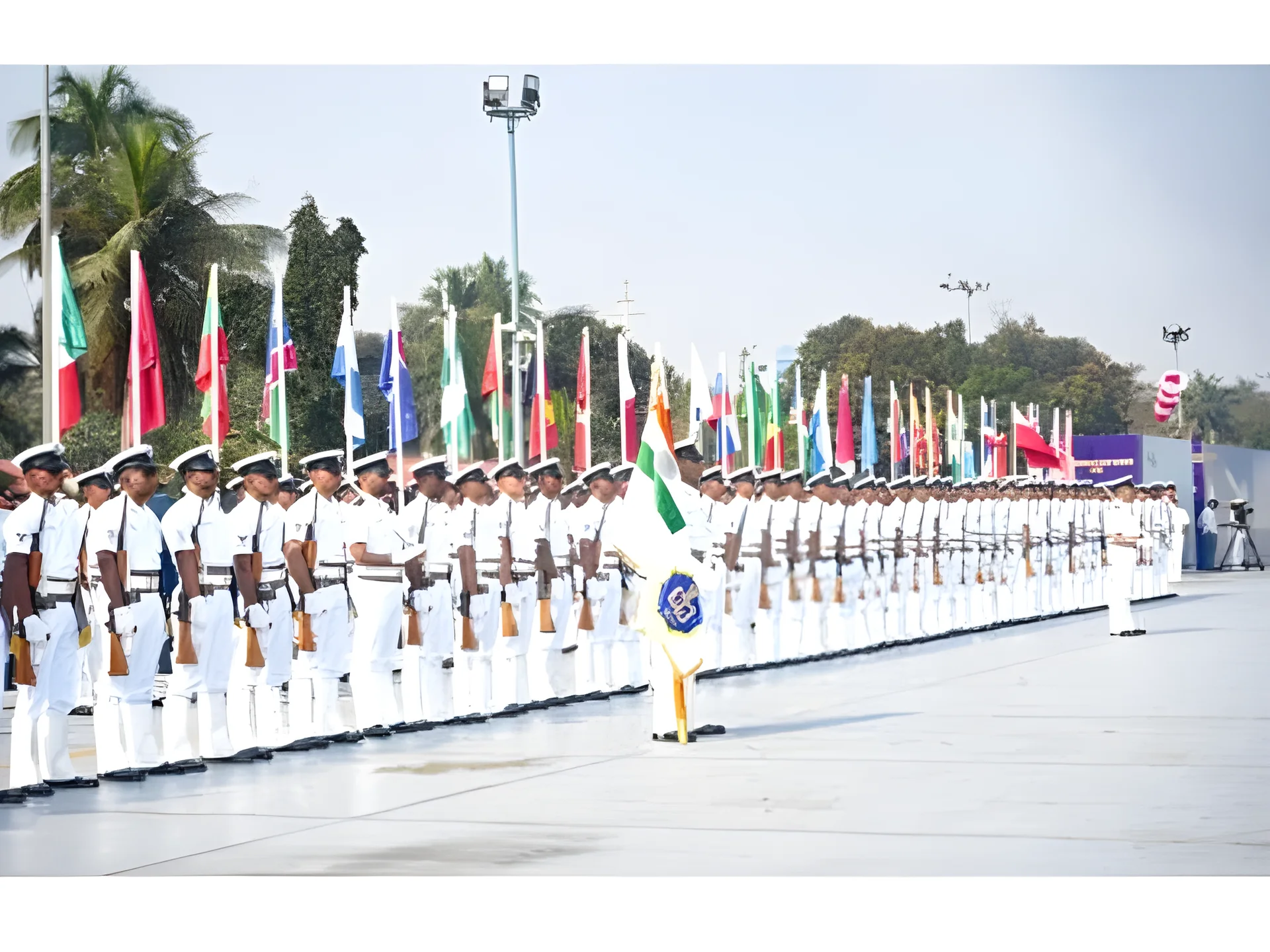
The MILAN 2026 naval exercise, involving 74 nations and 42 warships, concluded in Visakhapatnam, marking the largest and most inclusive edition of the multilateral maritime exercise to date. The event, held in the Indian Ocean Region (IOR), brought together a diverse array of maritime forces to enhance cooperation, interoperability, and mutual understanding among participating nations.
Strategic Importance and Global Participation
The Indian Navy’s 13th edition of MILAN 2026 saw the participation of 74 countries, including both regional and global maritime powers. The exercise featured 42 warships, approximately 32 aircraft and helicopters, and was divided into ‘Harbour’ and ‘Sea’ phases. The scale of the event highlights India’s growing influence as a maritime power and its role as a key player in regional and global naval cooperation.
According to an official release, the exercise aimed to support mutual cooperation and strengthen ties among countries in the IOR. It provided a platform for participating nations to learn and practice joint maritime combat strategies and interoperability, which are critical in addressing contemporary security challenges in the region.
Defence Minister Rajnath Singh inaugurated the exercise on February 24, welcoming representatives from 74 countries. Singh emphasized that MILAN 2026 was the largest and most inclusive edition to date, reflecting the global maritime community’s confidence in India as a trusted and responsible maritime partner.
“This year, with the participation of 74 nations, MILAN 2026 stands as the largest and most inclusive edition to date, a reflection of the confidence the global maritime community places in India as a trusted and responsible maritime partner,” said Singh.
Evolution of MILAN and Naval Growth
MILAN has evolved significantly since its inception, growing from a regional exercise into one of the world’s most prominent multinational naval exercises. Singh noted that the event has expanded in both scope and stature through the concerted efforts of all partners, and it now serves as a key platform for maritime cooperation and strategic dialogue.
The Indian Navy has demonstrated rapid growth, with a new warship commissioned into the force approximately every 50 days. This development highlights India’s increasing naval capabilities and its strategic importance in the IOR.
Singh further emphasized the importance of naval cooperation in today’s interconnected world. He stated, “No single navy, regardless of its capability, can deal with these challenges alone. Hence, in today’s interconnected world, cooperation among navies is now more important than ever.”
The exercise focused on enhancing interoperability among the navies of partner countries, improving professional competence through the sharing of experiences and best practices, and deepening friendships among participating navies by evolving bonds rooted in mutual advantage.
Future Implications and Regional Security
The significance of MILAN 2026 extends beyond the exercise itself, reflecting broader geopolitical and security dynamics in the Indian Ocean. With growing regional tensions and the increasing importance of maritime trade routes, such exercises are crucial in maintaining stability and promoting peaceful cooperation among nations.
The Indian Ocean is a critical hub for global trade, with more than 40% of the world’s maritime trade passing through its waters. Strengthening maritime partnerships through exercises like MILAN is essential for ensuring the security of these vital trade routes.
Analysts suggest that the growing participation of countries in MILAN highlights the importance of India’s role in regional security. With the exercise’s focus on interoperability, it is expected that future collaborations between participating nations will lead to more joint operations and strategic coordination in the region.
The next edition of MILAN is expected to build on the success of MILAN 2026, with further opportunities for maritime cooperation and enhanced strategic partnerships among participating nations. The exercise is likely to continue evolving, reflecting the dynamic and ever-changing nature of maritime security in the 21st century.



Comments
No comments yet
Be the first to share your thoughts