

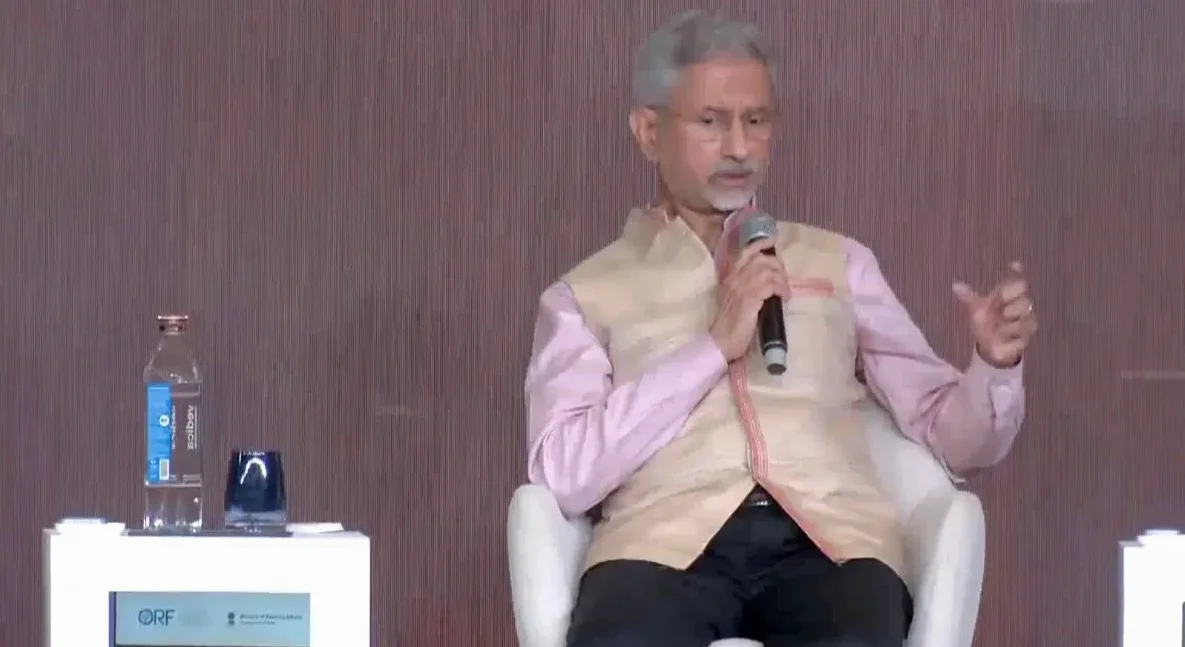
India permitted an Iranian naval vessel to dock in the port of Kochi after the ship reported technical difficulties, External Affairs Minister S Jaishankar said during the Raisina Dialogue 2026. The incident occurred amid heightened tensions in the Indian Ocean region following the sinking of the Iranian naval vessel IRIS Dena in international waters. Jaishankar emphasized the humanitarian considerations behind the decision, noting that many commercial vessels attacked at sea have Indian crew members on board.
Humanitarian Concerns Over Merchant Vessel Safety
Jaisinghankar raised concerns about the safety of Indian sailors working on merchant ships, stating that attacks on commercial vessels frequently put Indian lives at risk. He highlighted that Indians form a significant portion of the global merchant marine workforce and stressed the need for the country to recognize the dangers they face as conflicts spill into key shipping routes.
His remarks came as tensions in the Indian Ocean region remain high following the sinking of the Iranian naval vessel IRIS Dena in international waters. The ship had earlier been in the region after participating in naval engagements connected with India. Jaishankar said that India had permitted another Iranian ship, IRIS Lavan, to enter the port of Kochi after it reported technical difficulties.
The vessel had earlier taken part in the International Fleet Review and the MILAN 2026 exercise, held between February 15 and February 25. Iran approached India seeking assistance days before the IRIS Dena incident. India approved docking on March 1, and the vessel later reached Kochi. The ship has 183 crew members, many of them cadets, who have since disembarked and are staying at naval facilities nearby.
Humanitarian Decision Amid Changing Circumstances
Jaishankar said that India had received a message from the Iranian side that one of the ships, which presumably was closest to Indian waters at that point of time, wanted to come into the port. He said the decision was made on March 1 after the ship reported technical problems. The vessel took a few days to sail in and then docked in Kochi. The ship is there, and the people on board, a lot of them young cadets, have disembarked and are staying in a nearby facility.
Jaishankar explained that the ship had initially been part of a fleet review and then got caught on the wrong side of events. He said that India’s decision to allow the ship to dock was based on humanitarian considerations, rather than legal issues. He added that other ships had faced similar situations, and one of them unfortunately did not make it.
Following a distress call connected with IRIS Dena, the Indian Navy launched search and rescue operations to support efforts led by Sri Lanka. A long-range maritime patrol aircraft was deployed to assist the search. Jaishankar said that the Indian Navy is prepared to assist in such situations and emphasized the importance of regional cooperation.
Emphasis on Safety of Indian Mariners
Jaisinghankar also said that India’s approach to regional crises takes into account the safety of millions of Indians working abroad and those serving on merchant vessels. He said that Indians are a large segment of people who man merchant ships. Every time there is an attack on a vessel carrying goods, it is very likely that a part of the vessel is manned by Indians.
He said that the country should give a lot of weight to this because there have been fatalities in the last few days. He said that there has to be adequate recognition in the country about the interest of its people, the merchant mariners, and what could be done to safeguard them.
Jaisinghankar also responded to debates circulating online about geopolitical developments in the region. He said that there are a lot of social media debates going on over this, but the reality of the Indian Ocean must be understood. He noted that Diego Garcia has been in the Indian Ocean for the last five decades and that foreign forces based in Djibouti have been present since the early first decade of this century.
Jaisinghankar emphasized the importance of strengthening cooperation across the Indian Ocean region and said that India has invested considerable diplomatic effort in building partnerships over the past decade. He said that the Indian Ocean Region is an ecosystem and that the rebuilding process of the Indian Ocean needs to be recognized.
He added that a lot of this requires hard work, and in the last decade, Indian diplomacy has invested a lot in this process. He said that if India is to build an Indian Ocean sentiment or identity, it has to be backed up with resources, work, commitments, and practical projects. He concluded by saying that the rise of India will be determined by India’s strength, not by the mistakes of others.



Comments
No comments yet
Be the first to share your thoughts