

 The Hindu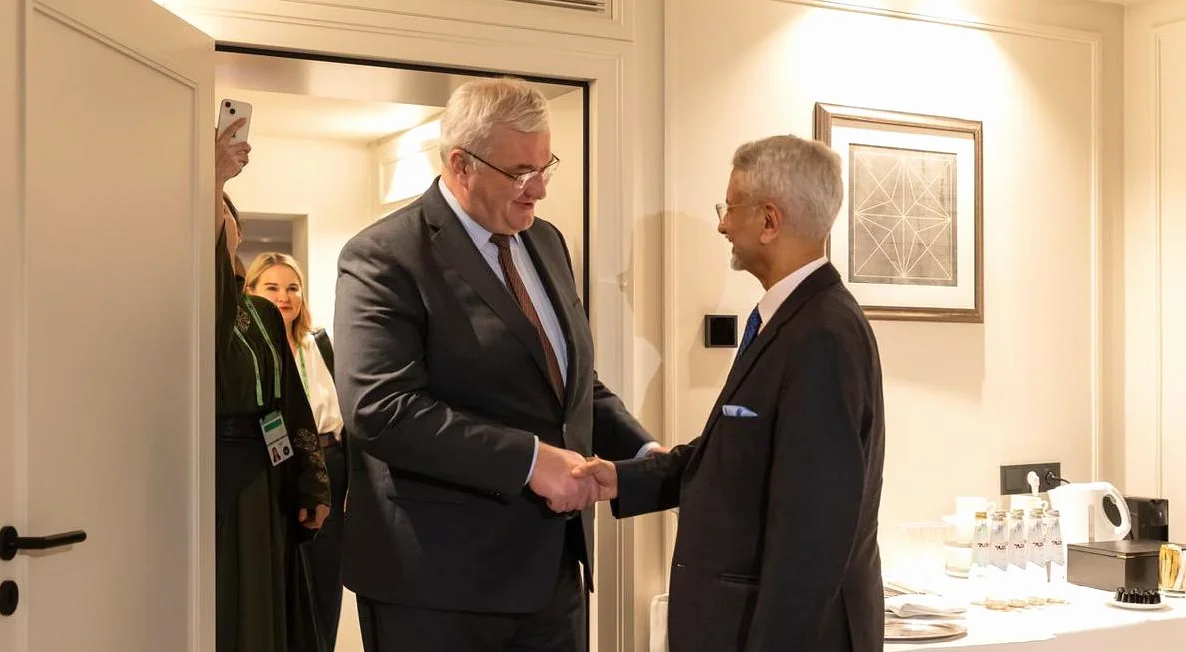
India’s External Affairs Minister S. Jaishankar met with Ukraine’s Foreign Minister Andrii Sybiha on February 14, 2026, during the Munich Security Conference, an annual gathering of global security experts and policymakers. The meeting took place as U.S.-led negotiations between Russia and Ukraine continued to shape the trajectory of the ongoing conflict.
Strategic Talks Amid Ongoing Conflict
According to Sybiha, the two ministers discussed the current state of the war, reaffirming their commitment to expanding trade and deepening bilateral ties. The meeting came as Russia’s strikes on Ukraine’s energy infrastructure continued to disrupt daily life and challenge the resilience of the Ukrainian economy.
Sybiha emphasized the importance of India’s role in international efforts aimed at achieving a lasting peace. He highlighted the significance of India’s constructive engagement in U.S.-led diplomacy, noting that such cooperation could contribute to a more stable regional order.
Jaisankar, in a series of tweets, confirmed the meetings with Sybiha, as well as with Austrian Foreign Minister M Beate Meinl-Reisinger and Serbian Foreign Minister Marko Djuric. He described the discussions as part of a broader effort to strengthen diplomatic relations and address shared security concerns.
India’s Stance on Strategic Autonomy
Jaisankar has consistently denied that India has lost its ‘strategic autonomy,’ a position that has guided Indian foreign policy in recent years. This approach has seen India maintain balanced relations with both Russia and the West, despite the geopolitical tensions surrounding the Ukraine war.
India has remained neutral in the conflict, though it has provided humanitarian aid and economic support to Ukraine. This stance allows India to maintain its relationships with both Moscow and the West, a delicate balancing act in a rapidly evolving global landscape.
Sybiha’s comments on India’s role in U.S.-led international efforts indicate that Ukraine is seeking stronger partnerships with non-Western countries to bolster its position in negotiations with Russia. The ongoing strikes by Russian forces have underscored the need for international solidarity and support for Ukraine’s sovereignty.
Future Diplomatic Engagements
Analysts suggest that the meeting between Jaisankar and Sybiha could be a precursor to more formal diplomatic initiatives. With the Munich Security Conference serving as a platform for global dialogue, the discussions may influence future policies and cooperation frameworks between India and Ukraine.
India’s foreign minister is expected to continue engaging with key international players in the coming weeks, as the global community awaits developments in the U.S.-led negotiations. The outcome of these talks could have far-reaching implications for regional stability and international relations.
The ongoing Russia-Ukraine conflict has had significant economic and humanitarian impacts, with millions of Ukrainians displaced and the global economy affected by disrupted supply chains. As the conflict enters its sixth year, the need for a lasting resolution has become increasingly urgent.
Jaisankar’s meetings with Sybiha and other foreign ministers reflect India’s continued interest in maintaining a complex foreign policy, one that balances regional and global interests while seeking to promote peace and stability.






Comments
No comments yet
Be the first to share your thoughts