

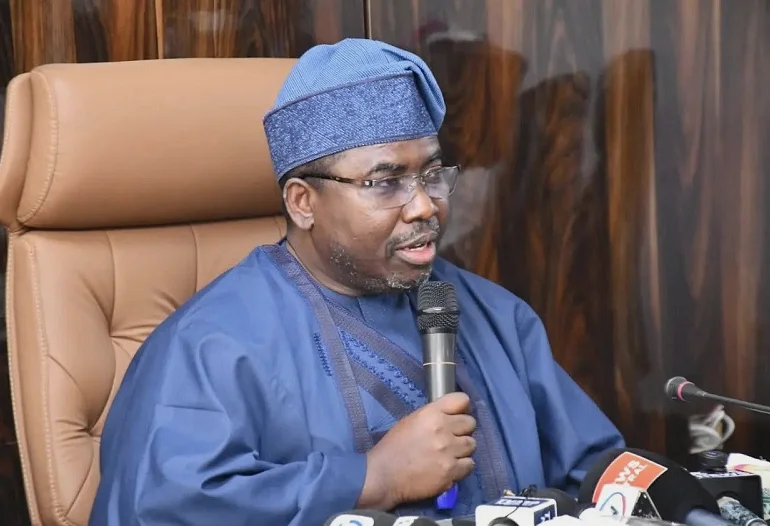
The Independent National Electoral Commission (INEC) is exploring legislative action to address public concerns over the 2027 election schedule, which some Nigerians say conflicts with the holy month of Ramadan.
The House of Representatives has already convened for a session to discuss the timetable, with spokesman Akintunde Rotimi confirming the assembly will deliberate on the schedule released by the commission.
Earlier, the Conference Committee on Electoral Act was set to meet to address the electronic transmission of election results, a provision included in recent amendments to the Electoral Act.
The Presidential and National Assembly elections are currently scheduled for February 20, while governorship and state assembly polls are set for March 6. However, the release of the timetable sparked immediate calls for a review, as the dates overlap with Ramadan.
Mohammed Haruna, National Commissioner and Chairman of Information and Voter Education at INEC, acknowledged the concerns in a statement. He said the timetable was developed in compliance with the constitution, Electoral Act, and INEC guidelines.
Haruna explained that the dates are set in accordance with regulations that specify presidential and national assembly elections must be held on the third Saturday of February, while governorship and state assembly elections take place two weeks later.
Despite this, INEC is now consulting with stakeholders and may seek legislative intervention to address the concerns, ensuring any adjustments align with constitutional and statutory requirements.
Several Muslim stakeholders, including Sheikh AbdurRahman Ahmad of the Ansar-Ud-Deen Society of Nigeria, criticized the decision, calling it insensitive and disrespectful to the Muslim community. They argued that holding elections during Ramadan could pose challenges for voters, electoral officials, and security personnel observing the fast.
Sheikh Ahmad called on INEC to move the elections outside Ramadan, stating that the Muslim community is a key stakeholder in the electoral process and deserves respect in decision-making.
Imam Nojeem Jimoh of The Companion, an association of Muslim men in business and professions, echoed similar sentiments, urging INEC to reconsider the dates in the interest of inclusivity and national cohesion. He noted that past adjustments had been made due to security and logistical concerns and that similar action could be taken now.
Jimoh emphasized the need for broader consultations with religious and community leaders before finalizing election schedules. He said such engagement would strengthen public trust in the electoral process.
Other Muslim leaders, including Asiwaju Khamis Olatunde Badmus and Abdulganiyu Olaide Ezra, also urged INEC to review the dates to allow Muslims to observe Ramadan without hardship. They argued that shifting the elections would not harm INEC but would benefit the national interest.
A lawyer from Osun State, Dele Abass, noted that there is no law prohibiting elections during Ramadan, even in Islamic countries. He suggested that the concerns raised are not based on legal grounds but on social and cultural considerations.
INEC has reiterated its commitment to ensuring the credibility and inclusivity of the 2027 General Election. The public will be informed of any further developments regarding the timetable.
Comments
No comments yet
Be the first to share your thoughts