

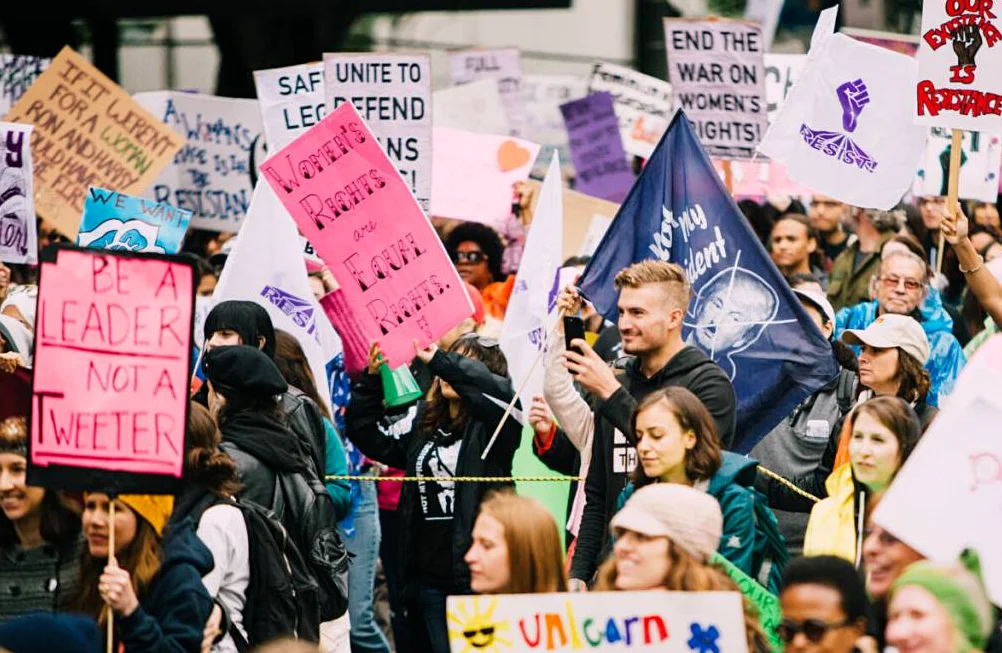
International Women’s Day, marked annually on March 8, serves as a reminder that economic inequality remains a pressing issue despite historical progress for women. While the day is often celebrated as a milestone in gender equality, its origins lie in economic protest. In 1917, women textile workers in Europe demanded ‘bread (wages) and peace (political stability)’, highlighting the breaking point of daily conditions that triggered collective action and social change.
Stagnation in Economic Participation
According to the 2024 edition of the World Economic Forum’s Global Gender Gap Report, Canada ranked 36th out of 146 countries, a drop from 30th the previous year. While the country performs strongly in education and has seen gains in political representation, economic participation and wage equity have stagnated. This highlights that progress in one domain does not cancel stagnation in another.
Women’s empowerment has always been tied to economic independence. As women gained access to education, paid work, property rights, and reproductive decision-making, long-standing social arrangements shifted. Systems that relied on women’s financial dependence and limited mobility were disrupted.
Historical Constraints on Women’s Autonomy
Historically, women’s choices were constrained by design. In many societies, girls were given in marriage to older men and expected to manage households and bear children. In farming economies marked by high child mortality, children were tied to labor and survival. Motherhood was not optional; it was mandatory. Marriage was often an economic arrangement. Remaining single or childless was rarely socially acceptable.
Reproductive autonomy, as understood today, did not exist. Women who experienced what we now recognize as postpartum depression were frequently stigmatized or isolated rather than supported. Cultural norms reinforced dependence. Women were expected to remain confined to domestic roles, excluded from public authority, and were economically reliant on male relatives.
Legal barriers reinforced these expectations. In many countries, women could not vote, own property, inherit assets, or enter professions such as medicine, law, or engineering. Some published intellectual work under male pseudonyms to gain legitimacy. Unpaid care work, such as raising children, tending to elders, and sustaining households, was treated as a duty rather than labor, despite its central role in economic stability.
Religious and civic institutions often mirrored these restrictions, permitting women to serve in supportive roles while barring them from leadership. These limitations were not incidental; they maintained social hierarchies by restricting autonomy. When women had fewer choices, existing power structures remained intact.
Resistance to Autonomy Expansions
The expansion of women’s rights disrupted that stability. Access to income reduced forced dependence. Control over reproduction altered family planning. Education expanded career pathways. Political participation challenged exclusionary governance. Marriage shifted, in many contexts, from economic necessity to partnership.
History also shows that expansions of autonomy are frequently met with resistance. Efforts to restrict reproductive rights, limit workplace protections, or reduce social support are not isolated debates; they shape economic mobility and long-term opportunity. Limiting autonomy increases financial vulnerability and reinforces inequality, particularly for marginalized women.
This raises direct questions: Whose futures are affected when access to health care or income is restricted? Who absorbs the economic cost when unpaid labour expands? Who benefits when dependency is restored?
International Women’s Day exists because rights were demanded, not granted. Voting rights, property ownership, access to education, entry into professions, and reproductive freedom were secured through organized pressure. Each advance required confronting entrenched systems.
Empowerment is not symbolic. It is structural. When women participate fully in economic and civic life, societies gain broader expertise, stronger institutions, and more resilient communities.
The roots of change remain economic. The lesson of 1917 still applies. Stability built on exclusion is fragile. Sustainable societies require equitable access to opportunity, income, health, and decision-making power.
International Women’s Day is therefore not simply a celebration. It is an accountability marker. It asks whether economic systems, public policy, and institutional leadership reflect genuine equity, or whether structural inequality persists beneath symbolic progress.
Autonomy, dignity, and economic security are not abstract ideals. They are the foundation of social stability.





Comments
No comments yet
Be the first to share your thoughts